
HS2 Chiltern Tunnel: Milestone Achieved
The completion of the first cross passage connecting northbound and southbound tunnels beneath the Chiltern Hills marks a significant milestone in High Speed Two’s infrastructure development, showcasing advanced engineering solutions for large-scale tunneling projects.
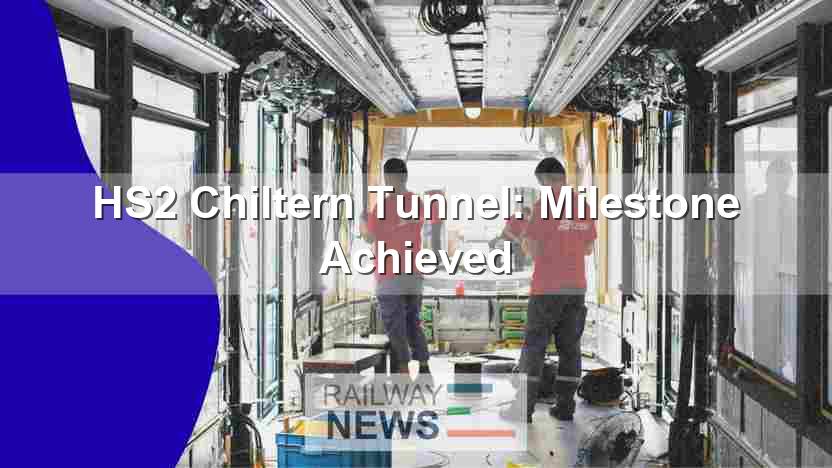
This article explores the significant engineering feat achieved by High Speed Two (HS2) in the construction of its high-speed rail line between London and the North of England. Specifically, we will delve into the completion of the first cross passage connecting the northbound and southbound tunnels beneath the Chiltern Hills. This project highlights several critical aspects of large-scale tunneling projects, including the challenges posed by complex geology, the innovative engineering solutions employed, and the broader economic impact of such infrastructure development. The completion of this cross passage marks a crucial step forward, demonstrating the progress of the HS2 project and its potential to revolutionize high-speed rail travel in the UK. The intricate process, involving advanced tunnel boring machines (TBMs), specialized excavation techniques, and robust lining systems, will be examined in detail to provide a detailed understanding of the complexities involved in constructing such a vital piece of national infrastructure. Additionally, we will discuss the broader context of the project, its implications for the UK’s transportation network, and its contribution to the national economy.
The Chiltern Tunnel Cross Passages: A Key Milestone
The construction of the HS2 high-speed rail line involves the creation of extensive tunnel networks, most significantly the ten-mile-long tunnels beneath the Chiltern Hills. These tunnels, designed to accommodate trains operating at speeds of up to 320 km/h (200 mph), comprise two parallel bores. The recently completed cross passage represents the first of 38 such connections strategically placed along the tunnel route. These passages are essential for emergency access, ventilation, and overall operational efficiency. The completion of the first passage signifies a substantial advancement in the project’s progress, marking a transition into a new phase of construction within the Chiltern tunnel section.
Tunnel Boring and Excavation Techniques
The excavation of the cross passages required sophisticated engineering solutions. Two Tunnel Boring Machines (TBMs), named Florence and Cecilia, were utilized to create the initial tunnels. Once the TBMs reached the designated point, a remotely operated excavator was employed to break through from one tunnel bore to the adjacent one, creating the passage. This process demanded precise control and expertise to avoid compromising the structural integrity of the existing tunnels. The meticulous excavation was followed by the implementation of a robust support system.
Support Systems and Lining
The geological conditions within the Chiltern Hills posed significant challenges during the excavation process. To ensure the stability of the tunnels and the newly created cross passages, a sprayed concrete lining (SCL) was applied. This technique involves spraying a concrete mixture onto the tunnel walls to provide immediate support and prevent ground collapse. Following the SCL application, a waterproof membrane was installed, providing an additional layer of protection against water ingress. Finally, a secondary concrete lining, constructed using formwork, was added to further enhance the tunnel’s structural strength and durability. This multi-layered approach ensured the long-term stability and safety of the cross passages.
Project Scope and Economic Impact
The HS2 project extends beyond the construction of tunnels; it’s a nationwide infrastructure endeavor creating thousands of jobs. The project currently supports 25,000 jobs. The completion of the first Chiltern cross passage is not merely an engineering achievement; it represents substantial progress towards a modern, high-speed rail network. This investment signifies a considerable commitment to improving Britain’s transportation infrastructure, stimulating economic growth through job creation, and facilitating faster, more efficient travel between London and the North.
Conclusions
The completion of the first cross passage under the Chiltern Hills represents a significant milestone in the construction of the HS2 high-speed rail line. The project showcases advanced tunneling techniques, including the use of TBMs (Tunnel Boring Machines), remotely operated excavators, and a multi-layered lining system comprising sprayed concrete lining (SCL), waterproof membranes, and secondary concrete lining. The successful execution of this complex engineering feat highlights the expertise and precision required for large-scale infrastructure projects. Beyond the engineering marvel, the project’s broader implications are substantial. The economic benefits, including the creation of 25,000 jobs, underline its positive contribution to the UK economy. The anticipated improvements in travel times and connectivity will transform the way people and goods move across the country, boosting economic activity and facilitating social interaction. However, the project’s scale and complexity also underscore the challenges involved in such large-scale undertakings, requiring careful planning, risk management, and close collaboration among various stakeholders. The successful completion of this phase reaffirms the viability and importance of HS2 in modernizing the UK’s transport infrastructure and underscores the potential for future large-scale infrastructure projects to contribute to national economic growth and societal progress. The ongoing work on the remaining 37 cross passages, combined with the broader progress of the HS2 project, further exemplifies the nation’s commitment to improving its transportation infrastructure, underscoring the long-term benefits of strategic investment in advanced rail technologies.

Railway infrastructure, rolling stock and transport technologies specialist focused on global rail industry developments, high-speed rail systems, signaling technologies and freight transportation. Covering railway investments, public transport modernization, rail operations and international mobility projects across Europe, Asia and North America.
RELATED POSTS

September 5, 2026 4:19 pm
CPK launched formal tender talks with four consortia to design...

September 5, 2026 7:14 pm
HS2 Ltd signed renegotiated civils contracts with EKFB and Align...

September 6, 2026 4:12 am
Alstom delivered the first of 100 new G Class trams...
September 6, 2026 8:17 am
DB InfraGO reopened the Nuremberg-Regensburg line in Bavaria on 31...
September 5, 2026 6:17 pm
Universal Signalling won a deal to install its U-Cross system...
September 6, 2026 12:20 pm
Indian Railways ordered a probe after a fire destroyed 2...