
Hitachi Rail’s Hagerstown: A New Era for US Rail
This article discusses Hitachi Rail’s substantial $70 million investment in a new train manufacturing facility in Washington County, Maryland, which will produce 256 new railcars for the WMATA (Metro) and establish a hub capable of supplying North American railway systems with modern rolling stock. The project promises significant job creation and technological advancements in the rail sector.
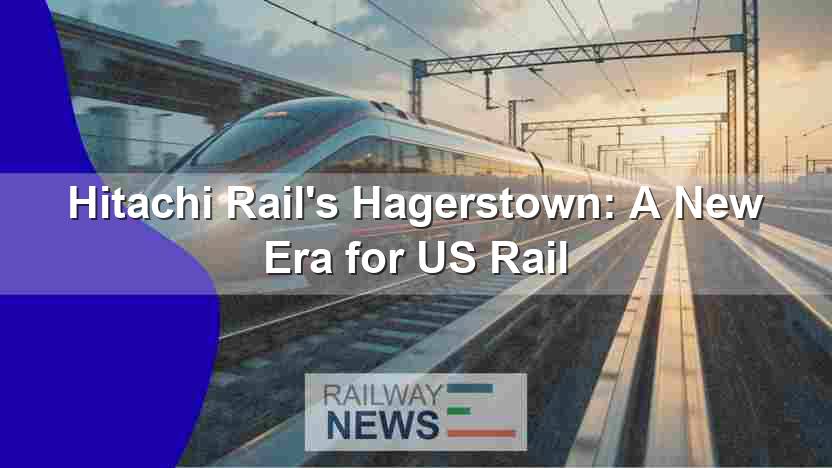
This article explores the significant development of Hitachi Rail’s new train manufacturing facility in Washington County, Maryland. The $70 million investment represents a substantial commitment to North American rail infrastructure and underscores the growing demand for modern, efficient rolling stock. This facility, scheduled for completion in the first quarter of 2024, will not only produce 256 new 8000-series railcars for the Washington Metropolitan Area Transit Authority (WMATA) (Metro), but also establish a manufacturing hub capable of supplying railcars for diverse railway systems across the continent. The project’s impact extends beyond immediate production, promising the creation of 1,300 jobs and showcasing a significant investment in American manufacturing and technological advancement in the rail sector. The construction of the facility, including an 800-yard test track, will propel technological innovation and support the future growth of the North American rail industry. The subsequent sections will delve into the details of the project, its implications, and the broader context of the North American rail market.
The Hagerstown Facility: A Manufacturing Hub for North America
Hitachi Rail’s decision to establish a major manufacturing facility in Hagerstown, Maryland, is a strategic move with far-reaching consequences. The 41-acre site will house a state-of-the-art train factory and an 800-yard test track, enabling detailed testing and quality assurance. The facility’s capacity is projected to reach 20 railcars per month in a single shift once fully operational, demonstrating a significant increase in production capabilities. The choice of Hagerstown highlights the region’s strategic location, access to skilled labor, and supportive business environment. This facility will significantly contribute to the local economy through job creation and associated economic activity, while simultaneously becoming a key player in the broader North American rail industry.
Meeting the Demand for Modern Rolling Stock
The initial contract for the production of 256 8000-series railcars for WMATA (Metro) highlights a critical need for modernizing existing fleets across North America. Many transit agencies face aging infrastructure and rolling stock, requiring significant investment in new vehicles to enhance safety, efficiency, and passenger experience. Hitachi Rail’s new facility is well-positioned to meet this demand, offering a range of train types from metro to high-speed services. This adaptability is crucial for securing long-term contracts and ensuring the facility’s sustained success in a competitive market. The inclusion of options for up to 800 additional cars in the WMATA contract further underscores this significant demand and capacity for expansion.
Economic Impact and Job Creation
The project’s economic impact extends beyond the immediate construction and operation of the facility. The creation of 1,300 jobs, including 460 direct employment opportunities at Hitachi Rail, represents a significant boost to the local and regional economies. This encompasses a diverse range of roles, from skilled manufacturing and engineering positions to support services, stimulating economic growth through increased wages and spending. The long-term sustainability of these jobs relies on continued investment in rail infrastructure and ongoing contracts with various transit agencies, demonstrating the crucial link between this manufacturing facility and the broader North American rail sector’s health.
Technological Advancement and Industry Leadership
Hitachi Rail’s investment in the Hagerstown facility showcases a commitment to technological innovation and industry leadership. The incorporation of cutting-edge manufacturing techniques and testing capabilities will ensure the production of high-quality, reliable railcars. The 800-yard test track allows for rigorous testing of the rolling stock, guaranteeing adherence to safety standards and optimal performance. This approach to technological advancement not only benefits individual transit agencies but also drives the overall advancement of rail technology in North America. The recent unveiling of the “Blues Train” at InnoTrans further emphasizes Hitachi Rail’s dedication to innovation and its ability to deliver cutting-edge rail solutions.
Conclusion
The establishment of Hitachi Rail’s new train manufacturing facility in Hagerstown represents a pivotal moment for the North American rail industry. The $70 million investment, the creation of 1,300 jobs, and the potential for significant expansion demonstrate a commitment to modernizing rail infrastructure and meeting the growing demand for efficient and safe rolling stock. The facility’s capacity to produce a wide range of trains, from metro to high-speed services, coupled with its advanced testing capabilities and emphasis on technological innovation, positions it as a key player in the future of North American rail transport. The successful completion of this project, including the timely delivery of the 256 8000-series railcars for WMATA (Metro), will not only enhance the efficiency and reliability of the Washington DC region’s transit system but will also serve as a model for future rail infrastructure development across the continent. The long-term success of this venture hinges on continued investment in rail infrastructure projects, robust collaboration between public and private sectors, and a sustained focus on technological advancement within the rail industry. The Hagerstown facility signifies a significant step forward in ensuring that North America remains at the forefront of global rail technology and that its future transportation needs are met efficiently and sustainably. This project underscores the importance of public-private partnerships in driving economic growth, creating jobs, and modernizing essential infrastructure for the benefit of communities across North America.

Railway infrastructure, rolling stock and transport technologies specialist focused on global rail industry developments, high-speed rail systems, signaling technologies and freight transportation. Covering railway investments, public transport modernization, rail operations and international mobility projects across Europe, Asia and North America.
RELATED POSTS

September 5, 2026 4:19 pm
CPK launched formal tender talks with four consortia to design...

September 5, 2026 7:14 pm
HS2 Ltd signed renegotiated civils contracts with EKFB and Align...

September 6, 2026 4:12 am
Alstom delivered the first of 100 new G Class trams...
September 6, 2026 8:17 am
DB InfraGO reopened the Nuremberg-Regensburg line in Bavaria on 31...
September 5, 2026 6:17 pm
Universal Signalling won a deal to install its U-Cross system...
September 6, 2026 12:20 pm
Indian Railways ordered a probe after a fire destroyed 2...