
ATO Revolutionizes Rail: Knorr-Bremse & Thales Partner
The collaboration between Knorr-Bremse and Thales to develop Automatic Train Operation (ATO) solutions for the digital freight train (DFT) aims to address key challenges in the rail industry, including staff shortages, operational inefficiencies, and environmental impact through enhanced automation, efficiency improvements, and sustainable practices.
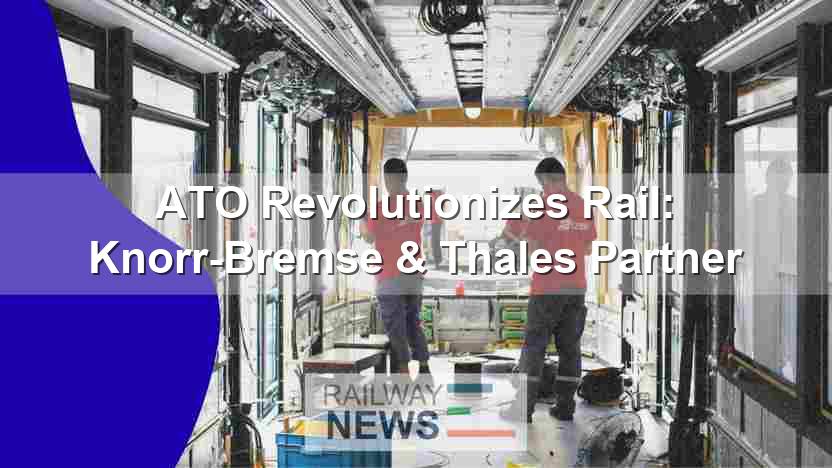
The global railway industry is undergoing a significant transformation driven by the increasing demand for higher efficiency, improved safety, and enhanced sustainability. This evolution is heavily reliant on the integration of advanced technologies, particularly in the realm of train automation. This article explores the recent partnership between Knorr-Bremse, a leading supplier of braking systems and other critical train components, and Thales, a major player in signaling and transportation systems, to develop Automatic Train Operation (ATO) solutions for freight and passenger trains. The collaboration focuses on creating a more efficient and sustainable railway system through the implementation of automated features for the digital freight train (DFT), addressing key challenges such as staff shortages, improving operational efficiency, and reducing environmental impact. We will explore the technical aspects of ATO implementation, its potential benefits, and the broader implications for the future of rail transportation.
ATO Implementation in Freight and Passenger Operations
Automatic Train Operation (ATO) systems represent a crucial step towards the fully autonomous operation of trains. By automating various aspects of train control, ATO offers significant advantages in terms of efficiency, safety, and punctuality. The system utilizes a sophisticated combination of onboard sensors, communication systems, and trackside infrastructure to precisely manage train speed, braking, and acceleration. These systems are designed to optimize train performance based on real-time data analysis, including track characteristics (gradients, curves), topography, environmental conditions (e.g., weather), and train-specific parameters (e.g., load, passenger occupancy). This data-driven approach allows for the creation of optimized driving strategies, leading to improved fuel efficiency, reduced wear and tear on components, and ultimately, cost savings for railway operators. The integration of ATO requires a seamless collaboration between onboard train systems and the centralized train control systems. This involves the careful selection and implementation of communication protocols and data exchange standards to ensure smooth and reliable operation.
Addressing Staff Shortages and Operational Efficiency
The rail freight industry, in particular, faces significant challenges regarding staff shortages, particularly skilled train drivers. ATO can help mitigate this issue by automating routine tasks, reducing the workload on existing personnel, and making the operation more attractive to potential employees. By automating many aspects of train operation, ATO allows existing drivers to focus on monitoring and managing the overall system, enhancing situational awareness and improving response time to potential issues. This increases operational efficiency, ensuring that trains run on schedule and maximize capacity utilization. Improved scheduling capabilities provided by ATO further contribute to enhanced productivity, reducing delays caused by human error and optimizing the use of rolling stock.
Environmental Sustainability and Energy Savings
ATO contributes significantly towards environmental sustainability goals by optimizing energy consumption. Through precise control of train speed and acceleration, ATO minimizes energy waste, leading to a reduction in fuel consumption and greenhouse gas emissions. The optimized driving profiles generated by ATO can significantly reduce the energy required to transport goods or passengers, leading to considerable cost savings and environmental benefits. Combined with the adoption of electric locomotives, the implementation of ATO systems represents a substantial step toward creating a more environmentally friendly railway system. The potential for reducing fuel consumption and lowering operational costs strongly aligns with the industry’s drive towards achieving greater sustainability.
The Knorr-Bremse and Thales Partnership
The collaboration between Knorr-Bremse and Thales leverages the combined expertise of both companies to create a detailed ATO solution. Knorr-Bremse brings its extensive knowledge of braking systems and other critical train components, while Thales contributes its expertise in signaling, communications, and train control systems. This partnership represents a significant step in accelerating the development and implementation of ATO in the railway industry. Their combined capabilities allow for the creation of a unified and highly reliable system that addresses the diverse needs of both freight and passenger rail operations. The strategic nature of this partnership underscores the growing importance of automated train operation in shaping the future of rail transportation.
Conclusion
The implementation of Automatic Train Operation (ATO) systems offers substantial benefits to the railway industry. This technology addresses critical challenges, including staff shortages and environmental concerns, while improving operational efficiency, safety, and punctuality. The partnership between Knorr-Bremse and Thales represents a significant advancement in the development and deployment of ATO, combining leading expertise in train systems and signaling technologies. The potential for optimizing train performance, reducing fuel consumption, and enhancing overall operational efficiency highlights the significant impact of ATO on the future of rail transportation. As ATO technology matures and becomes more widely adopted, we can expect to see further advancements in train automation, leading to a more efficient, sustainable, and safe railway system for both freight and passenger operations. The move towards autonomous driving in the rail sector, while still a work in progress, is becoming increasingly feasible and economically viable, thanks to strategic partnerships like this one. This collaboration not only accelerates the development of vital technologies but also underscores the significant industry-wide commitment towards innovation and sustainability within the rail sector. Continued investment in research and development will be crucial in overcoming the remaining challenges and fully realizing the potential of ATO in revolutionizing rail transportation globally.

Railway infrastructure, rolling stock and transport technologies specialist focused on global rail industry developments, high-speed rail systems, signaling technologies and freight transportation. Covering railway investments, public transport modernization, rail operations and international mobility projects across Europe, Asia and North America.
RELATED POSTS

September 5, 2026 4:19 pm
CPK launched formal tender talks with four consortia to design...

September 5, 2026 7:14 pm
HS2 Ltd signed renegotiated civils contracts with EKFB and Align...

September 6, 2026 4:12 am
Alstom delivered the first of 100 new G Class trams...
September 6, 2026 8:17 am
DB InfraGO reopened the Nuremberg-Regensburg line in Bavaria on 31...
September 5, 2026 6:17 pm
Universal Signalling won a deal to install its U-Cross system...
September 6, 2026 12:20 pm
Indian Railways ordered a probe after a fire destroyed 2...