
Foynes-Limerick Rail Line Revitalization: €104M Investment
The €104 million revitalization project by Iarnród Éireann on the Foynes-Limerick rail line represents a substantial investment in Irish rail infrastructure, focusing on track rehabilitation, infrastructure upgrades, and signaling improvements to enhance freight transport sustainability.
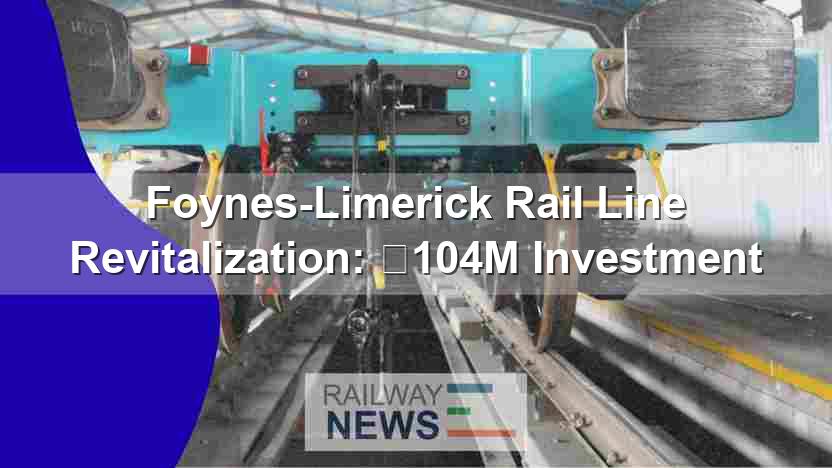
This article examines the significant €104 million revitalization project undertaken by Iarnród Éireann (Irish Rail) on the Foynes-Limerick rail line. The project, encompassing a detailed overhaul of the 42km track, represents a substantial investment in Irish rail infrastructure and underscores the commitment to shifting freight transport towards more sustainable, rail-based solutions. The project’s scope extends beyond mere track replacement, encompassing the upgrading of associated infrastructure such as bridges, culverts, level crossings, and signaling systems. This detailed analysis will explore the phased implementation of the project, the engineering challenges involved, and the broader economic and environmental implications of restoring this historically significant line to operational capacity. We will delve into the specific phases of the project, the technical considerations, and the long-term benefits for the regions served by the line, focusing on the shift toward sustainable freight transportation and its contribution to Ireland’s overall transportation strategy.
Track Rehabilitation and Infrastructure Upgrades
The initial phase of the project, estimated at €64 million and slated for completion within two years, focuses on the core railway infrastructure. This involves the complete removal of the existing, deteriorated track and its replacement with new rail, sleepers (cross-ties), and ballast. This is a crucial step, ensuring the structural integrity and operational efficiency of the line. Concurrently, significant upgrades to road infrastructure at level crossings are being implemented to enhance safety and improve traffic flow. Additionally, the project includes the rehabilitation of bridges and culverts, ensuring their structural soundness and load-bearing capacity, as well as the renewal of lineside fencing for safety and security.
Signaling and Communication Systems
Phase two of the project will focus on the installation of modern signaling systems, crucial for safe and efficient train operations. This will include the implementation of a detailed automated signaling system, enhancing capacity and reducing the risk of human error. The installation of CCTV (Closed-Circuit Television) cameras at level crossings will improve safety and monitoring capabilities. Additionally, the project will upgrade train communication systems, ensuring reliable and efficient communication between trains and control centers, a vital component of modern railway operations. The integration of these advanced systems aims to transform the line into a modern, safe, and efficient rail corridor.
Yard Upgrades and Track Connections
The project’s scope extends beyond the main line itself, encompassing significant upgrades to the Limerick and Foynes rail yards. These upgrades are essential for efficient train handling, including shunting (the process of moving rail cars within yards), and the smooth flow of freight traffic. Additionally, the project will address track connections, ensuring seamless integration with the broader Irish Rail network. These improvements are key to optimizing the line’s operational efficiency and maximizing its potential for freight transport. The improved infrastructure will improve connectivity, reduce congestion, and increase the capacity of the rail yards.
Economic and Environmental Impact: A Shift Towards Sustainable Freight
The restoration of the Foynes-Limerick rail line is more than just a railway project; it represents a strategic investment in sustainable transportation. By providing a viable alternative to road freight, the project aims to significantly reduce the carbon footprint of goods transportation in the region. This shift towards rail freight offers substantial environmental benefits, reducing greenhouse gas emissions and improving air quality. Additionally, the project is expected to create significant economic opportunities, supporting local jobs during construction and creating new business opportunities along the line through increased accessibility and improved logistics. The revitalization also offers a boost to local economies by facilitating better transport links and opening opportunities for economic growth within the served regions of Patrickswell, Adare, Askeaton, and Foynes.
Conclusions
The €104 million investment in the Foynes-Limerick rail line by Iarnród Éireann signifies a proactive approach to modernizing Irish rail infrastructure and promoting sustainable freight transport. The project, encompassing complete track renewal, infrastructure upgrades, signaling system enhancements, and yard improvements, represents a multifaceted approach to enhancing efficiency, safety, and environmental sustainability. The phased implementation, focusing initially on track rehabilitation and later on signaling and communication systems, ensures a systematic and effective approach to this ambitious undertaking. The project’s successful completion is expected to generate significant economic benefits, creating jobs and supporting regional development. Moreover, by providing a viable alternative to road freight, it will contribute meaningfully to Ireland’s efforts to reduce its carbon footprint and transition towards a more environmentally conscious transportation sector. The long-term implications of this project are profound, not only for the regions directly served but also for Ireland’s broader commitment to sustainable transportation and economic growth. The successful completion and integration of this railway line will serve as a compelling case study for future rail infrastructure projects, demonstrating the potential for revitalizing dormant lines and leveraging rail transport for environmental and economic gains.

Railway infrastructure, rolling stock and transport technologies specialist focused on global rail industry developments, high-speed rail systems, signaling technologies and freight transportation. Covering railway investments, public transport modernization, rail operations and international mobility projects across Europe, Asia and North America.
BENZER KONULAR
July 1, 2026 1:37 pm
NRHS awarded $187K to 34 U.S. rail heritage projects in...
July 4, 2026 11:41 pm
Eurostar cancelled all direct London–Amsterdam trains through July 2 after...
July 4, 2026 11:02 pm
Eurostar suspends all direct London–Dutch trains through 2 July after...
July 1, 2026 4:22 pm
Správa železnic opened a €60M multimodal hub at Jihlava město...
July 7, 2026 12:01 am
Hitachi Rail completed the acquisition of Clever Devices, a U.S....
July 16, 2026 7:04 am
Network Rail will deliver only 83% of planned renewals in...