
Siemens’ $3.2B Deal: Revolutionizing Indian Freight
Siemens India’s $3.2 billion contract with Indian Railways includes the manufacture and maintenance of 1,200 high-horsepower electric freight locomotives, marking a significant leap in modernizing India’s railway infrastructure and setting new benchmarks for public-private partnerships in the rail sector.
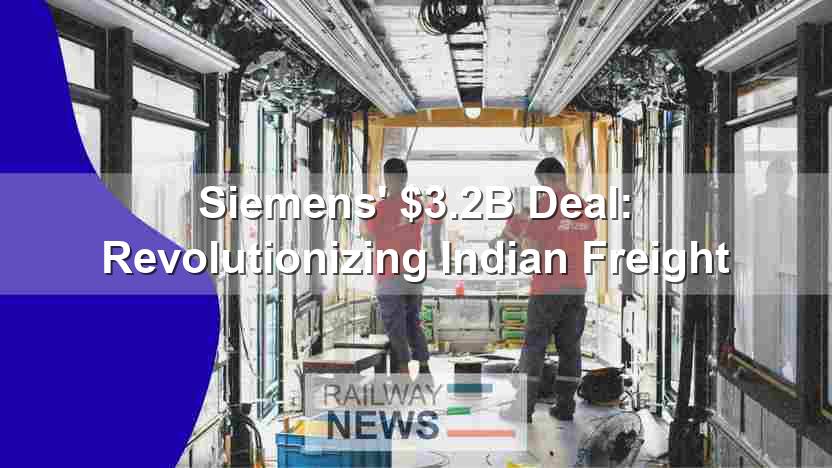
This article explores the significant implications of Siemens India’s recently awarded $3.2 billion contract with Indian Railways for the manufacturing and maintenance of 1,200 high-horsepower (9000 HP) electric freight locomotives. This landmark agreement signifies a substantial leap forward in modernizing India’s railway infrastructure, boosting efficiency, and reducing environmental impact. The contract encompasses not only the manufacturing process, meticulously planned for execution at the Dahod facility, but also a detailed 35-year maintenance plan. This long-term commitment underscores the strategic importance of this project for both Siemens and Indian Railways, setting a new benchmark for public-private partnerships in the rail sector. The introduction of these advanced locomotives promises to drastically improve freight transportation across India’s vast rail network, enhancing operational capabilities and contributing to the country’s economic growth. We will explore the technological advancements embedded within these locomotives, the logistical challenges of their production and maintenance, and the broader strategic impact on India’s railway system.
High-Horsepower Locomotive Manufacturing and Technological Advancements
The core of this project lies in the manufacturing of 1,200 state-of-the-art 9000 HP electric freight locomotives. Siemens’ expertise in electric locomotive technology will be instrumental in achieving the project’s ambitious goals. The locomotives will utilize Insulated Gate Bipolar Transistor (IGBT) based propulsion technology, a significant advancement that offers superior energy efficiency compared to older technologies. This is further enhanced by regenerative braking, which captures kinetic energy during deceleration, converting it back into electrical energy and reducing overall energy consumption. The anticipated average speed increase from 20-25 kmph to 50-60 kmph will significantly improve freight transit times, ultimately boosting operational efficiency across the Indian Railways network. The construction of a new facility in Dahod, planned for completion within two years, is crucial for meeting the ambitious 11-year manufacturing timeline. This facility will house advanced manufacturing and assembly lines, specifically designed for the efficient production of these high-capacity locomotives.
Maintenance and Depot Infrastructure
Beyond the manufacturing aspect, the 35-year maintenance agreement represents a crucial element of the contract. Siemens will be responsible for the upkeep of the locomotives at four strategically located depots: Vishakhapatnam, Raipur, Kharagpur, and Pune. This long-term commitment ensures consistent performance and reliability of the locomotives, minimizing downtime and maximizing operational efficiency. The establishment of these maintenance depots involves significant investment in infrastructure, skilled personnel training, and the procurement of specialized equipment. This multifaceted approach will be essential for maintaining the high operational standards throughout the locomotives’ service life. Effective maintenance strategies, encompassing preventative and corrective maintenance, will be crucial for maximizing the lifespan and minimizing operational disruptions.
Strategic Impact on Indian Railways
The deployment of these high-horsepower electric locomotives is set to revolutionize freight transportation across the Indian Railways network. Their intended use on the Western Dedicated Freight Corridor (DFC) and graded sections signifies a strategic focus on optimizing high-capacity freight movement. The ability to haul 4500-tonne trains at 75 kmph on gradients of 1 in 200 is a considerable improvement over existing capabilities. This will not only enhance the efficiency of freight transport but also significantly reduce transit times and associated costs. The project also highlights the growing trend of public-private partnerships in the railway sector, leveraging the expertise and resources of private companies to upgrade and modernize national infrastructure. This strategic collaboration between Siemens and Indian Railways is expected to accelerate the modernization process, ultimately boosting the country’s economic competitiveness.
Competitive Bidding and Future Implications
Siemens India secured this contract through a competitive bidding process, signifying the company’s competitiveness and technological prowess in the global rail industry. The project’s success is dependent on the effective collaboration between Siemens, as the technology partner, and Indian Railways staff who will be trained to maintain these locomotives. The recent launch of a new rail bogie production facility in Aurangabad further demonstrates Siemens’ commitment to investing in and expanding its rail manufacturing capabilities within India. The long-term implications of this project are far-reaching. It serves as a model for future upgrades and modernization efforts in the Indian Railways, showcasing the potential for private sector participation in large-scale infrastructure projects. The successful execution of this contract will not only improve freight transport but also contribute to India’s overall economic growth and development. This initiative positions India as a leader in adopting cutting-edge rail technology, setting a precedent for other developing nations seeking to improve their transportation infrastructure.
Conclusions
The Siemens India contract for the manufacturing and maintenance of 1,200 9000 HP electric freight locomotives represents a transformative moment for Indian Railways. This $3.2 billion agreement is not merely a procurement deal; it’s a strategic partnership focused on modernizing freight transport infrastructure and bolstering India’s economic competitiveness. The introduction of IGBT-based propulsion technology with regenerative braking signifies a significant leap in energy efficiency, reducing operational costs and environmental impact. The ambitious 11-year manufacturing timeline and the 35-year maintenance agreement showcase a long-term vision for sustainable rail operations. The strategic location of maintenance depots across the country underscores the commitment to ensuring consistent locomotive performance and minimizing downtime. The project’s success hinges on effective collaboration between Siemens and Indian Railways personnel, necessitating detailed training programs and a robust knowledge transfer framework. The successful execution of this project will demonstrably improve freight transport efficiency, reduce transit times, and enhance India’s capacity to handle increasing freight volumes. Beyond the immediate impact, the project serves as a compelling model for future public-private partnerships in the rail sector, showcasing the potential for private sector participation in large-scale infrastructure development. This landmark agreement positions India at the forefront of technological advancement in the rail industry, setting a precedent for modernization and sustainable growth within its vast and crucial rail network.

Railway infrastructure, rolling stock and transport technologies specialist focused on global rail industry developments, high-speed rail systems, signaling technologies and freight transportation. Covering railway investments, public transport modernization, rail operations and international mobility projects across Europe, Asia and North America.
RELATED POSTS

October 8, 2026 1:15 pm
Alstom secured a €1bn contract to build 13 automated trains,...

October 1, 2026 7:09 am
United States regulators confirmed a September 30 deadline for the...

October 8, 2026 12:18 pm
Siemens Mobility signed an agreement with VinSpeed to supply 350...

October 4, 2026 5:14 pm
Alstom secured a CA$4.7 billion order from VIA Rail Canada...

October 5, 2026 6:12 pm
AECOM and Jacobs secured a contract in September 2026 to...

October 4, 2026 11:08 pm
Sound Transit confirmed the September 30 opening of Seattle Pinehurst...