
Singapore’s JRL: AI-Powered Rail Revolution
SOR’s nine-year contract for the operation and maintenance of Singapore’s new Jurong Region Line (JRL) is a testament to technological innovation, operational efficiency, and advanced customer-centric strategies in modern public transportation systems, signaling significant investments in rail infrastructure while enhancing connectivity and service quality.
Introduction
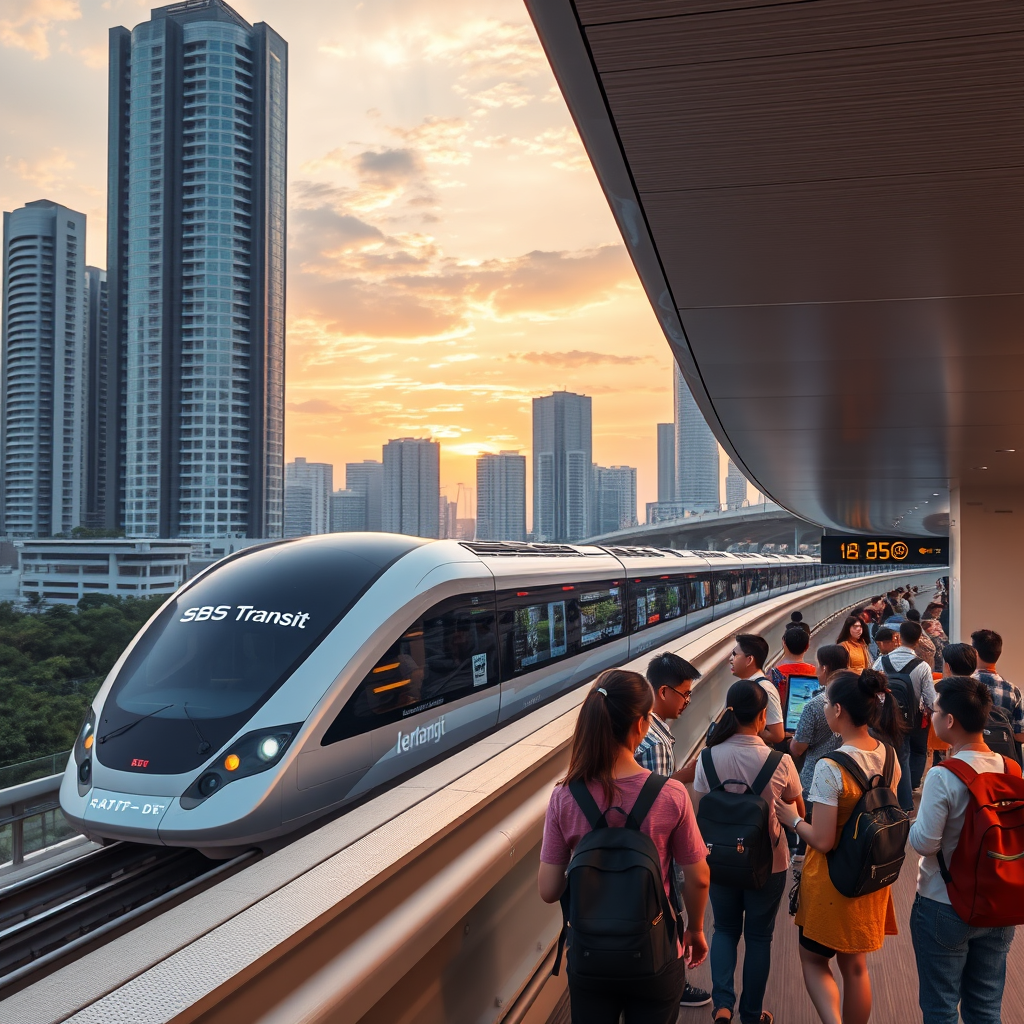
This article examines the significant contract awarded to Singapore One Rail (SOR), a joint venture between SBS Transit and RATP Dev, for the operation and maintenance of Singapore’s new Jurong Region Line (JRL). The nine-year contract, with a potential two-year extension, represents a substantial investment of $750 million and underscores the increasing importance of technological innovation and operational efficiency in modern railway systems. The JRL, a 24km fully elevated line with 24 stations and one depot, will significantly enhance connectivity in western Singapore, serving key areas such as the Jurong Industrial Estate, Jurong Innovation District, Nanyang Technological University, and the Tengah new town. This award highlights not only the financial aspects of large-scale rail projects but also the crucial role of advanced technologies and customer-centric approaches in shaping the future of public transportation. The strategic partnership between SBS Transit and RATP Dev, built on previous successful collaborations, offers a compelling case study in leveraging international expertise and technological advancements to optimize railway operations and enhance the commuter experience.
Technological Advancement and Operational Efficiency
SOR’s commitment to leveraging cutting-edge technologies is a key differentiator in their approach to JRL operation. The planned implementation of condition monitoring systems allows for proactive maintenance, minimizing disruptions and maximizing operational uptime. The integration of video and data analytics provides valuable insights into passenger flow, operational efficiency, and potential safety hazards, enabling data-driven decision-making for continuous improvement. The use of Generative AI (Artificial Intelligence) represents a significant leap forward, promising automated anomaly detection, predictive maintenance scheduling, and optimized resource allocation. These technological advancements not only enhance safety and reliability but also contribute significantly to cost optimization and improved operational efficiency. This strategic approach reflects a proactive commitment to delivering a high-quality and sustainable rail service.
Customer-Centric Approach and Innovation
Beyond technological advancements, SOR demonstrates a strong commitment to a customer-centric approach. The establishment of a Customer Experience Innovation Lab highlights their proactive engagement with commuters. By actively involving commuters in the co-development and testing of new technologies, SOR fosters a collaborative environment and ensures that innovations directly address the needs and expectations of the public. The lab’s focus on local talent development, through initiatives such as design workshops and hackathons, demonstrates a commitment to fostering innovation within the local community and addressing transportation challenges creatively. This approach goes beyond simple service provision, emphasizing a partnership with the community to create a truly optimized and responsive public transportation system.
Strategic Partnerships and International Collaboration
The partnership between SBS Transit and RATP Dev (Régie Autonome des Transports Parisiens) exemplifies the benefits of strategic alliances in the rail industry. This collaboration leverages the expertise and experience of two leading operators, combining local market knowledge with international best practices. RATP Dev’s involvement brings a wealth of experience from managing complex rail systems globally, while SBS Transit provides invaluable local expertise and understanding of the Singaporean market. This successful collaboration, evidenced by their joint work on Line 15 of the Grand Paris Express, underscores the potential for such partnerships to drive innovation and efficiency in public transportation. The JRL contract highlights the increasing importance of international collaboration in achieving ambitious infrastructure projects.
Cybersecurity and System Reliability
The decision by SBS Transit to utilize Cervello’s AI-driven cybersecurity solutions underscores the critical importance of robust security measures in modern rail systems. Protecting sensitive data and ensuring the integrity of operational systems is paramount to maintaining reliable service and safeguarding commuter safety. The integration of AI-powered cybersecurity enhances both system resilience and the overall commuter experience by reducing the risk of disruptions and data breaches. This proactive approach demonstrates a commitment to not only technological advancement but also to building a secure and reliable public transportation infrastructure.
Conclusions
The awarding of the Jurong Region Line (JRL) operating contract to Singapore One Rail (SOR) marks a significant milestone in Singapore’s public transportation development. The $750 million contract represents a substantial investment, showcasing the commitment to enhance connectivity in western Singapore and providing a modern, efficient, and reliable rail service. SOR’s strategy centers on leveraging technological advancements, including condition monitoring, video and data analytics, and Generative AI, to optimize operations and enhance safety. This proactive approach to maintenance and system management is crucial for minimizing disruptions and maximizing efficiency. Additionally, SOR’s commitment to a customer-centric approach, demonstrated by the establishment of the Customer Experience Innovation Lab, underscores a dedication to continuous improvement and community engagement. The successful collaboration between SBS Transit and RATP Dev exemplifies the power of strategic partnerships, combining local expertise with international best practices. Finally, the prioritization of cybersecurity, implemented through AI-driven solutions, emphasizes the importance of robust security measures in maintaining a reliable and safe rail system. To summarize, the JRL project serves as a compelling case study illustrating the future of rail operations, highlighting the crucial interplay of technological innovation, operational efficiency, customer-centric design, and robust cybersecurity measures in creating a world-class public transportation system.

Railway infrastructure, rolling stock and transport technologies specialist focused on global rail industry developments, high-speed rail systems, signaling technologies and freight transportation. Covering railway investments, public transport modernization, rail operations and international mobility projects across Europe, Asia and North America.
RELATED POSTS

September 5, 2026 4:19 pm
CPK launched formal tender talks with four consortia to design...

September 5, 2026 7:14 pm
HS2 Ltd signed renegotiated civils contracts with EKFB and Align...

September 6, 2026 4:12 am
Alstom delivered the first of 100 new G Class trams...
September 6, 2026 8:17 am
DB InfraGO reopened the Nuremberg-Regensburg line in Bavaria on 31...
September 5, 2026 6:17 pm
Universal Signalling won a deal to install its U-Cross system...
September 6, 2026 12:20 pm
Indian Railways ordered a probe after a fire destroyed 2...