
Amtrak’s $8B Rail Revolution: NEC & Beyond
Amtrak seeks nearly $8 billion in federal funding to modernize its infrastructure and expand services along the Northeast Corridor, promising improved safety, efficiency, and accessibility for millions of passengers.
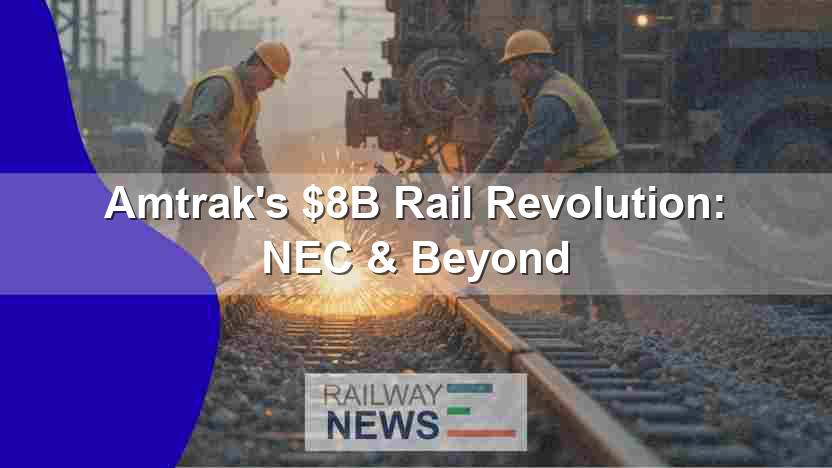
This article explores Amtrak’s ambitious application for nearly $8 billion in federal funding to revitalize its infrastructure and expand services across the United States. The application, submitted to the Federal Railroad Administration (FRA), encompasses a wide range of projects aimed at modernizing the Northeast Corridor (NEC) and enhancing long-distance rail reliability. This substantial investment, if approved, represents a generational shift in American passenger rail, promising improved safety, efficiency, and accessibility for millions of passengers. We will delve into the specifics of Amtrak’s proposals, analyzing the significance of these investments for the future of passenger rail in the US, the potential economic impact, and the challenges that lie ahead in securing and implementing this ambitious undertaking. The analysis will consider the various projects involved, the political landscape surrounding funding, and the long-term implications for sustainable transportation solutions.
Northeast Corridor Modernization
The lion’s share of Amtrak’s funding request, approximately $7.3 billion, is earmarked for 14 major projects along the heavily trafficked Northeast Corridor. These projects are crucial for addressing the aging infrastructure, enhancing capacity, and improving the overall passenger experience. Key initiatives include the replacement of several aging bridges, such as the Connecticut River Bridge, the Gunpowder River Bridge, and the Pelham Bay Bridge. These structures are critical components of the NEC, and their replacement is essential for ensuring safety and operational reliability. Additionally, significant investment is proposed for expanding the capacity of key stations, including the crucial New York Penn Station, which serves as a vital transportation hub for the entire region. This expansion will significantly improve passenger flow and alleviate congestion, benefiting millions of commuters daily. Finally, the replacement of the nearly 150-year-old Baltimore-Potomac Tunnel with the new Frederick Douglass Tunnel is a centerpiece of this modernization effort, significantly enhancing safety and capacity.
Enhancing Long-Distance Rail Service
Beyond the NEC improvements, Amtrak’s application includes $716 million for 16 projects aimed at boosting the reliability and frequency of long-distance routes. This investment will directly benefit communities across the country, many of which rely heavily on Amtrak for transportation and economic connectivity. Specific projects involve upgrading rail lines and enhancing service on routes like the Empire Builder (serving the Northwest), the Cardinal (Midwest to Southeast), and the Sunset Limited (Southwestern US). Increasing the frequency of these services, potentially from three to daily runs, is crucial for enhancing the viability of rail travel as a competitive transportation option, connecting rural and urban communities. This represents a significant commitment to addressing transportation needs outside major metropolitan areas, improving access to opportunities and bolstering regional economies.
Strategic Partnerships and Political Support
Amtrak’s funding application demonstrates a proactive approach to securing critical infrastructure investments. The collaboration with the Southern Rail Commission, as evidenced by the proposed intercity rail study connecting New York City, Atlanta, and Dallas, showcases a commitment to building regional partnerships for long-term strategic planning. Additionally, the strong support from Senator Chuck Schumer, the Senate Majority Leader, underscores the political momentum behind these modernization initiatives. This bipartisan support is crucial for ensuring the successful passage of the funding requests and demonstrates a broad recognition of the significance of Amtrak’s role in national transportation and economic development.
The Significance of Generational Investment
Amtrak’s $8 billion funding request is not just about repairing or replacing aging infrastructure; it signifies a larger investment in the future of passenger rail in the United States. The proposed projects represent a detailed strategy to address longstanding challenges, improve safety, enhance capacity, and enhance the overall passenger experience. The modernization of the Northeast Corridor, the improvements to long-distance services, and the strategic partnerships reflect a commitment to building a more sustainable and efficient transportation system. The success of this application hinges not only on securing the funding but also on effective project management, efficient allocation of resources, and the ongoing commitment to collaboration among stakeholders. The potential economic benefits, in terms of job creation, improved connectivity, and regional economic growth, are substantial and far-reaching. If successful, this investment will serve as a blueprint for future rail improvements across the nation and demonstrate a renewed focus on building a detailed and efficient passenger rail network for generations to come. The positive impacts on the economy, communities, and the environment warrant a close and attentive review of this ambitious plan.

Railway infrastructure, rolling stock and transport technologies specialist focused on global rail industry developments, high-speed rail systems, signaling technologies and freight transportation. Covering railway investments, public transport modernization, rail operations and international mobility projects across Europe, Asia and North America.
RELATED POSTS

September 5, 2026 4:19 pm
CPK launched formal tender talks with four consortia to design...

September 5, 2026 7:14 pm
HS2 Ltd signed renegotiated civils contracts with EKFB and Align...

September 6, 2026 4:12 am
Alstom delivered the first of 100 new G Class trams...
September 6, 2026 8:17 am
DB InfraGO reopened the Nuremberg-Regensburg line in Bavaria on 31...
September 5, 2026 6:17 pm
Universal Signalling won a deal to install its U-Cross system...
September 6, 2026 12:20 pm
Indian Railways ordered a probe after a fire destroyed 2...