
Ningdong:Worlds Most Powerful Hydrogen Locomotive
The Ningdong locomotive, developed by CRRC, is a groundbreaking hydrogen-powered train that represents a technological leap forward, offering extended operational ranges with reduced refueling times, demonstrating cost-effective energy transition for existing diesel fleets while prioritizing safety features to ensure reliable and efficient operation.
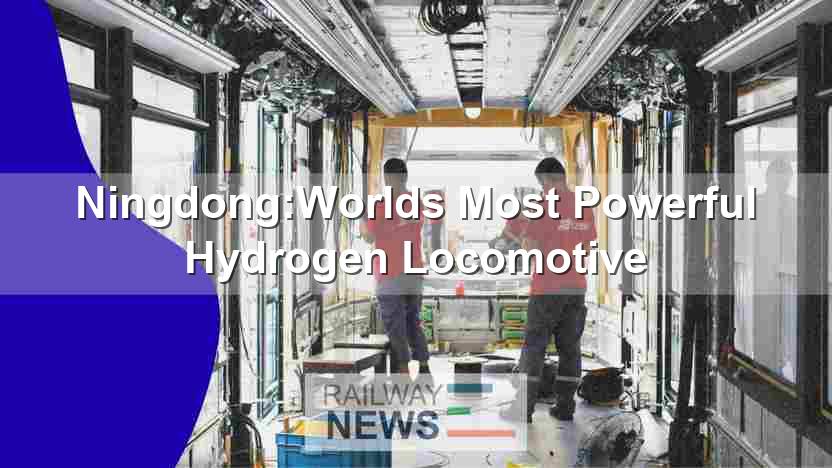
The global railway industry is undergoing a significant transformation driven by the urgent need for environmentally sustainable transportation solutions. This article explores the recent unveiling of the Ningdong, a hydrogen-powered locomotive developed by the China Railway Rolling Stock Corporation (CRRC), touted as the “world’s most powerful” of its kind. We will explore the technological advancements incorporated into this locomotive, its potential impact on the Chinese railway system, and its broader implications for the future of railway technology worldwide. The discussion will cover the locomotive’s operational capabilities, safety features, economic advantages, and the broader context of hydrogen’s role in decarbonizing the rail sector, comparing its progress with similar developments in other regions such as Europe. Ultimately, we will analyze the long-term prospects of hydrogen-powered locomotives and their potential to revolutionize railway transportation on a global scale.
The Ningdong Locomotive: A Technological Breakthrough
The CRRC’s Ningdong locomotive represents a significant leap forward in hydrogen-powered railway technology. With a 270kg liquefied hydrogen (LH2) capacity, it boasts an operational range of up to 190 hours. This extended range significantly surpasses that of previous hydrogen-powered locomotives, reducing the frequency of refueling and enhancing operational efficiency. The two-hour refueling time is also considerably efficient, minimizing downtime and maximizing operational uptime. The conversion of an existing diesel locomotive to hydrogen power demonstrates a cost-effective approach to transitioning existing fleets to cleaner energy sources.
Safety and Reliability: Engineering for a Hydrogen Future
Safety is paramount in railway operations, and the Ningdong incorporates numerous advanced safety features specifically designed for hydrogen fuel cell systems. These include intelligent monitoring systems for real-time diagnostics and predictive maintenance, ensuring early detection of potential issues. A mechanical interlock system on the fuel cell safeguards against malfunctions, and fireproof materials and a fire wall isolate the hydrogen storage from other critical components. The explosion-proof design of the fuel cells further mitigates risks. An independent ventilation system rapidly purges the hydrogen storage area, replacing the air within five minutes in the event of a leak.
Economic and Environmental Advantages: A Sustainable Solution
The economic benefits of hydrogen-powered locomotives are substantial. CRRC claims that operating costs are approximately half those of diesel locomotives, driven by the lower cost of hydrogen fuel and reduced maintenance requirements. This significant cost reduction makes hydrogen technology economically viable for large-scale deployment. From an environmental perspective, the Ningdong represents a substantial reduction in greenhouse gas emissions, contributing significantly to China’s decarbonization goals. CRRC estimates that hydrogen trains could replace up to 90% of China’s 7,800 diesel locomotives, which constitute 36% of the national fleet. This mass adoption would significantly improve air quality and reduce the railway’s carbon footprint.
Global Perspectives: Hydrogen’s Role in Decarbonizing Rail
The development of the Ningdong is not an isolated event. Other countries, particularly in Europe, are also actively pursuing hydrogen-powered railway solutions. Alstom’s Coradia iLint, for instance, is already operational in Sweden and Germany. This global trend towards hydrogen technology highlights its potential as a pivotal solution in the decarbonization of the railway industry worldwide. The differing approaches – conversion of existing locomotives versus new builds – highlight different strategies for adopting this technology. The success of these various initiatives will be crucial in determining the future prevalence and impact of hydrogen within the rail sector.
Conclusions: Paving the Way for a Hydrogen-Powered Rail Future
The CRRC’s Ningdong hydrogen locomotive represents a significant milestone in railway technology. Its impressive range, coupled with robust safety features and substantial economic advantages, makes it a compelling alternative to traditional diesel locomotives. The successful conversion of an existing diesel locomotive into a hydrogen-powered unit showcases a practical approach to a large-scale transition, leveraging existing infrastructure and minimizing initial investment costs. The focus on safety, with intelligent monitoring, mechanical interlocks, and explosion-proof designs, addresses critical concerns surrounding hydrogen fuel cell technology. The potential for substantial cost savings compared to diesel operations makes the switch economically viable, offering a clear path to sustainable railway operations. While the Ningdong’s success is primarily focused on the Chinese railway network, its implications are global. The parallel development of hydrogen-powered rail systems in Europe, like Alstom’s Coradia iLint, demonstrates the global recognition of hydrogen as a key element of decarbonizing the rail sector. The ongoing development and deployment of hydrogen-powered locomotives will be critical in achieving significant reductions in greenhouse gas emissions from the global railway network. The future of railway transportation hinges on the successful integration of innovative technologies like hydrogen power, promising a cleaner, more efficient, and sustainable future for the industry.

Railway infrastructure, rolling stock and transport technologies specialist focused on global rail industry developments, high-speed rail systems, signaling technologies and freight transportation. Covering railway investments, public transport modernization, rail operations and international mobility projects across Europe, Asia and North America.
RELATED POSTS

September 5, 2026 4:19 pm
CPK launched formal tender talks with four consortia to design...

September 5, 2026 7:14 pm
HS2 Ltd signed renegotiated civils contracts with EKFB and Align...

September 6, 2026 4:12 am
Alstom delivered the first of 100 new G Class trams...
September 6, 2026 8:17 am
DB InfraGO reopened the Nuremberg-Regensburg line in Bavaria on 31...
September 5, 2026 6:17 pm
Universal Signalling won a deal to install its U-Cross system...
September 6, 2026 12:20 pm
Indian Railways ordered a probe after a fire destroyed 2...