
KL-Singapore HSR Revival: Economic Boom or Bust?
The recent announcement by MyHSR Corp signals a renewed interest in the Kuala Lumpur-Singapore High-Speed Rail project, aiming to dramatically reduce travel time between Malaysia’s capital city and Singapore, fostering closer economic ties and improved regional connectivity.
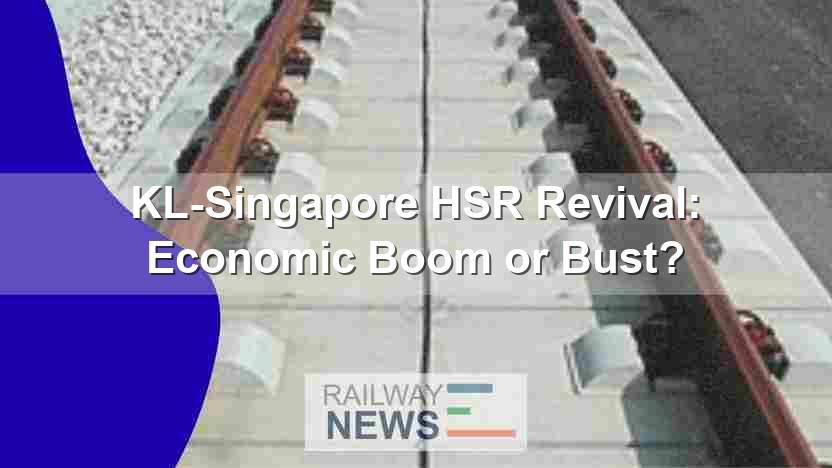
Reviving the Kuala Lumpur-Singapore High-Speed Rail (HSR) Project: A Detailed Analysis
The recent announcement by MyHSR Corp (Malaysia High-Speed Rail Corporation), the Malaysian government agency responsible for the project, signaling a renewed interest in the Kuala Lumpur-Singapore High-Speed Rail (HSR) project, marks a significant development in Southeast Asian infrastructure. This article explores the multifaceted aspects of this ambitious undertaking, examining its potential economic benefits, technological challenges, political considerations, and overall feasibility. The project, initially shelved in 2020, aims to dramatically reduce travel time between Kuala Lumpur and Singapore, fostering closer economic ties and improving regional connectivity. This revival necessitates a thorough evaluation of various factors, ranging from securing funding and selecting appropriate technology to navigating the complex political landscape and addressing potential environmental concerns. The subsequent sections will explore these key aspects in detail, offering a detailed overview of the challenges and opportunities presented by this ambitious endeavor.
Economic Viability and Regional Integration
The KL-Singapore HSR project holds immense potential for boosting economic growth in both countries. A drastically reduced travel time of 90 minutes, compared to the current 4+ hours by road, will facilitate increased cross-border trade, tourism, and investment. The project will not only enhance the economic dynamism of the Klang Valley but also extend its positive impact along the Southern Corridor of the Malaysian peninsula and beyond. Improved connectivity can lead to the creation of new business opportunities, increased labor mobility, and the development of specialized economic zones along the HSR corridor. Additionally, the project’s construction phase alone will generate numerous jobs, stimulating economic activity across various sectors. The strategic location of the HSR, linking two major economic hubs in Southeast Asia, can also attract further foreign direct investment (FDI) into the region, contributing to sustainable long-term growth.
Technological Considerations and Infrastructure Development
The successful implementation of the KL-Singapore HSR hinges on the adoption of advanced rail technologies. This includes selecting suitable high-speed trainsets, signaling systems, and track infrastructure that can withstand the demands of high-speed operation. Additionally, the integration of Intelligent Transportation Systems (ITS) is crucial for optimizing operational efficiency, enhancing safety, and improving the overall passenger experience. This would involve real-time monitoring of train operations, automated fare collection systems, and advanced passenger information systems. The project will also require significant investments in civil engineering, land acquisition, and station construction. Careful planning and meticulous execution are essential to ensure the timely completion of this complex infrastructure project. Environmental impact assessments and mitigation strategies must be incorporated from the initial planning stages to ensure the project’s sustainability.
Political and Diplomatic Cooperation
The revival of the KL-Singapore HSR project demonstrates a renewed commitment from both governments to regional cooperation. After a period of suspension, the re-opening of discussions indicates a willingness to overcome past obstacles and work towards a mutually beneficial agreement. Effective communication and collaboration between Malaysian and Singaporean authorities are paramount to navigating potential disagreements and ensuring the smooth progress of the project. Transparency in decision-making and a shared commitment to the project’s long-term success are critical factors for ensuring political stability and fostering public support.
Financial Sustainability and Risk Mitigation
The high capital cost associated with high-speed rail projects requires a robust financial strategy. Securing sufficient funding through a combination of government investment, private sector participation (PPP), and potentially international loans is crucial. A thorough risk assessment is essential, identifying potential financial risks, such as cost overruns, delays, and changes in economic conditions. Effective risk mitigation strategies, including contingency planning and robust project management, are necessary to ensure the project’s financial viability. Transparent financial management and regular audits will help to build public confidence and ensure accountability.
Conclusion
The renewed push for the Kuala Lumpur-Singapore High-Speed Rail project presents a significant opportunity for both countries to enhance their economic competitiveness and strengthen regional connectivity. The project’s success, however, depends on several critical factors. Firstly, securing adequate funding and effectively managing potential cost overruns is paramount. This requires a transparent and well-defined financial plan incorporating both public and private investment. Secondly, the seamless integration of advanced technologies, including ITS (Intelligent Transportation Systems) and efficient signaling systems, is crucial for optimizing operational efficiency and passenger safety. Thirdly, strong political will and close cooperation between the Malaysian and Singaporean governments are indispensable to overcome potential hurdles and ensure the timely completion of the project. Finally, detailed environmental impact assessments and mitigation strategies must be implemented to minimize the project’s environmental footprint. By addressing these crucial factors, the KL-Singapore HSR can become a model for high-speed rail development in Southeast Asia, driving economic growth, improving regional integration, and fostering sustainable development across the region. The potential benefits, though substantial, require careful planning, transparent execution, and a long-term commitment from all stakeholders to ensure that this ambitious project delivers on its promises.

Railway infrastructure, rolling stock and transport technologies specialist focused on global rail industry developments, high-speed rail systems, signaling technologies and freight transportation. Covering railway investments, public transport modernization, rail operations and international mobility projects across Europe, Asia and North America.
RELATED POSTS

September 5, 2026 4:19 pm
CPK launched formal tender talks with four consortia to design...

September 5, 2026 7:14 pm
HS2 Ltd signed renegotiated civils contracts with EKFB and Align...

September 6, 2026 4:12 am
Alstom delivered the first of 100 new G Class trams...
September 5, 2026 6:17 pm
Universal Signalling won a deal to install its U-Cross system...
September 6, 2026 8:17 am
DB InfraGO reopened the Nuremberg-Regensburg line in Bavaria on 31...
September 6, 2026 12:20 pm
Indian Railways ordered a probe after a fire destroyed 2...