
Italy’s High-Speed Rail: Giant TBMs Tunnel South
The Salerno-Reggio Calabria high-speed rail line project in Italy showcases advanced tunneling technology with the deployment of large diameter Tunnel Boring Machines (TBMs) like Europe’s largest, the Partenope TBM, for a 3km Saginara Tunnel and other key tunnels, aiming to modernize regional infrastructure while emphasizing technological innovation and environmental sustainability.
Introduction
This article explores the significant advancements in the construction of the Salerno-Reggio Calabria high-speed rail line in Italy, focusing specifically on the deployment of Tunnel Boring Machines (TBMs) for the excavation of several key tunnels. The project represents a substantial investment in Italy’s railway infrastructure, aiming to modernize and improve transportation capabilities across the region. We will examine the technical specifications of the TBMs employed, the logistical challenges involved in operating such large-scale machinery, and the broader context of this project within Italy’s national high-speed rail network development strategy. The discussion will also touch upon the overall project scope, highlighting the collaboration between various entities and the expected impact on regional connectivity and economic development. The use of advanced technologies like large diameter TBMs underscores a commitment to efficiency and minimizing environmental impact during construction. This project serves as a case study for large-scale infrastructure projects globally, showcasing best practices and technological innovation in tunneling methodologies.
The Partenope TBM and the Saginara Tunnel
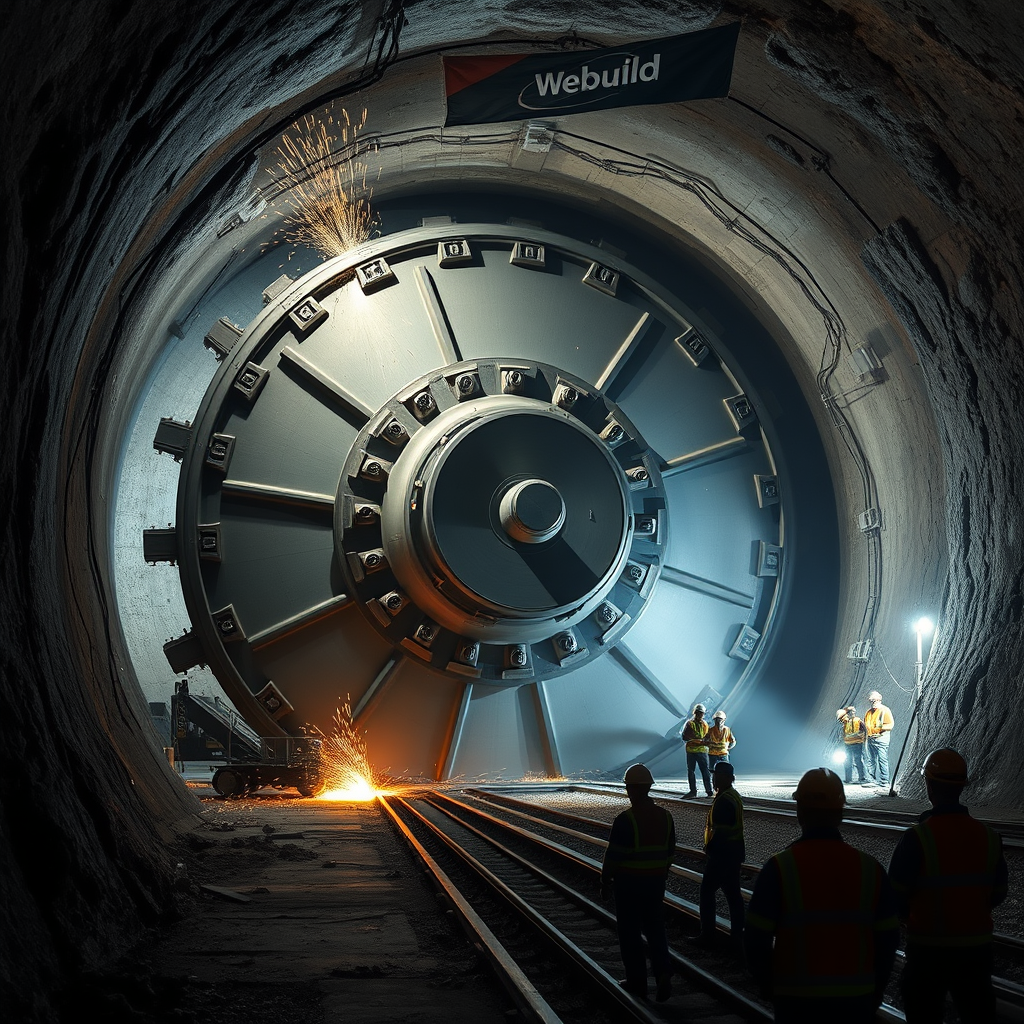
The commencement of tunneling operations on the 3km Saginara Tunnel marks a pivotal moment in the construction of the Salerno-Reggio Calabria high-speed rail line. The deployment of the Partenope TBM, Europe’s largest, signifies a commitment to efficient and technologically advanced construction methods. This 130m long, 4,000-tonne machine, boasting a cutting-head diameter of 13.6m and powered by 18 motors generating 10 MW, represents a significant investment in specialized equipment. The machine’s size and power output reflect the scale of the undertaking and the challenging geological conditions expected during excavation. The operational team of over 100 specialized technicians underscores the need for highly skilled personnel to manage and maintain such a complex machine, ensuring both safety and timely completion.
Lot 1A: Battipaglia-Romagnano Section
The Battipaglia-Romagnano section (Lot 1A), a 35km stretch encompassing 20 tunnels and 19 viaducts, is crucial to the overall project. The Xenia Consortium, led by Webuild in partnership with Pizzarotti, Ghella, and Tunnel Pro, holds the contract for this section. Four TBMs, including the Partenope, are dedicated to excavating eight tunnels within this segment. This collaborative approach highlights the complexity of such large-scale infrastructure projects and the necessity for specialized expertise across multiple disciplines. The significant financial investment in Lot 1A (€934 million, approximately $976 million for Lot 3A of a separate Trento project, indicative of the overall project cost) demonstrates the Italian government’s commitment to upgrading its national rail network.
Technological Advancements and Environmental Considerations
The utilization of advanced TBMs like the Partenope is not just about speed and efficiency; it also reflects a consideration for environmental sustainability. While large-scale construction projects inherently carry environmental impacts, the use of powerful and efficient machinery aims to minimize disruption and environmental footprint. The focus on precision engineering in the design and operation of these TBMs reduces the potential for collateral damage and waste generation. The “innovative and eco-friendly” nature of the TBMs, though not specifically detailed, implies incorporation of measures to mitigate noise and dust pollution, as well as optimized energy consumption. Additionally, the selection of these machines likely involves an assessment of their potential impact on local ecosystems and water resources.
Conclusions
The deployment of the Partenope TBM on the Salerno-Reggio Calabria high-speed rail line represents a significant milestone in Italian railway infrastructure development. This project, encompassing the ambitious Battipaglia-Romagnano section (Lot 1A), showcases a commitment to modernizing transportation networks through the strategic use of cutting-edge technology. The use of four large-diameter TBMs highlights the scale of the undertaking and the sophisticated engineering required to overcome geographical challenges. The collaborative nature of the project, involving Webuild, Rete Ferroviaria Italiana (RFI – Italian Railway infrastructure manager), and other key players, underscores the importance of a coordinated approach to delivering such complex infrastructure projects. The substantial financial investment signifies the Italian government’s long-term commitment to enhancing its national rail network. The emphasis on “eco-friendly” TBMs indicates a growing awareness of the environmental impact of large-scale construction and a commitment to minimizing it. The successful completion of this project will not only improve transportation efficiency and connectivity in Southern Italy but also serve as a valuable case study for future high-speed rail developments globally, demonstrating the potential of advanced tunneling technologies and collaborative project management. The experience gained from operating and maintaining these TBMs will provide valuable data for future similar projects, contributing to the ongoing evolution of tunneling techniques and the development of even more efficient and environmentally responsible solutions. The Salerno-Reggio Calabria high-speed line, therefore, signifies much more than just a rail project; it is a statement of intent regarding Italy’s commitment to modern infrastructure, technological innovation, and sustainable development.

Railway infrastructure, rolling stock and transport technologies specialist focused on global rail industry developments, high-speed rail systems, signaling technologies and freight transportation. Covering railway investments, public transport modernization, rail operations and international mobility projects across Europe, Asia and North America.
RELATED POSTS

October 1, 2026 7:09 am
United States regulators confirmed a September 30 deadline for the...

October 8, 2026 1:15 pm
Alstom secured a €1bn contract to build 13 automated trains,...

October 4, 2026 5:14 pm
Alstom secured a CA$4.7 billion order from VIA Rail Canada...
October 1, 2026 10:14 am
HS2 installed a 55-metre steel span in Birmingham, completing phase...

October 4, 2026 11:08 pm
Sound Transit confirmed the September 30 opening of Seattle Pinehurst...

October 5, 2026 6:12 pm
AECOM and Jacobs secured a contract in September 2026 to...