
Berlin S-Bahn: Modernization Complete, 106 New Trains
The completion of the Berlin S-Bahn fleet modernization project includes the delivery of over 100 new trains, marking a significant upgrade in capacity and efficiency for the network, aimed at enhancing public transportation options and addressing growing urban transport needs.
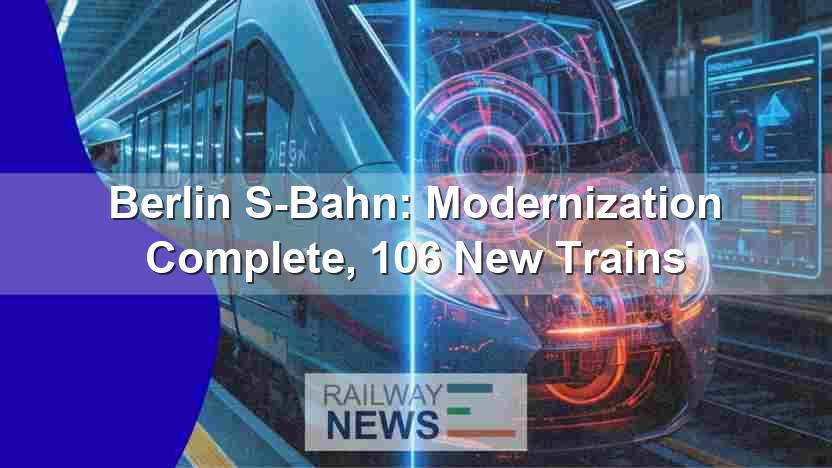
Introduction
This article explores the recent completion of the Berlin S-Bahn (S-Bahn – suburban railway) fleet modernization project, focusing on the delivery of the final Class 483/484 trains. This significant undertaking involved the introduction of over 100 new trains, representing a substantial investment in enhancing the capacity, efficiency, and passenger experience of the Berlin and Brandenburg S-Bahn network. The project’s impact extends beyond simply replacing older rolling stock; it represents a strategic move towards a more sustainable and efficient public transportation system, aimed at attracting more commuters and addressing the growing transportation needs of a major metropolitan area. We will examine the technical specifications of the new trains, the logistical challenges involved in their deployment, the financial aspects of the project, and the broader implications for urban transportation planning in Germany. This analysis will explore the multifaceted nature of this large-scale railway infrastructure update and its potential to serve as a model for other cities facing similar challenges.
The New 483/484 Fleet: Specifications and Improvements
The delivery of the final Class 483/484 train marks the culmination of a two-year rollout program. This new fleet comprises 106 trains, serving five different S-Bahn lines (S41, S42, S46, S47, and S8). The increased capacity, roughly 18,000 seats in total, directly addresses the rising passenger demand within the Berlin-Brandenburg region. Beyond sheer numbers, these trains boast significant technological advancements. The incorporation of modern, energy-efficient drive technology contributes to a more sustainable operation. Further improvements include air conditioning for enhanced passenger comfort and a state-of-the-art passenger information system, improving accessibility and the overall travel experience. The longer train lengths also contribute to improved capacity and passenger flow.
Project Financing and Governance
The substantial financial investment required for the construction of the 483/484 fleet was jointly undertaken by the regional governments of Berlin and Brandenburg. This collaborative effort underscores the importance placed on upgrading the public transportation infrastructure within the region. The project’s financing was integrated within the broader transport contract for the S-Bahn system’s Ring subnetwork, highlighting a coordinated approach to regional transportation planning and funding. This collaborative model of funding and governance offers a case study in successful public-private partnerships for large-scale infrastructure projects.
Operational Impacts and Network Expansion
The introduction of the new fleet has had a demonstrable impact on S-Bahn operations. The increased capacity on lines like the S41 and S42 (Ring lines), as well as the S46, S47, and S8, has led to improved service frequency and reliability. The expansion of the S8 line during peak hours, extending its reach from Birkenwerder to Wildau via Zeuthen, is a direct consequence of the increased rolling stock availability provided by the new trains. This expansion shows how the fleet upgrade facilitates network enhancements and better serves the commuting needs of the expanding metropolitan area.
Sustainability and Future Outlook
The modernization project extends beyond simply increasing capacity. The emphasis on energy-efficient drive technology reflects a commitment to environmentally sustainable public transportation. This aspect aligns with broader goals of reducing carbon emissions and promoting sustainable urban development. Additionally, the concurrent BR 481 longevity program, aiming to extend the lifespan of existing trains through refurbishment, highlights a holistic approach to asset management. The successful completion of the 483/484 project, coupled with the continued modernization efforts, positions the Berlin S-Bahn as a model for efficient and sustainable urban rail systems. The Siemens contract to supply 90 new trains for the Munich S-Bahn signifies the growing demand for such upgrades across major German cities and demonstrates the continuing modernization of Germany’s suburban rail systems. This trend towards improved capacity, enhanced passenger experience, and increased sustainability is expected to continue, as cities strive to meet the growing demands of their citizens and aim for more environmentally responsible modes of public transportation.
Conclusions
The delivery of the final Class 483/484 train for the Berlin S-Bahn marks a significant milestone in the modernization of the Berlin and Brandenburg region’s public transportation network. The project’s success hinges on several key factors: the collaborative funding model between Berlin and Brandenburg, the innovative design and technology of the new trains (featuring energy-efficient drives, air conditioning, and advanced passenger information systems), and the effective integration of the new fleet into existing infrastructure, enabling service expansions like the extended S8 line. The 106 new trains provide approximately 18,000 additional seats, substantially increasing capacity and addressing the region’s growing transportation needs. This project serves as an example of successful large-scale public transportation infrastructure modernization, demonstrating how strategic investment can enhance efficiency, passenger comfort, and environmental sustainability. The focus on energy efficiency, combined with the concurrent BR 481 longevity program to extend the life of older trains, highlights a detailed and sustainable approach to rail system management. The ongoing trend, as evidenced by the new Siemens contract for Munich, points towards a broader movement toward modernizing Germany’s suburban railway networks, improving urban mobility and contributing to a more environmentally conscious future.

Railway infrastructure, rolling stock and transport technologies specialist focused on global rail industry developments, high-speed rail systems, signaling technologies and freight transportation. Covering railway investments, public transport modernization, rail operations and international mobility projects across Europe, Asia and North America.
RELATED POSTS

October 8, 2026 1:15 pm
Alstom secured a €1bn contract to build 13 automated trains,...

October 1, 2026 7:09 am
United States regulators confirmed a September 30 deadline for the...

October 8, 2026 12:18 pm
Siemens Mobility signed an agreement with VinSpeed to supply 350...

October 4, 2026 5:14 pm
Alstom secured a CA$4.7 billion order from VIA Rail Canada...

October 5, 2026 6:12 pm
AECOM and Jacobs secured a contract in September 2026 to...

October 4, 2026 11:08 pm
Sound Transit confirmed the September 30 opening of Seattle Pinehurst...