
UIC 530-2: Freight Wagons’ Running Safety & Security on Twisted Tracks
UIC 530-2 (Chapter 5) establishes the critical Running Safety standards for freight wagons, focusing on “Security against Derailment” on twisted tracks. This guide details the assessment methods (Test Rig vs. Calculation), the critical Wheel Unloading limit ($\Delta Q / Q \le 0.60$), and the torsional stiffness requirements for both bogie and 2-axle wagons.
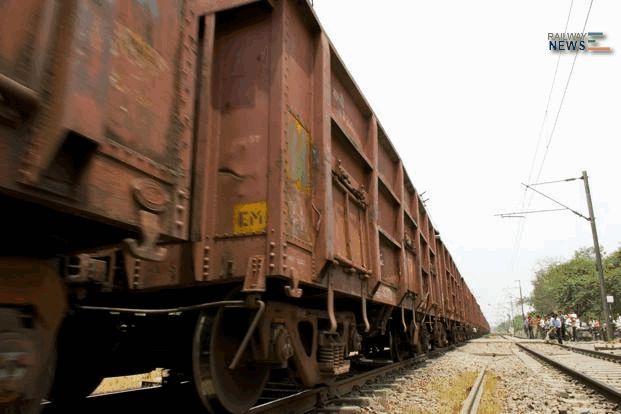
UIC 530-2 Chapter 5 defines the mandatory running safety requirements for freight wagons, specifically focusing on the risk of derailment due to track twist. When a wagon with a rigid chassis encounters a track irregularity (where one rail is lower than the other), it acts like a wobbly table: three wheels may touch the rail while the fourth attempts to lift off.
This chapter establishes the calculation methods and bench tests required to prove that a wagon has sufficient Torsional Flexibility to keep its wheels on the rail even under the worst track conditions allowed by infrastructure managers.
1. Security Against Derailment on Twisted Track
The core acceptance criterion is the Wheel Unloading Ratio ($\Delta Q / Q$). The standard mandates that even when the track is twisted (simulated twist values $g_{lim}$), the wheel load on the outer rail must not drop below a critical safety margin. The assessment can be performed via three methods:
- Method 1 (Physical Test): The wagon is placed on a test rig that physically lowers one wheelset to simulate twist.
- Method 2 (Calculation): Used for standard bogie wagons (like Y25). It uses mathematical models to predict stiffness based on the chassis design.
- Method 3 (On-Track Test): Dynamic testing using instrumented wheelsets on a specific test track with calibrated defects.
2. Critical Limit Values
For a wagon to be homologated for international traffic (RIV/TEN), it must respect the following limit values during the static twist test. If the wheel lifts too much, the flange can climb the railhead.Parameter Symbol Limit Criteria Wheel Unloading $\Delta Q / Q_0$ Must be ≤ 0.60 (60%). Meaning at least 40% of the nominal load must remain on the wheel. Twist Value $g_{lim}$ Typically 3‰ to 7‰ depending on the wheelbase ($2a*$) and buffer overlap. Chassis Stiffness $c_t^*$ Torsional stiffness coefficient must be low enough to absorb track irregularities.
3. Impact of Running Gear (Bogies vs. 2-Axle)
The standard differentiates between vehicle types. Two-axle wagons are notoriously stiffer and more prone to derailment on twisted tracks, often requiring softer suspension springs or “floating” axle guards. Bogie wagons (like Y25) generally have better twist compensation due to the primary suspension of the bogie itself acting independently of the car body.
4. Safety Under Braking (Longitudinal Force)
Running safety is not just about vertical twist; it is also about horizontal stability. UIC 530-2 also considers the risk of a light wagon being “squeezed” off the track by heavy wagons during emergency braking. This requires verifying the coupler overlap and buffer stability to prevent the wagon from jacking pipes or overriding buffers.

Railway infrastructure, rolling stock and transport technologies specialist focused on global rail industry developments, high-speed rail systems, signaling technologies and freight transportation. Covering railway investments, public transport modernization, rail operations and international mobility projects across Europe, Asia and North America.