
EN 45545: Railway Fire Safety Standard & Hazard Levels (HL1, HL2, HL3)
EN 45545 is the harmonized European Standard for railway fire protection. This guide explains the classification of Hazard Levels (HL1, HL2, HL3) based on Operation Categories (tunnels/open track), detailing the critical material testing metrics such as Heat Release Rate (MARHE), Smoke Density (Ds), and Toxicity (CIT) required for homologation.
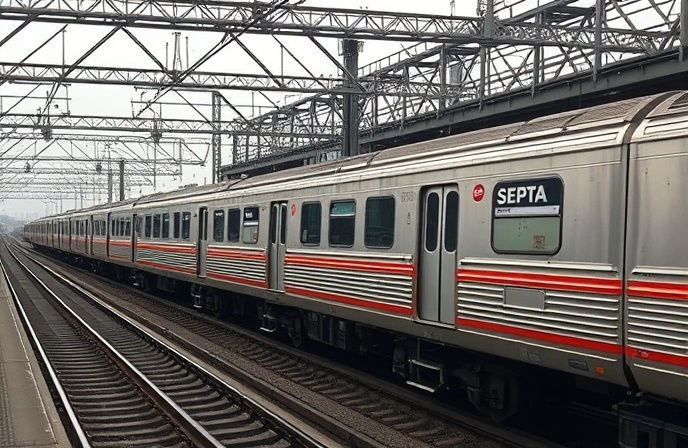
EN 45545 is the unified European Standard for fire protection on railway vehicles. It supersedes older national standards (such as BS 6853, DIN 5510, and NF F 16-101), creating a single regulatory framework for material safety.
The core objective of EN 45545 (specifically Part 2: Requirements for fire behavior of materials and components) is to limit fire development and ensure passengers have sufficient time to evacuate before conditions become survivable. It classifies trains not by “Country” but by “Risk Profile”.
1. Hazard Levels (HL): Calculating the Risk
A tram in a city center has a different risk profile than a sleeper train in an Alpine tunnel. EN 45545 determines the Hazard Level (HL1 to HL3) based on the intersection of the Operation Category (OC) and the Design Category.
- HL1 (Low Risk): Trams or Metros operating on open tracks with easy evacuation.
- HL2 (Medium Risk): Most standard regional and intercity trains (Tunnels < 5km).
- HL3 (High Risk): The strictest category. Required for Sleeper Trains, or trains operating in long tunnels (> 5km) where immediate side evacuation is impossible.
2. Classification Matrix
To determine which material you can use, you must first know the vehicle’s classification. HL3 materials are significantly harder to engineer and more expensive due to low-smoke/toxicity requirements.Operation Category Description Standard Vehicle (Double Decker) Sleeper / Couchette Car OC 1 Open Track / Minimal Tunnels HL 1 HL 2 OC 2 Tunnels up to 5 km HL 2 (Industry Standard) HL 2 / HL 3 OC 3 / OC 4 Long Tunnels (> 5 km) HL 3 (Strict) HL 3 (Strict)
3. Requirement Sets (R1 to R26)
Not all materials are tested the same way. A ceiling panel (where heat rises) is tested differently than a floor covering. EN 45545-2 assigns Requirement Sets (R) to specific component groups:
- R1: Large Surface Areas (Walls, Ceilings, Windows).
- R6: Passenger Seats (Vandalism and flammability).
- R10: Flooring Materials.
- R15/R16: Cables (Interior/Exterior).
4. Critical Test Metrics
Passing an EN 45545 test involves meeting strict thresholds in three key areas:
- Flame Spread (CFE): How fast the fire travels across the material.
- Heat Release (MARHE): Maximum Average Rate of Heat Emission. This determines if the material will contribute to a “Flashover” (sudden ignition of the whole cabin). HL3 typically requires MARHE < 60 kW/m².
- Smoke & Toxicity (Ds & CIT): Optical density of smoke (visibility) and the Conventional Index of Toxicity (cyanide/CO levels).

Railway infrastructure, rolling stock and transport technologies specialist focused on global rail industry developments, high-speed rail systems, signaling technologies and freight transportation. Covering railway investments, public transport modernization, rail operations and international mobility projects across Europe, Asia and North America.
COMMENTS