
WSDOT Launches $55.2M Cascadia High-Speed Rail Study
WSDOT launched a $55.2 million study for the Cascadia high-speed rail line connecting Vancouver, Seattle, and Portland to draft a formal service plan by 2028.
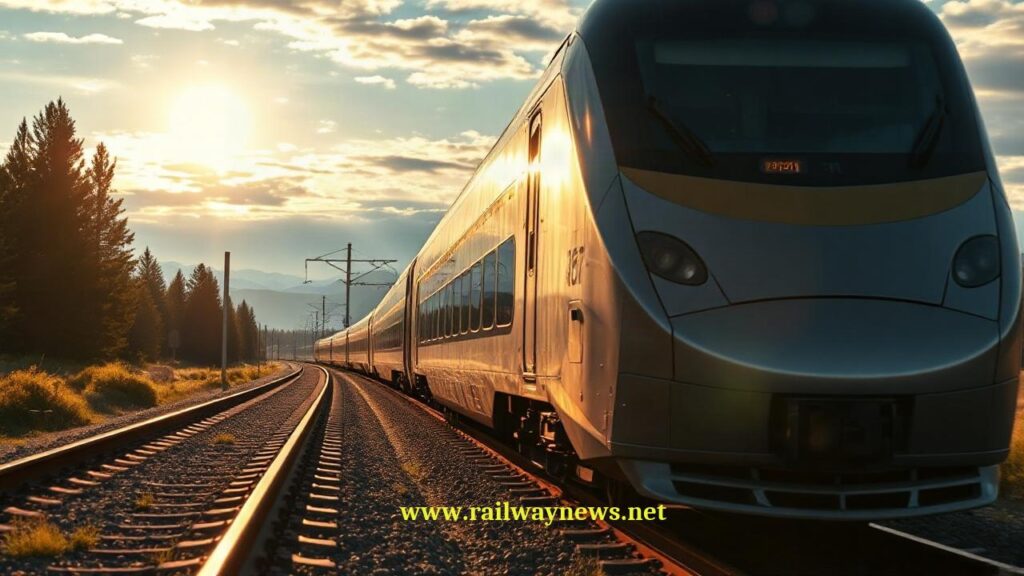
⚡ In Brief: The Washington State Department of Transportation has launched public consultation to draft a Service Development Plan for the Cascadia high-speed rail corridor linking Vancouver, Seattle, and Portland, supported by $55.2 million in combined federal and state planning funds.
OLYMPIA, UNITED STATES – The Washington State Department of Transportation (WSDOT) initiated public consultation in early 2025 to develop a formal Service Development Plan (SDP) for an interstate high-speed rail corridor connecting British Columbia, Washington, and Oregon. Backed by a $49.7 million Federal Railroad Administration grant and $5.5 million in state funds awarded in 2024, the study addresses regional travel demand across a cross-border megaregion projected to add 3.4 million residents by 2050. The resulting roadmap will outline alignment alternatives, governance frameworks, and financing strategies ahead of a final completion deadline in 2028.
What Is the Full Scope of This Project?
The Cascadia high-speed rail project encompasses the preliminary engineering, route selection, and business-case analysis for a dedicated electrified railway connecting Vancouver, British Columbia, to Portland, Oregon, via Seattle.
The Service Development Plan serves as Phase 1 under the Federal Railroad Administration’s Corridor Identification and Development Program, establishing route profiles, station locations, service frequencies, and ridership models across international and state borders. WSDOT is coordinating the rail analysis directly with parallel expansion and preservation studies for the Interstate 5 highway corridor to assess multimodal trade-offs. The total capital expenditure required to design and build the ultimate operational line has not been finalized, but initial planning is fully funded through $55.2 million in joint public allocations.
Key Project Data
| Parameter | Value |
|---|---|
| Project / Contract Name | Cascadia High-Speed Rail Service Development Plan (SDP) |
| Total Value | $55.2 million (Planning Phase: $49.7M FRA grant + $5.5M state match); total line construction cost not disclosed |
| Parties Involved | Washington State Department of Transportation (WSDOT), Federal Railroad Administration (FRA), Oregon Department of Transportation, Province of British Columbia |
| Timeline / Completion | Service Development Plan finalization targeted for 2028; full revenue service target date not disclosed |
| Country / Corridor | United States & Canada / Pacific Northwest (Vancouver, BC – Seattle, WA – Portland, OR) |
How Does This Compare to Similar Projects?
Cascadia’s 2028 timeline for basic planning completion highlights the extended preparation cycles characteristic of United States high-speed rail proposals relative to other passenger rail investments underway across North America.
While Cascadia remains in early alignment assessment, national intercity operator Amtrak has already advanced capital upgrades to the physical delivery stage, preparing construction awards for major maintenance and yard modernisations in Boston, New York City, and Washington, D.C., in early FY25 (Source: Amtrak, 2024). Commuter and intercity rail networks elsewhere in the United States demonstrate immediate passenger volume expansion, with Florida’s Tri-Rail surpassing 4.5 million passenger journeys in 2025 (Source: Rail Market, 2025). On regional legacy networks, procurement cycles are moving faster: the Massachusetts Bay Transportation Authority (MBTA) expects to complete competitive dialogue and select a preferred delivery partner for network regional rail procurement by the close of 2026 (Source: Rail Market, 2025). Internationally, large-scale rail investments move under turnkey bilateral frameworks, exemplified by Kazakhstan Railways executing a $4.2 billion fleet modernization deal with Wabtec in September 2025 (Source: The Times of Central Asia, 2025). Specific construction comparison contracts for Cascadia’s civil works were not available at time of publication, as engineering parameters remain under preliminary study.
Editor’s Analysis
Cascadia reflects an ongoing shift in North American rail planning toward multi-state, cross-border corridors designed to preempt highway saturation. The project aligns with global market indicators where the passenger rail segment is projected to expand at a compound annual growth rate of 5.8% through 2033, driven by capacity constraints in densifying urban centers (Source: Future Market Insights, 2025). However, a four-year window solely to finalize an SDP creates significant exposure to shifting political priorities and inflation before major civil construction tenders can be advertised.
FAQ
Q: What cities will the Cascadia high-speed rail line connect?
A: The line will link the metropolitan areas of Vancouver in British Columbia, Seattle in Washington State, and Portland in Oregon. Exact intermediate station stops remain under evaluation by WSDOT through 2028.
Q: How much money has been committed to the Cascadia rail plan to date?
A: The Service Development Plan phase is supported by $55.2 million, consisting of a $49.7 million federal grant from the Federal Railroad Administration and $5.5 million in Washington State matching funds. Total construction funding has not been allocated.
Q: When will construction start and high-speed train operations begin?
A: This has not been officially confirmed. The Service Development Plan will only be finalized in 2028, after which environmental review, route design, and capital procurement must occur before ground breaking can take place.

Railway infrastructure, rolling stock and transport technologies specialist focused on global rail industry developments, high-speed rail systems, signaling technologies and freight transportation. Covering railway investments, public transport modernization, rail operations and international mobility projects across Europe, Asia and North America.
RELATED POSTS

October 1, 2026 7:09 am
United States regulators confirmed a September 30 deadline for the...

October 8, 2026 1:15 pm
Alstom secured a €1bn contract to build 13 automated trains,...

October 4, 2026 5:14 pm
Alstom secured a CA$4.7 billion order from VIA Rail Canada...
October 8, 2026 12:18 pm
Siemens Mobility signed an agreement with VinSpeed to supply 350...

October 1, 2026 12:13 am
Illinois approved $1.5 billion annually for the Northern Illinois Transit...
October 6, 2026 2:14 am
Union Pacific launched export rail shipments with Ferromex to deliver...