
UK: £45B Rail Plan Needs Freight Focus, RFG Demands
Northern Powerhouse Rail gets £45B boost, but the Rail Freight Group demands freight integration to meet 2026 market growth and net-zero goals.
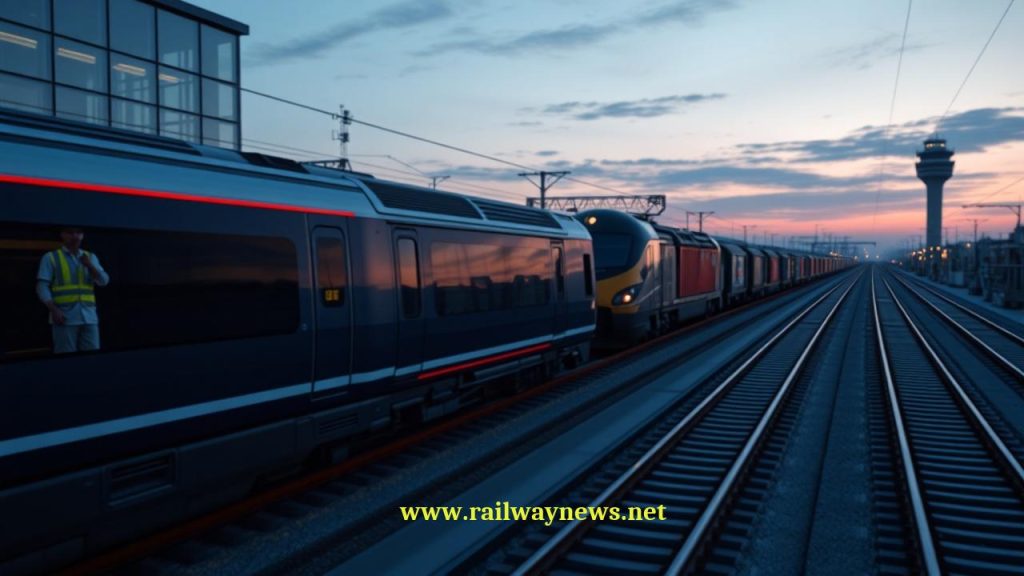
The UK’s Rail Freight Group (RFG) has welcomed the government’s landmark £45 billion Northern Powerhouse Rail (NPR) investment but has issued a strong call for freight capacity to be fundamentally integrated into the project’s design from day one. This push comes as industry forecasts predict a significant rebound in the freight market for 2026, creating a critical window to future-proof the network for economic growth and the UK’s net-zero targets.
| Category | Details |
|---|---|
| Project Name | Northern Powerhouse Rail (NPR) |
| Total Funding Envelope | Up to £45 billion |
| Initial Funding | £1.1 billion for planning, development, and design |
| Key Stakeholder | Rail Freight Group (RFG) |
| Key Infrastructure Confirmed | New high-speed station at Manchester Airport |
| Publication Date | 14 January 2026 |
The UK Government has formally committed to the Northern Powerhouse Rail programme, a transformative plan to upgrade rail connectivity across the North and Midlands. An initial £1.1 billion has been allocated over the Spending Review period to advance design and development work, part of a total funding package worth up to £45 billion. While the RFG lauded the announcement as a “significant commitment,” Director General Maggie Simpson OBE stressed the importance of foresight. “It is essential that the plans support the growth of rail freight, supporting new industries, infrastructure, and consumers across the region,” she stated, cautioning that the new project must not delay the completion of existing network upgrades that are already set to provide critical capacity for freight.
While new high-speed lines are primarily for passenger services, the project’s true value for logistics lies in the “released capacity” it will create across the conventional network. This is where the RFG’s demands become critical. A key technical specification already confirmed is the delivery of a new station at Manchester Airport, a move praised by Manchester Airports Group as essential to unlocking the full potential of its £1.3bn transformation programme. This new hub is designed to stimulate jobs, trade, and investment by creating a seamless interchange between global air freight and an enhanced domestic rail logistics network, connecting businesses across Liverpool, Manchester, Leeds, Bradford, Sheffield, York, and beyond.
The timing of this investment aligns with a positive outlook for the wider logistics sector. According to Doug Waggoner, CEO of Echo Global Logistics, the freight market is expected to improve significantly in 2026, driven by falling interest rates that stimulate manufacturing, housing, and consumer spending. This predicted upswing underscores the urgency of the RFG’s position; embedding freight capability into NPR now will ensure the network is ready to absorb growing demand, support industrial investment in emerging sectors like renewables and advanced manufacturing, and contribute to national decarbonisation goals by shifting goods from road to rail.
Key Takeaways
- Freight Integration is Crucial: The success of the £45bn NPR project depends on embedding freight capacity from the outset to support industrial growth and supply chain efficiency.
- Economic Synergy: The project’s timeline aligns with forecasts for a 2026 freight market rebound, creating a major opportunity for decarbonisation and economic development in the North.
- Strategic Hub Development: The confirmation of a new station at Manchester Airport will create a vital passenger and logistics hub, amplifying the airport’s own £1.3bn investment and boosting international trade.
Editor’s Analysis
This development signals a crucial pivot in UK infrastructure strategy, moving beyond a passenger-centric view to a more holistic, integrated logistics approach. By demanding freight integration at the planning stage of a major high-speed project, the RFG is highlighting that modern railways are foundational to supply chain resilience, decarbonisation, and international competitiveness. The success of NPR will be measured not just in journey times, but in its ability to attract industrial investment and remove millions of lorry-miles from the roads—a metric of growing importance for global economies targeting net-zero emissions.
Frequently Asked Questions
- What is Northern Powerhouse Rail (NPR)?
- Northern Powerhouse Rail is a major UK government rail infrastructure programme with a budget of up to £45 billion, aimed at significantly improving connectivity between major city regions in the North of England, including Liverpool, Manchester, Leeds, Sheffield, and York.
- Why is the Rail Freight Group emphasizing freight capacity?
- The RFG argues that while new high-speed lines are for passengers, they release vital capacity on the existing network. By planning for freight from the start, the NPR project can support industrial growth, reduce road congestion, help meet net-zero carbon targets, and accommodate the expected growth in freight demand.
- What is the total budget for this rail programme?
- The full programme has a funding envelope of up to £45 billion. The government has initially committed £1.1 billion to cover the planning, development, and design phase.

Railway infrastructure, rolling stock and transport technologies specialist focused on global rail industry developments, high-speed rail systems, signaling technologies and freight transportation. Covering railway investments, public transport modernization, rail operations and international mobility projects across Europe, Asia and North America.
RELATED POSTS

October 1, 2026 7:09 am
United States regulators confirmed a September 30 deadline for the...

October 8, 2026 1:15 pm
Alstom secured a €1bn contract to build 13 automated trains,...

October 4, 2026 5:14 pm
Alstom secured a CA$4.7 billion order from VIA Rail Canada...

October 1, 2026 12:13 am
Illinois approved $1.5 billion annually for the Northern Illinois Transit...

October 6, 2026 2:14 am
Union Pacific launched export rail shipments with Ferromex to deliver...

October 1, 2026 6:10 am
Amtrak approved a System Expansion Committee on July 30 to...