
UAE Rail Expansion: Vossloh’s Key Role in GCC Railway Project
Vossloh’s contract underscores its pivotal role in enhancing the UAE’s rail network by supplying critical infrastructure, highlighting the strategic importance of robust, efficient transport systems for regional economic development.
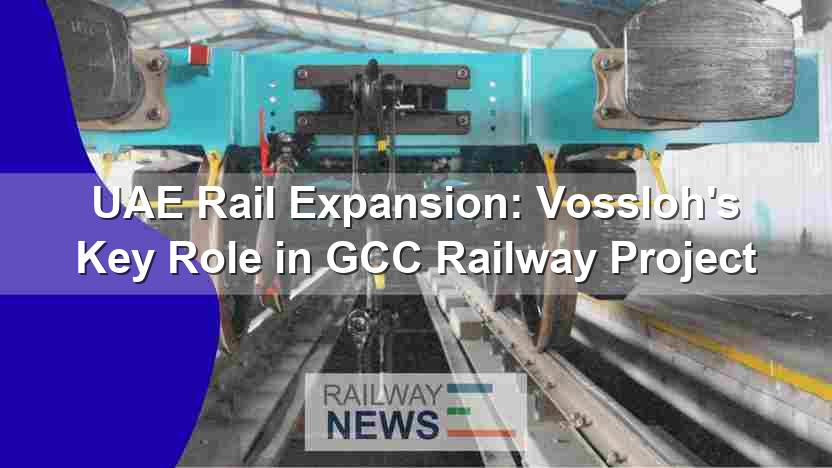
This article explores the significant contract awarded to Vossloh for the supply of critical railway infrastructure components for the second phase of the Gulf Cooperation Council (GCC) railway line in the United Arab Emirates (UAE). The project, a substantial undertaking encompassing a significant expansion of the UAE’s rail network, highlights the growing importance of robust and efficient rail transport systems in the region. We will examine the scope of Vossloh’s contribution, the technical specifications of the supplied components, and the broader implications of this expansion for the UAE’s logistics and economic landscape. The analysis will consider the strategic importance of interoperability, the challenges of constructing a large-scale railway system, and the role of international partnerships in such mega-projects. Finally, we will assess the long-term impact of this expansion on regional trade and the overall development of the UAE’s transportation infrastructure.
Vossloh’s Contribution to the UAE Rail Network Expansion
Vossloh, a leading supplier of railway infrastructure, has secured a contract to provide a substantial quantity of turnouts (points and crossings – devices allowing trains to switch tracks) and rail fastening systems for the second phase of the GCC railway line in the UAE. This phase involves extending the line 605km from Ghuweifat, on the Saudi Arabian border, to Fujairah on the east coast. The project is being executed in phases, leveraging a standard gauge, primarily double-track network design, due to its extensive size. The first phase of this expansion, a 139km stretch linking Ruwais to Ghuweifat, is the focus of Vossloh’s immediate supply contract.
Technical Specifications and Supply Scope
Specifically, Vossloh is supplying 38 turnouts and 495,000 sleeper sets equipped with its W30 HH rail fastening system for the Ruwais-Ghuweifat section. Deliveries are scheduled to be completed by late October. The selection of the W30 HH system reflects a commitment to high-performance, reliable fastening technology vital for maintaining track integrity at the intended operating speeds. The overall project design accommodates freight trains with a maximum weight of 32.5 tonnes and speeds up to 160 km/h, and passenger trains operating at up to 200 km/h. This emphasizes the necessity for high-quality components capable of withstanding the stresses of heavy and high-speed operation.
Project Partnerships and International Collaboration
The project’s construction is being undertaken by a joint venture involving China State Construction Engineering and SK Engineering and Construction (South Korea). This highlights the increasingly common practice of international collaboration in large-scale infrastructure projects, combining expertise and resources from different countries. The involvement of these major international players underscores the importance of the GCC railway project on a global scale. This collaboration facilitates the transfer of technological know-how and best practices, benefiting all involved parties.
Economic and Logistical Implications
The completion of this railway expansion will dramatically increase the UAE’s freight transportation capacity. The network’s throughput is projected to increase from seven million tonnes per year to over 50 million tonnes. This augmented capacity has significant implications for the UAE’s economy, facilitating increased trade, reducing transportation costs, and supporting the growth of various industries. Improved interoperability with the Saudi Arabian rail network is also a key benefit, streamlining cross-border logistics and promoting regional economic integration.
Conclusions
Vossloh’s contract for the supply of turnouts and rail fastening systems for the second phase of the UAE’s GCC railway is a significant milestone in the expansion of the country’s transportation infrastructure. The project showcases the importance of robust and high-performance railway technology in supporting economic growth and regional integration. The use of Vossloh’s W30 HH fastening system, coupled with the project’s high-speed and heavy-haul specifications, demonstrates a commitment to building a modern, efficient, and safe railway network. The international partnerships involved underscore the increasingly global nature of large-scale infrastructure projects, fostering technological exchange and economic collaboration. The anticipated increase in freight capacity from seven to over 50 million tonnes per year will significantly impact the UAE’s economy, enhancing its competitiveness and facilitating trade. The project’s success will depend on continued collaboration, meticulous project management, and the use of high-quality materials and technology, ensuring the long-term viability and efficiency of the upgraded rail network, enhancing the UAE’s position as a regional transportation hub. The completion of this project represents a substantial contribution to the UAE’s economic development and its integration into regional and international trade networks. The improved infrastructure will not only boost economic activity but also enhance the quality of life for residents through improved transportation options and reduced congestion.

Railway infrastructure, rolling stock and transport technologies specialist focused on global rail industry developments, high-speed rail systems, signaling technologies and freight transportation. Covering railway investments, public transport modernization, rail operations and international mobility projects across Europe, Asia and North America.
RELATED POSTS

October 8, 2026 1:15 pm
Alstom secured a €1bn contract to build 13 automated trains,...

October 1, 2026 7:09 am
United States regulators confirmed a September 30 deadline for the...

October 8, 2026 12:18 pm
Siemens Mobility signed an agreement with VinSpeed to supply 350...

October 4, 2026 5:14 pm
Alstom secured a CA$4.7 billion order from VIA Rail Canada...

October 5, 2026 6:12 pm
AECOM and Jacobs secured a contract in September 2026 to...

October 4, 2026 11:08 pm
Sound Transit confirmed the September 30 opening of Seattle Pinehurst...