
Turin-Lyon High-Speed Rail: A €7 Billion Loss?
The Turin-Lyon high-speed rail faces a projected €7 billion loss. Is this ambitious project truly viable? Discover how!
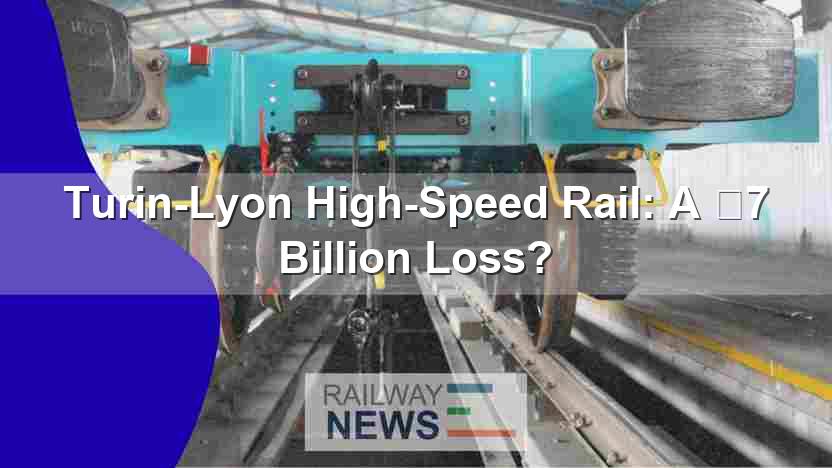
The proposed Turin-Lyon high-speed rail (HSR) line, a 270km link connecting Turin, Italy, and Lyon, France, has been the subject of intense debate. This article explores the economic feasibility of this ambitious project, examining various factors contributing to concerns regarding its profitability. A recent Italian government-commissioned report projected a €7 billion loss by 2059, raising serious questions about the project’s financial sustainability. This analysis will explore the core issues surrounding this projected deficit, considering construction costs, anticipated passenger revenue, environmental benefits, and the broader geopolitical implications. We will investigate whether the purported benefits, such as reduced travel times and decreased road congestion, outweigh the significant financial risks involved. Ultimately, the analysis aims to provide a detailed assessment of the economic viability of the Turin-Lyon HSR, considering both optimistic projections and potential challenges.
High Construction Costs and Projected Revenue Shortfall
The primary driver of the projected €7 billion loss is the exorbitant cost of construction. The project’s centerpiece, a substantial tunnel through the Alps between the Susa Valley (Italy) and Maurienne (France), represents a significant engineering challenge, leading to substantial capital expenditure. While proponents predict increased passenger traffic and reduced travel times between Milan and Paris (from approximately seven hours to four), the projected revenue of €1.3 billion falls far short of covering the overall costs. This shortfall highlights a fundamental flaw in the original cost-benefit analysis and underscores the need for a more realistic appraisal of passenger demand and revenue generation potential.
Environmental Considerations and External Funding
Advocates for the Turin-Lyon HSR cite significant environmental benefits, namely the reduction of road traffic and associated greenhouse gas emissions. The projected removal of millions of trucks from roads is a compelling argument, however, the economic cost must be weighed against this environmental advantage. The European Union’s (EU) significant financial contribution further complicates the situation. Should the project be cancelled, the EU may demand reimbursement, adding another layer of financial complexity and potential political tension between Italy and the EU.
Political Divisiveness and Policy Implications
The Turin-Lyon HSR project has become a focal point of political contention within Italy. The differing stances of the League party (supportive) and the 5-Star Movement (opposed) highlight the deep divisions surrounding the project’s viability and the government’s strategic priorities. This political stalemate underscores the need for transparent and robust cost-benefit analyses, ensuring that all stakeholders are informed and that the project’s financial risks are fully understood before committing to such a large-scale undertaking. The failure to reach a consensus also demonstrates the challenges involved in balancing national infrastructure ambitions with budgetary constraints and political realities.
Comparative Analysis and Future Projections
A detailed assessment of the Turin-Lyon HSR requires a comparison with similar high-speed rail projects globally, examining their cost overruns, passenger demand, and overall financial performance. This comparative analysis will help to contextualize the projected losses and identify best practices or potential pitfalls to avoid. Additionally, incorporating more sophisticated modelling techniques to predict future passenger demand and revenue streams, along with refined cost projections, is crucial for a more reliable assessment of the project’s long-term viability.
Conclusions
The Italian government’s report projecting a €7 billion loss for the Turin-Lyon HSR project raises serious concerns about its economic viability. While the potential environmental benefits are undeniable, the high construction costs, coupled with a relatively low projected passenger revenue, paint a concerning financial picture. The significant political division within Italy further complicates matters, hindering a cohesive approach to resolving the project’s inherent challenges. The EU’s involvement adds another layer of complexity, emphasizing the potential for substantial financial repercussions in case of cancellation. A thorough comparative analysis of similar projects, incorporating refined forecasting models and a more nuanced understanding of passenger demand, is crucial for a more informed decision-making process. Ultimately, the Turin-Lyon HSR needs a rigorous reassessment of its financial projections, addressing both the construction costs and the long-term revenue potential. Without a viable plan to address the projected deficits and secure stable funding, the project’s future remains precarious, underscoring the need for a transparent and evidence-based approach to large-scale infrastructure projects.

Transport and railway industry editor covering global rail infrastructure, sustainable mobility, urban transit systems and next-generation railway technologies with a focus on accessible and industry-focused reporting.
RELATED POSTS

October 4, 2026 5:14 pm
Alstom secured a CA$4.7 billion order from VIA Rail Canada...

October 4, 2026 11:08 pm
Sound Transit confirmed the September 30 opening of Seattle Pinehurst...
October 1, 2026 10:14 am
HS2 installed a 55-metre steel span in Birmingham, completing phase...
October 1, 2026 3:12 am
Greenbrier confirmed Brian Comstock as new president and CEO effective...
October 1, 2026 7:09 pm
FRA ordered US rail operators to obey 5 restricted speed...

October 5, 2026 6:12 pm
AECOM and Jacobs secured a contract in September 2026 to...