
Teamsters Slam UP-NS Merger: Monopoly & Safety Concerns Raised
Teamsters oppose the Union Pacific-Norfolk Southern merger, fearing a monopoly that threatens rail safety, jobs, and service quality for customers.
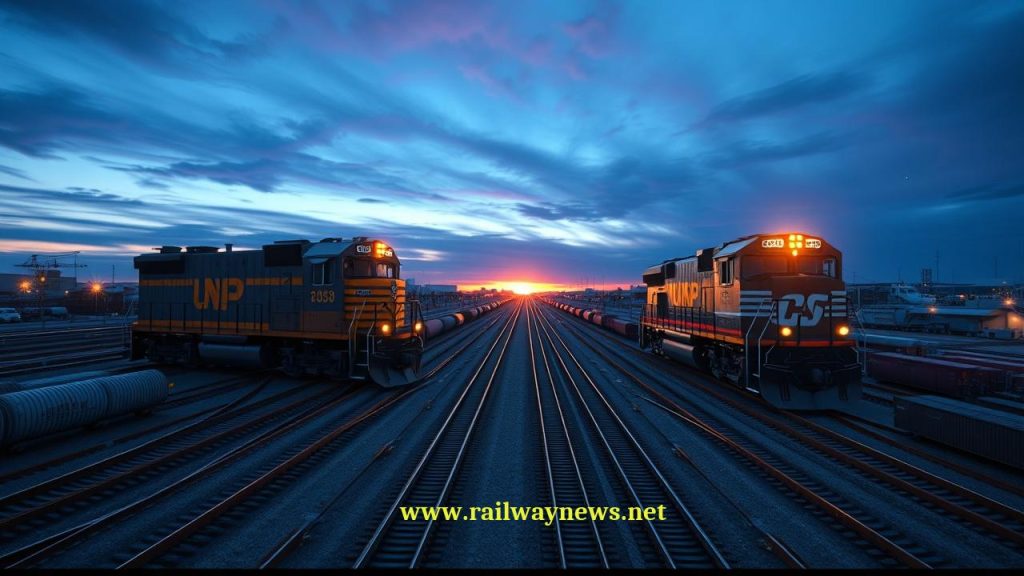
WASHINGTON – The Teamsters Rail Conference, representing nearly 20,000 workers across two major unions, has formally announced its strong opposition to the proposed merger of Union Pacific Railroad and Norfolk Southern Railway. The unions have called on the U.S. Surface Transportation Board (STB) to reject the proposal, arguing that the consolidation would create a less competitive and less safe rail network, while harming workers and customers.
| Category | Details |
|---|---|
| Key Parties | Union Pacific (UP), Norfolk Southern (NS), Teamsters Rail Conference (BLET & BMWE), Surface Transportation Board (STB) |
| Affected Workforce | Nearly 20,000 Teamsters-represented employees at UP and NS |
| Union’s Core Objections | Reduced competition, weaker service, job losses, expansion of unsafe practices, monopoly power |
| Pro-Merger Argument | Creation of faster, simpler single-line hauls for enhanced efficiency and customer service |
| Allied Opposition | American Chemistry Council, Rail Customer Coalition, various legislators and competing railroads |
The announcement came from the Brotherhood of Locomotive Engineers and Trainmen (BLET) and the Brotherhood of Maintenance of Way Employes (BMWE), the two unions that constitute the Teamsters Rail Conference. In a statement, the unions confirmed their decision was the result of a thorough internal investigation, extensive meetings with union members, and direct negotiations with Union Pacific’s leadership. The conclusion was unequivocal: a merged entity of this scale would not only be detrimental to its own workforce but would also diminish the railroad industry’s competitiveness against other transportation modes like trucking.
The unions’ formal opposition centers on fears that the merger would exacerbate what they term “unsafe” railroad practices, a significant concern amid ongoing national discussions about rail safety. They argue that consolidation of this magnitude historically leads to weaker service for shippers and significant job losses, a direct contradiction to promises made by the railroads. While UP has reportedly secured job-guarantee agreements with other unions, such as the International Association of Sheet Metal, Air, Rail & Transportation Workers–Transportation Division (SMART-TD), the Teamsters remain unconvinced that the merger’s long-term effects will be positive for labor.
This opposition from labor does not exist in a vacuum. The Teamsters’ position aligns with a growing chorus of dissent from powerful industry groups and lawmakers. The Rail Customer Coalition and the American Chemistry Council have both submitted letters to federal regulators expressing deep concerns that railroad mergers do not enhance competition. Instead, they point to a history of weaker service and higher costs post-consolidation. Proponents of the merger, however, argue that it will create significant efficiencies, citing the benefits of single-line hauls—where one railroad handles a shipment end-to-end—as a way to simplify logistics and speed up transit times for customers.
Key Takeaways
- Significant Labor Opposition: The Teamsters Rail Conference, a major labor bloc representing nearly 20,000 workers, has formally requested the STB to block the merger.
- Broad-Based Concerns: The unions’ fears of reduced competition, service degradation, and monopoly power are shared by major customer coalitions and legislators, creating a powerful multi-sector front against the deal.
- Regulatory Showdown: The Surface Transportation Board is now the central arbiter, tasked with weighing the railroads’ promises of efficiency against widespread concerns over the merger’s impact on the national supply chain.
Editor’s Analysis
The unified opposition from the Teamsters Rail Conference and major shipper groups presents a formidable obstacle for the Union Pacific-Norfolk Southern merger. This is not merely a labor dispute; it is a fundamental challenge to the logic of further consolidation among Class I railroads. For the Surface Transportation Board, which has adopted a more cautious approach to major rail mergers since the Conrail split in the late 1990s, this case will be a critical test of its modern regulatory philosophy. The alignment of powerful labor and customer interests creates a compelling narrative that the potential public harms of creating a transcontinental monopoly may far outweigh the private benefits of operational efficiency. How the STB rules will likely set a defining precedent for the structure of the North American rail industry for decades to come.
Frequently Asked Questions
Which unions are opposing the UP-NS merger?
The Brotherhood of Locomotive Engineers and Trainmen (BLET) and The Brotherhood of Maintenance of Way Employes (BMWE), which together form the Teamsters Rail Conference, are leading the opposition.
What are the main arguments against the merger?
The primary arguments include fears of creating a monopoly, which would lead to reduced competition, weaker service for customers, job losses for union members, and the expansion of unsafe operating practices.
Who will ultimately approve or deny the merger?
The U.S. Surface Transportation Board (STB), a federal regulatory agency, holds the ultimate authority to review, impose conditions on, approve, or deny the proposed railroad merger.

Transport and railway industry editor covering global rail infrastructure, sustainable mobility, urban transit systems and next-generation railway technologies with a focus on accessible and industry-focused reporting.
RELATED POSTS

October 1, 2026 7:09 am
United States regulators confirmed a September 30 deadline for the...

October 8, 2026 1:15 pm
Alstom secured a €1bn contract to build 13 automated trains,...

October 4, 2026 5:14 pm
Alstom secured a CA$4.7 billion order from VIA Rail Canada...

October 1, 2026 12:13 am
Illinois approved $1.5 billion annually for the Northern Illinois Transit...

October 6, 2026 2:14 am
Union Pacific launched export rail shipments with Ferromex to deliver...

October 1, 2026 6:10 am
Amtrak approved a System Expansion Committee on July 30 to...