
Sydney Metro: $1.8B Airport Tunnel Project
The $1.3 billion contract awarded to CPB Contractors-Ghella for the construction of Sydney Metro’s WSA-SBT project showcases a significant milestone in Western Sydney infrastructure development, focusing on connecting the region with new airport and aerotropolis facilities through advanced tunneling techniques and intricate station design.
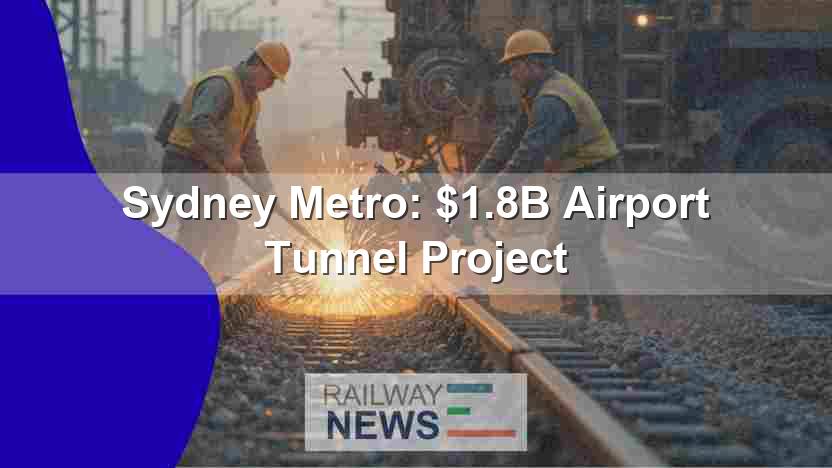
This article explores the significant $1.3 billion (A$1.8 billion) contract awarded to the CPB Contractors-Ghella joint venture (JV) for the construction of the Sydney Metro – Western Sydney Airport Station Boxes and Tunnelling Works (WSA-SBT). This project represents a crucial component of the broader Western Sydney infrastructure development, aiming to connect the rapidly growing Western Sydney region with the new Western Sydney International (Nancy-Bird Walton) Airport and Aerotropolis. The project’s scope extends beyond mere tunnel construction; it encompasses intricate design elements, sophisticated tunnelling techniques, and the construction of several new stations. This intricate undertaking involves the deployment of advanced Tunnel Boring Machines (TBMs) and the utilization of precast concrete segments, highlighting the technological sophistication and scale of the project. Additionally, the article will examine the broader implications of this project, including its contribution to job creation, economic stimulation, and the long-term benefits for the residents of Western Sydney. The successful completion of this project will not only significantly enhance regional connectivity but also serve as a testament to modern railway engineering and infrastructure development.
Tunnel Construction and Methodology
The WSA-SBT contract mandates the design and construction of nearly 9.8 kilometers of twin metro rail tunnels, divided into two sections. The northern section, spanning 4.3 kilometers, extends from St Marys to Orchard Hills. The southern section, measuring 5.5 kilometers, connects the Airport Business Park to the Aerotropolis Station. This ambitious undertaking necessitates the use of four hard rock TBMs, underscoring the challenging geological conditions encountered during the project. The construction process also involves the fabrication and installation of over 67,000 precast concrete segments to line the tunnels, ensuring structural integrity and longevity. The strategic use of two provisional precast concrete factories, one of which will be located at the Western Sydney International site, aims to optimize efficiency and minimize logistical complexities.
Station Construction and Civil Works
Beyond tunnel construction, the JV is responsible for the excavation and civil works associated with four new stations: St Marys, Orchard Hills, Western Sydney International (Nancy-Bird Walton) Airport, and Aerotropolis. Each station presents unique design and construction challenges, requiring careful consideration of factors such as passenger flow, accessibility, and integration with surrounding infrastructure. The successful completion of these stations will significantly enhance the overall accessibility and convenience of the new metro line, serving as critical hubs for passenger movement. The scale of this task demands meticulous planning, coordination, and a high degree of expertise in civil engineering.
Project Timeline and Implications
The project commenced with initial site establishment and preparation, with the first TBM expected to begin tunnelling operations in early 2023. The entire tunnelling phase is projected to conclude by late 2024, after which the focus will shift to track laying and station fit-out. This tightly controlled schedule reflects the logistical complexities and strategic importance of the project. The successful completion of this project will have a far-reaching impact, not only on the connectivity of Western Sydney but also on its economic vitality. The project’s substantial investment translates to significant job creation during construction and enduring benefits for the community.
Overall Project Significance and Conclusion
The Sydney Metro – Western Sydney Airport project, specifically the WSA-SBT contract, represents a monumental undertaking in modern railway infrastructure development. The successful implementation of this project will revolutionize transport connectivity in Western Sydney, fostering economic growth and improving the quality of life for its residents. The strategic use of advanced technologies, such as hard rock TBMs and precast concrete segments, showcases a commitment to efficiency and innovation. The project’s scale, encompassing extensive tunnelling works, the construction of multiple stations, and the integration with the Western Sydney International Airport, highlights the complexity and strategic importance of this investment. The completion of this project marks a significant step forward in providing efficient and sustainable transport solutions, solidifying Sydney’s position as a major global transportation hub. The project’s success will serve as a model for future large-scale infrastructure projects, demonstrating the synergy between effective planning, advanced engineering techniques, and sustainable development principles. The positive impact on job creation during construction, along with the long-term economic benefits for Western Sydney, reinforces the significance of this investment. The careful management of the project timeline, coupled with the advanced technologies employed, points to a commitment to delivering a high-quality, efficient, and sustainable transportation solution for the region.

Railway infrastructure, rolling stock and transport technologies specialist focused on global rail industry developments, high-speed rail systems, signaling technologies and freight transportation. Covering railway investments, public transport modernization, rail operations and international mobility projects across Europe, Asia and North America.
RELATED POSTS

October 8, 2026 1:15 pm
Alstom secured a €1bn contract to build 13 automated trains,...

October 1, 2026 7:09 am
United States regulators confirmed a September 30 deadline for the...

October 8, 2026 12:18 pm
Siemens Mobility signed an agreement with VinSpeed to supply 350...

October 4, 2026 5:14 pm
Alstom secured a CA$4.7 billion order from VIA Rail Canada...

October 5, 2026 6:12 pm
AECOM and Jacobs secured a contract in September 2026 to...

October 4, 2026 11:08 pm
Sound Transit confirmed the September 30 opening of Seattle Pinehurst...