
Stockholm’s Rissne Station: Urban Rail Expansion Challenges
This article explores the intricate challenges and solutions involved in expanding light rail transit systems in densely populated urban areas, using the Rissne station project in Stockholm as an example, emphasizing the multifaceted nature of such projects and their significance for sustainable urban development.
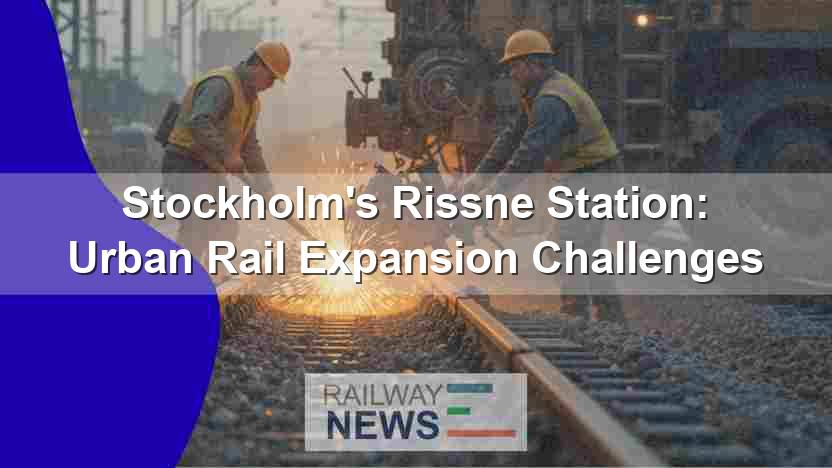
This article explores the complexities of urban rail infrastructure development, using the Rissne station project in Stockholm, Sweden, as a prime example. The expansion and modernization of light rail transit (LRT) systems within densely populated urban areas present significant engineering challenges. These challenges include minimizing disruption to existing transportation networks and surrounding communities, efficient management of resources, and ensuring the safety of both workers and the public during construction. The construction of Rissne station on Stockholm’s Tvärbanan light rail line, undertaken by NCC (a Swedish construction firm), serves as a compelling case study illustrating the multifaceted nature of such undertakings. This project, with its complex earthworks, utility relocation, and bridge modifications, highlights the logistical and technical expertise required for successful urban rail expansion. We will examine the scope of work, the logistical considerations, and the overall significance of projects like this in the context of sustainable urban development and efficient public transport.
Project Scope and Challenges
NCC’s contract for the preparatory work at Rissne station encompasses a wide range of tasks critical to the successful implementation of the new station. This includes the relocation of existing utilities (mains/pipelines), extensive railway substructure work involving earthworks and rock excavation (often requiring blasting techniques), and modifications to existing infrastructure. Specifically, the project involves widening a bridge crossing the existing subway line, necessitating careful planning and execution to prevent disruption to subway services. Additionally, the removal of existing bridges and the construction of a new pedestrian and bicycle tunnel underscore the detailed nature of this preparatory phase. The complexity arises from undertaking these works within a densely populated urban environment, demanding meticulous planning and precise execution to minimize disruption to residents and existing transport networks. Safety for both construction workers and the public is paramount throughout the project lifecycle.
Logistical Considerations and Expertise
Successfully completing a project of this magnitude requires significant logistical planning and expertise in several specialized areas. The relocation of underground utilities, for instance, demands careful coordination with utility providers and a deep understanding of subsurface conditions. Rock excavation, particularly in urban settings, necessitates precise blasting techniques to avoid damage to nearby structures. The bridge widening project requires detailed structural engineering and potentially temporary shoring to maintain structural integrity during construction. The construction of the pedestrian and bicycle tunnel adds further complexity to the project, requiring meticulous planning and coordination with other ongoing works. NCC’s claim of having “long-standing experience in complex civil engineering works and implementing projects in very busy urban environments” is directly relevant to their ability to manage these logistical challenges effectively.
Safety and Environmental Considerations
The construction of Rissne station, given its location in a busy urban setting, necessitates a robust safety plan for both construction personnel and the public. This includes implementing traffic management strategies to minimize disruption to road users, clearly defined pedestrian routes, and regular safety inspections. Additionally, environmental impact assessments must be conducted, and mitigation measures must be incorporated into the project plan to reduce any negative effects on the surrounding environment. This is particularly important during the excavation and blasting phases, and for managing construction waste responsibly. The emphasis on “ensuring traffic safety for the public and that the work environment is safe for our employees” highlights NCC’s commitment to prioritizing safety throughout the project.
Financial and Contractual Aspects
The €25.3 million contract awarded to NCC by Stockholm Public Transport (SL) and the City of Sundbyberg underscores the significant financial investment required for such urban rail infrastructure projects. This cost reflects the complexity of the work, the specialized skills required, and the need for mitigation strategies to minimize disruption. The project demonstrates the financial commitment of both public transport authorities and local government to improve public transit infrastructure. The successful completion of such contracts depends on effective project management, adherence to strict deadlines, and precise budget control. NCC’s previous experience with similar projects, including the Bergen Light Rail project and Roslagsbanan capacity upgrade, demonstrates their ability to manage large-scale infrastructure projects efficiently.
Conclusion
The Rissne station preparatory works represent a significant step in expanding and modernizing Stockholm’s light rail network. The project showcases the complexities inherent in urban rail infrastructure development, encompassing intricate earthworks, utility relocation, bridge modifications, and the imperative of maintaining safety and minimizing disruption. NCC’s role highlights the crucial need for experienced contractors with proven expertise in complex civil engineering and urban construction. The project’s success hinges on meticulous planning, effective coordination among stakeholders, robust safety protocols, and an understanding of the interconnectedness of different aspects of urban development. The successful completion of such projects is essential not only for enhancing public transportation but also for contributing to sustainable urban growth and improved quality of life within the city. The €25.3 million investment underscores the substantial commitment required to upgrade and expand essential urban infrastructure, impacting the daily lives of commuters and contributing to the overall economic vitality of the region. The integration of safety considerations and environmental awareness during the planning and execution phases further demonstrates a forward-thinking approach to infrastructure development, ensuring both immediate practical needs and long-term sustainability are met. Ultimately, the Rissne project serves as a microcosm of the broader challenges and opportunities presented by urban rail expansion, demonstrating the need for efficient planning, execution, and stakeholder collaboration.

Railway infrastructure, rolling stock and transport technologies specialist focused on global rail industry developments, high-speed rail systems, signaling technologies and freight transportation. Covering railway investments, public transport modernization, rail operations and international mobility projects across Europe, Asia and North America.
RELATED POSTS

October 8, 2026 1:15 pm
Alstom secured a €1bn contract to build 13 automated trains,...

October 1, 2026 7:09 am
United States regulators confirmed a September 30 deadline for the...

October 8, 2026 12:18 pm
Siemens Mobility signed an agreement with VinSpeed to supply 350...

October 4, 2026 5:14 pm
Alstom secured a CA$4.7 billion order from VIA Rail Canada...

October 5, 2026 6:12 pm
AECOM and Jacobs secured a contract in September 2026 to...

October 4, 2026 11:08 pm
Sound Transit confirmed the September 30 opening of Seattle Pinehurst...