
Siemens’ €5B Deal: 540 Mireo Trains for ÖBB
This article discusses Siemens Mobility’s €5 billion contract with Austria’s ÖBB for up to 540 Mireo electric multiple-unit trains, highlighting the technological advancements of the Mireo platform in modernizing Europe’s railway sector and its strategic implications for both companies.
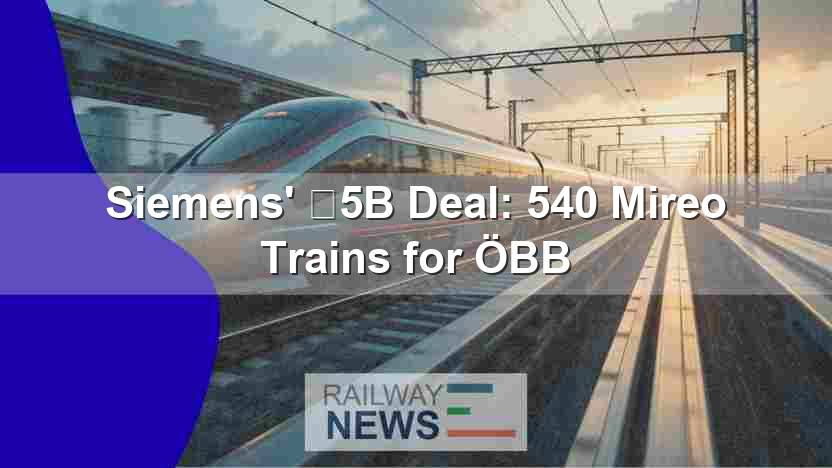
This article explores the significant €5 billion contract between Siemens Mobility and Österreichische Bundesbahnen (ÖBB), Austria’s national railway company, for the delivery of up to 540 Mireo electric multiple-unit (EMU) trains. This substantial agreement underscores the growing demand for modern, efficient, and sustainable rolling stock in the European railway sector. The deal represents a significant expansion of Siemens Mobility’s Mireo platform and highlights the enduring partnership between the two companies. We will explore the technological advancements embodied in the Mireo platform, the strategic implications of this large-scale order for both Siemens and ÖBB, and the broader context of this contract within the evolving landscape of European railway modernization. The analysis will also consider the environmental benefits associated with the lightweight design of the Mireo trains and the integration of advanced signaling systems like the European Train Control System (ETCS).
The Mireo Platform: A Technological Leap Forward
The Siemens Mireo platform represents a significant advancement in EMU technology. Its lightweight construction, achieved through the use of innovative materials and design techniques, contributes to lower energy consumption and reduced environmental impact. This is crucial in meeting increasingly stringent sustainability targets within the railway industry. The modular design of the Mireo platform allows for flexible configuration, enabling ÖBB to tailor the trains to specific operational requirements on different lines and routes. This adaptability is vital for a diverse network like ÖBB’s, accommodating varying passenger loads and operational needs. Additionally, the Mireo’s focus on passenger comfort and convenience, including features such as spacious interiors and modern amenities, enhances the overall passenger experience and promotes ridership.
Strategic Implications for Siemens Mobility and ÖBB
For Siemens Mobility, this contract signifies a major success, solidifying its position as a leading supplier of modern rolling stock in Europe. The €5 billion deal provides a substantial boost to its revenue and strengthens its long-term relationship with a key customer. The order also showcases the global appeal and technological superiority of the Mireo platform. For ÖBB, the acquisition of 540 Mireo trains represents a substantial investment in modernizing its fleet and improving its operational efficiency. The new trains will contribute to enhanced passenger capacity, improved punctuality, and ultimately, increased attractiveness of rail travel compared to other modes of transportation. The modernization directly supports ÖBB’s strategic objectives concerning sustainability and customer satisfaction. The integration of ETCS further enhances operational safety and efficiency, optimizing network capacity and reducing delays.
Environmental Considerations and Sustainability
The Mireo platform’s lightweight design is a key element in its sustainability profile. Reduced weight translates directly to lower energy consumption, resulting in significant reductions in CO2 emissions throughout the trains’ lifecycle. This aligns perfectly with ÖBB’s commitment to environmental sustainability and its goals for reducing its carbon footprint. The use of recyclable materials and efficient manufacturing processes further contributes to the Mireo’s environmental friendliness. This commitment to environmentally conscious design is becoming increasingly critical in the railway industry, influencing procurement decisions and shaping future technological developments.
The Broader Context of European Railway Modernization
The Siemens-ÖBB contract exemplifies a broader trend in the European railway sector: the large-scale modernization and upgrading of rolling stock. Across the continent, railway operators are investing heavily in new, high-performance trains to improve service quality, increase capacity, and reduce environmental impact. This investment is driven by several factors, including growing passenger demand, the need for improved operational efficiency, and the increasing pressure to achieve sustainability goals. The Mireo order, coupled with other recent orders placed by ÖBB and other European railway companies, demonstrates a strong commitment to advancing rail technology and building a more sustainable transportation future. The adoption of ETCS across ÖBB’s network, further underscores this commitment to modernization and interoperability, creating a more efficient and interconnected railway system across Europe.
Conclusions
The €5 billion contract between Siemens Mobility and ÖBB for the delivery of 540 Mireo EMUs represents a landmark agreement within the European railway industry. This substantial order showcases the technological prowess of the Mireo platform, emphasizing its lightweight design, energy efficiency, modularity, and passenger-centric features. The strategic implications for both companies are significant, with Siemens solidifying its market leadership and ÖBB significantly modernizing its fleet. Beyond the immediate benefits for Siemens and ÖBB, the agreement highlights the wider trend towards sustainable and efficient railway modernization across Europe. The Mireo’s environmentally friendly aspects, coupled with the implementation of ETCS (European Train Control System) across ÖBB’s network, demonstrate a strong commitment to reducing environmental impact and enhancing operational efficiency. This large-scale investment points toward a future where European railways are more modern, sustainable, and passenger-focused, contributing significantly to the continent’s transportation goals and broader sustainability objectives. The success of this partnership will undoubtedly serve as a benchmark for future large-scale railway procurement projects across Europe, encouraging other operators to pursue similar modernization strategies, ultimately benefitting passengers and the environment alike.

Railway infrastructure, rolling stock and transport technologies specialist focused on global rail industry developments, high-speed rail systems, signaling technologies and freight transportation. Covering railway investments, public transport modernization, rail operations and international mobility projects across Europe, Asia and North America.
RELATED POSTS

October 8, 2026 1:15 pm
Alstom secured a €1bn contract to build 13 automated trains,...

October 1, 2026 7:09 am
United States regulators confirmed a September 30 deadline for the...

October 8, 2026 12:18 pm
Siemens Mobility signed an agreement with VinSpeed to supply 350...

October 4, 2026 5:14 pm
Alstom secured a CA$4.7 billion order from VIA Rail Canada...

October 5, 2026 6:12 pm
AECOM and Jacobs secured a contract in September 2026 to...

October 4, 2026 11:08 pm
Sound Transit confirmed the September 30 opening of Seattle Pinehurst...