
Siemens Charger B+AC: North American Rail’s Battery-Electric Future
Siemens unveils battery-electric locomotive for North American passenger rail, aiming for sustainable, efficient travel.
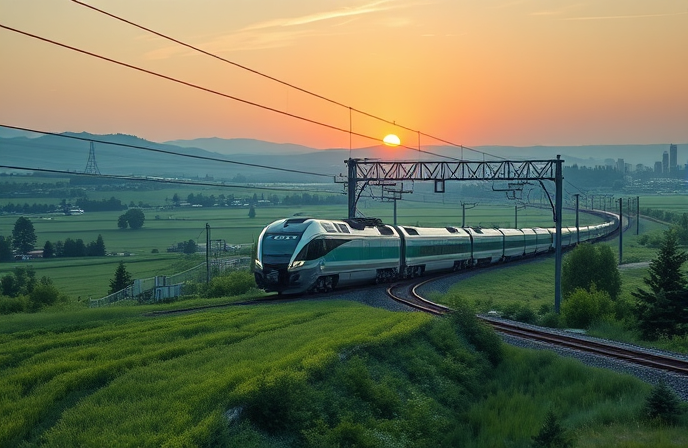
Siemens Mobility Unveils Groundbreaking Battery-Electric Locomotive for North American Passenger Rail
In a move poised to revolutionize North American passenger rail, Siemens Mobility has launched the Charger B+AC, a battery-electric locomotive. Announced on June 30, 2025, this innovative locomotive is designed specifically for the unique demands of the North American market. Who: Siemens Mobility. What: Unveiling the Charger B+AC. When: June 30, 2025. Where: Targeting the North American passenger rail market. Why: To provide a sustainable and efficient propulsion solution, reducing reliance on diesel engines and supporting the transition to electric rail. How: The Charger B+AC leverages a modular battery system and pantograph, operating primarily on overhead catenary power while seamlessly switching to battery mode where catenary infrastructure is unavailable. This article will delve into the key features of this groundbreaking locomotive, its implications for the industry, and its potential to reshape the future of passenger rail transportation in North America.
Technological Advancements in Propulsion
The Charger B+AC represents a significant leap forward in railway technology. Built on the proven Charger platform, which has already seen over 400 units deployed across North America, the B+AC replaces the traditional diesel engine with a state-of-the-art modular battery system. This system allows for flexible operation, drawing power from overhead catenary wires where available, and seamlessly transitioning to battery power in areas without catenary infrastructure, such as at stations or on certain sections of track. The locomotive is capable of reaching speeds up to 125 mph when operating under catenary power and can achieve speeds up to 100 mph in battery mode. Additionally, the Charger B+AC is compliant with Buy America regulations and will be manufactured in the United States, underlining Siemens Mobility’s commitment to supporting local economies and adhering to regulatory requirements. The locomotive also supports diverse charging methods, including catenary, plug-in, and dynamic braking.
Modular Design and Operational Flexibility
One of the key strengths of the Charger B+AC is its modular and scalable design. This approach allows transit authorities to customize the locomotive to meet specific operational requirements and adapt to evolving infrastructure. The modular battery system can be scaled to suit varying route lengths and operational profiles, optimizing both performance and efficiency. This flexibility is crucial for North American passenger rail networks, which often face a diverse range of operational conditions, from long-distance routes to urban commuter services. The integration of a pantograph ensures the locomotive can leverage existing overhead electrification infrastructure, promoting a smooth transition to electric operation and minimizing infrastructure upgrades. The ability to operate in battery mode provides crucial operational flexibility, enabling rail operators to provide services in areas without overhead lines or during infrastructure maintenance.
Sustainability and Environmental Impact
The introduction of the Charger B+AC marks a pivotal moment in the pursuit of sustainable transportation. By replacing diesel engines with a battery-electric solution, the locomotive significantly reduces greenhouse gas emissions and contributes to cleaner air quality, especially in urban areas where rail services are prevalent. The utilization of battery power, particularly when combined with renewable energy sources, further enhances the environmental benefits. The B+AC aligns with Siemens Mobility’s broader portfolio of alternative propulsion technologies, including the battery-electric Mireo Plus B, hydrogen-powered Mireo Plus H, and hybrid Vectron locomotives. This demonstrates a holistic approach to sustainability and empowers operators to make efficient, sustainable, and future-oriented investments. The reduced reliance on fossil fuels and lower noise pollution contribute to creating a more sustainable and enjoyable travel experience for passengers and surrounding communities.
Early Adoption and Industry Impact
The early adoption of the Charger B+AC by the Metropolitan Transportation Authority (MTA) and Metro-North Railroad in New York, who have already ordered 13 locomotives, underscores the industry’s positive reception. This initial order signifies a growing demand for battery-electric locomotives and highlights the confidence in Siemens Mobility’s technology. The recent order of 50 Vectron Dual Mode (VDM) locomotives from Akiem, which includes a firm commitment for ten locomotives and an option for 40 more, further reinforces the company’s position in the rail market. The expectation of first deliveries in the fourth quarter of 2026 indicates a swift progression from development to widespread deployment. This move signifies the commencement of significant growth within the railway industry, impacting not only the manufacturers but also the supporting infrastructure developers and the passenger transportation segment.
Conclusion
The unveiling of the Siemens Mobility Charger B+AC battery-electric locomotive represents a major milestone in the evolution of North American passenger rail. By combining innovative technology with operational flexibility and a commitment to sustainability, Siemens Mobility is poised to redefine the future of rail travel. The locomotive’s modular design, its ability to seamlessly switch between catenary and battery power, and its compliance with stringent regulations make it an attractive proposition for transit authorities seeking to modernize their fleets and reduce their environmental footprint. The early adoption by prominent transit agencies such as MTA and Metro-North Railroad in New York reinforces the positive industry response and underscores the growing demand for electric rail solutions. The Charger B+AC, along with Siemens Mobility’s expanding portfolio of alternative propulsion technologies, is set to empower operators to make efficient, sustainable, and future-oriented investments. Looking ahead, the widespread adoption of battery-electric locomotives like the Charger B+AC holds the potential to transform the North American rail landscape, paving the way for a cleaner, more efficient, and sustainable transportation future.
Company Summary
Siemens Mobility, a separately managed company of Siemens AG, is a leading provider of transport solutions. With over 160 years of experience in the railway industry, Siemens Mobility offers a detailed portfolio of products and services, including rolling stock, infrastructure, intelligent traffic systems, and related services. The company is dedicated to providing innovative and sustainable solutions that enhance passenger and freight transportation efficiency and environmental performance. Siemens Mobility has a strong global presence, with manufacturing facilities and operations in various countries, including the United States, ensuring localized support and adherence to regional regulations, such as the Buy America Act.

Railway infrastructure, rolling stock and transport technologies specialist focused on global rail industry developments, high-speed rail systems, signaling technologies and freight transportation. Covering railway investments, public transport modernization, rail operations and international mobility projects across Europe, Asia and North America.
RELATED POSTS

October 1, 2026 7:09 am
United States regulators confirmed a September 30 deadline for the...

October 8, 2026 1:15 pm
Alstom secured a €1bn contract to build 13 automated trains,...

October 4, 2026 5:14 pm
Alstom secured a CA$4.7 billion order from VIA Rail Canada...

October 1, 2026 12:13 am
Illinois approved $1.5 billion annually for the Northern Illinois Transit...

October 6, 2026 2:14 am
Union Pacific launched export rail shipments with Ferromex to deliver...

October 8, 2026 12:18 pm
Siemens Mobility signed an agreement with VinSpeed to supply 350...