
Revolutionizing Rail Safety: Duos’ Obliquevue System
Obliquevue is a revolutionary railcar undercarriage inspection technology developed by Duos Technologies that utilizes innovative oblique angle imaging, artificial intelligence, and integration with existing systems to enhance safety, reduce maintenance costs, and improve overall railway efficiency.
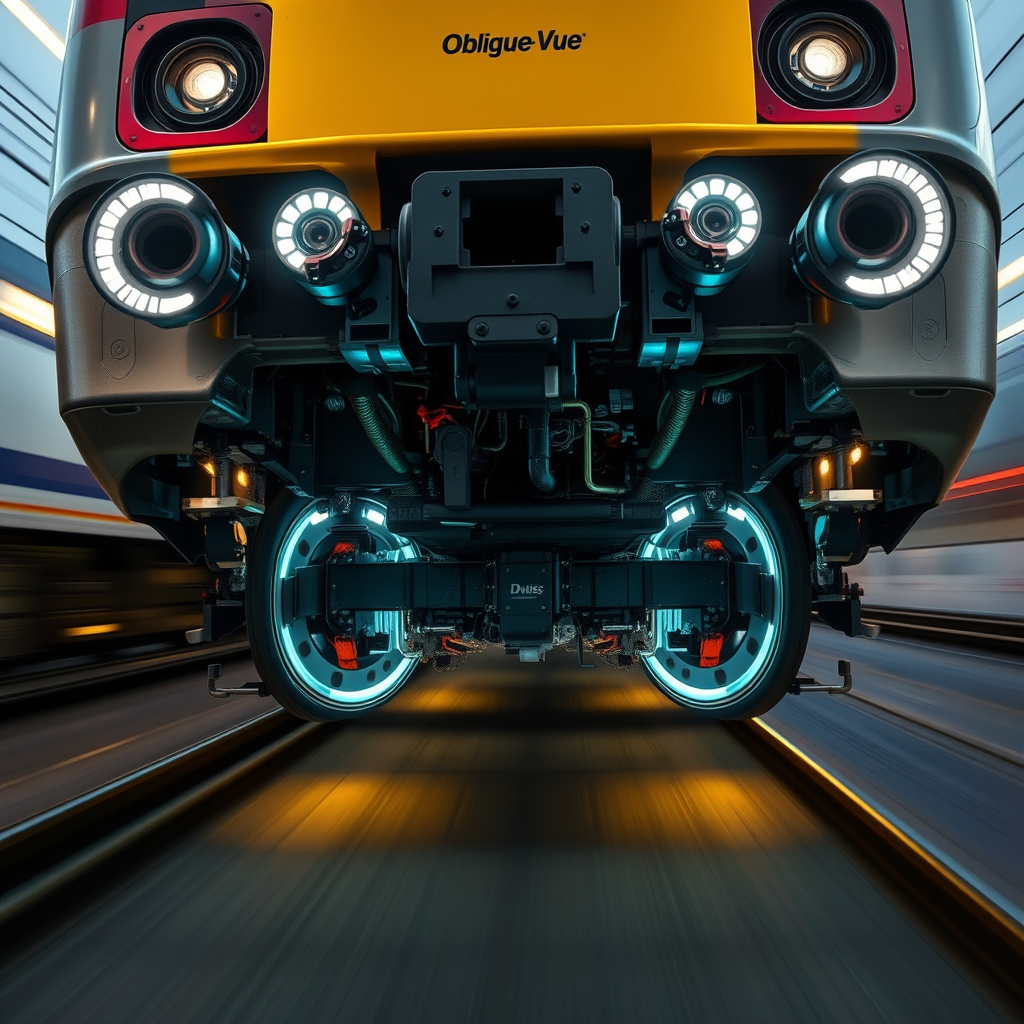
This article explores the advancements in railcar undercarriage inspection technology, specifically focusing on Duos Technologies’ newly patented obliquevue system. The rail industry faces constant pressure to enhance safety and operational efficiency while maintaining the integrity of its vast infrastructure. Traditional railcar inspection methods often lack the detailed detail necessary to identify subtle anomalies that can lead to derailments, costly repairs, and potential safety hazards. This necessitates the development of advanced, high-resolution imaging and analysis technologies. Duos Technologies’ obliquevue system represents a significant step forward in addressing this challenge. By employing innovative oblique angle imaging, artificial intelligence (AI), and integration with existing rail infrastructure systems, obliquevue aims to improve detection rates, reduce maintenance costs, and enhance overall railway safety. This examination will delve into the technical specifications of obliquevue, its integration with existing Duos Technologies platforms, the implications of its advanced imaging capabilities, and the broader impact on the rail industry’s commitment to safety and efficiency.
Obliquevue: A Technological Leap in Railcar Inspection
The core innovation behind obliquevue lies in its unique approach to capturing high-resolution images of railcar undercarriages. Unlike traditional systems that rely primarily on perpendicular views, obliquevue utilizes an array of four strategically positioned area scan cameras to obtain oblique angled images. This provides a more detailed view of critical components, revealing potential defects that might be obscured in standard, head-on inspections. The system is designed to operate at speeds up to 125 mph (approximately 201 km/h), enabling high-throughput inspection without compromising image quality. Custom-designed LED ring lights ensure optimal illumination, even in low-light conditions, guaranteeing clear and detailed images suitable for AI-powered analysis.
System Integration and Data Processing
The obliquevue system is not a standalone solution; rather, it integrates seamlessly with Duos Technologies’ existing infrastructure. It works in conjunction with the Railcar Inspection Portal (RIP) and the CENTRACO platform, allowing for efficient data management, analysis, and reporting. The captured images are processed using AI algorithms to identify and flag potential anomalies, such as damage to the truck inner spring nest, axles, traction motor, brake linkages, center bolster, and tread brake condition. This automated analysis significantly reduces the time and effort required for manual inspection, allowing for rapid identification and remediation of safety concerns.
Addressing Industry Standards and Safety Concerns
Obliquevue‘s design adheres to stringent safety standards set by the Association of American Railroads (AAR) and the Federal Railroad Administration (FRA). The system’s ability to detect subtle defects that might be overlooked by conventional methods directly contributes to enhanced railway safety. By providing real-time identification of potential hazards, obliquevue helps prevent derailments, reduces operational downtime, and mitigates the risks associated with damaged rolling stock. The system’s efficiency in processing large volumes of data also contributes to reduced operational costs and improved overall efficiency for railway operators.
Impact and Future Implications
Duos Technologies’ acquisition of the patent for obliquevue significantly strengthens its position as a leader in rail inspection technology. With a portfolio of 11 granted patents and six pending applications, Duos demonstrates its commitment to innovation and its focus on improving rail safety and efficiency. The success of obliquevue in scanning nearly ten million railcar images in 2024 highlights its practical application and its potential for widespread adoption within the rail industry. This technology’s capacity to rapidly and accurately identify potential safety issues will have a substantial impact on reducing incidents, improving preventative maintenance strategies, and ultimately enhancing the safety and reliability of global rail networks. The ongoing development and refinement of AI-powered analysis techniques promise even greater accuracy and efficiency in the future. Additionally, the integration of obliquevue with other emerging technologies, such as predictive maintenance and blockchain-based data management, could further revolutionize railway operations, contributing to a safer and more sustainable transportation system.

Railway infrastructure, rolling stock and transport technologies specialist focused on global rail industry developments, high-speed rail systems, signaling technologies and freight transportation. Covering railway investments, public transport modernization, rail operations and international mobility projects across Europe, Asia and North America.
RELATED POSTS

October 8, 2026 1:15 pm
Alstom secured a €1bn contract to build 13 automated trains,...

October 1, 2026 7:09 am
United States regulators confirmed a September 30 deadline for the...

October 4, 2026 5:14 pm
Alstom secured a CA$4.7 billion order from VIA Rail Canada...

October 8, 2026 12:18 pm
Siemens Mobility signed an agreement with VinSpeed to supply 350...

October 5, 2026 6:12 pm
AECOM and Jacobs secured a contract in September 2026 to...

October 4, 2026 11:08 pm
Sound Transit confirmed the September 30 opening of Seattle Pinehurst...