
Ray-Mont Logistics Launches Rail-Served Terminal at Mobile
Ray-Mont Logistics launched a rail-served export transloading terminal at the Port of Mobile for plastic resins and forest products, opening Phase 1 in Q4 2026.
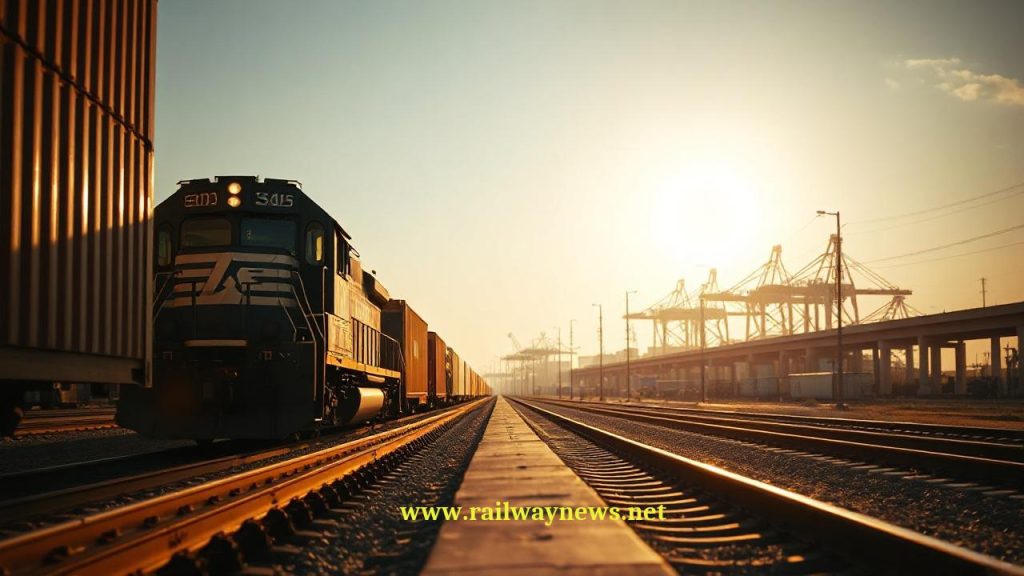
⚡ In Brief: Ray-Mont Logistics broke ground on a rail-served export transloading terminal at the Port of Mobile in Alabama, with Phase 1 operations scheduled to begin in Q4 2026.
MOBILE, Alabama – Montreal-based Ray-Mont Logistics has started construction on an export-focused logistics facility on Alabama Export Railroad (ALE) property, approximately 3 miles from the Port of Mobile. The transloading terminal will primarily handle plastic resin packaging and forest products. Phase 1 commissioning is targeted for fourth-quarter 2026.
What Is the Full Scope of This Project?
The terminal will integrate rail-to-ship transloading for plastic resins and forest products, served by Canadian National (CN) and the Alabama Export Railroad. The facility will draw on the Port of Mobile’s 50-foot shipping channel and APM Terminals’ on-dock rail infrastructure, connecting inland production centers to deepwater export capacity. The total capital investment value was not disclosed in the October 2025 announcement.
Key Project Data
| Parameter | Value |
|---|---|
| Project / Contract Name | Ray-Mont Logistics Port of Mobile Export Terminal |
| Total Value | Not disclosed |
| Parties Involved | Ray-Mont Logistics, Alabama Export Railroad (ALE), CN Railway, APM Terminals |
| Timeline / Completion | Phase 1 opening Q4 2026; full build-out timeline undisclosed |
| Country / Corridor | United States – Gulf Coast / Alabama Export Railroad corridor to Port of Mobile |
How Does This Compare to Similar Projects?
The Port of Mobile has attracted multiple logistics investments tied to its 50-foot channel depth, which accommodates post-Panamax vessels without tidal restrictions. In comparison, Geodis established a multimodal port hub in Le Havre, France in 2024 to consolidate freight flows through one Normandy gateway (Source: Seatrade Maritime, 2025), while AD Ports committed $835 million in September 2025 for a controlling stake in a Brazilian terminal operator, reflecting a broader industry pattern of logistics firms acquiring physical port-adjacent assets rather than relying solely on third-party stevedoring (Source: Seatrade Maritime, 2025). Ray-Mont’s Mobile facility follows this owner-operator model but targets specific commodity segments — plastic resins and forest products — rather than general containerized freight. No comparable transload project of this scale focusing exclusively on these two commodity streams has been announced at a U.S. Gulf Coast port in 2025.
Editor’s Analysis
Ray-Mont’s decision to locate on ALE property rather than directly on-port suggests a strategy to capture lower land costs while maintaining connectivity through short-line rail access — a cost structure advantage that pure on-dock facilities in Mobile cannot replicate. The commodity focus on plastic resins aligns with broad-based chemical freight gains reported by the Association of American Railroads for mid-2025, where chemical carloads are rising alongside agricultural and intermodal volumes (Source: AAR, May 2025). By timing Phase 1 for Q4 2026, Ray-Mont positions itself to absorb Gulf Coast resin export growth that is expected to accelerate as new polyethylene capacity from the U.S. petrochemical build-out reaches full production rates.
FAQ
Q: What types of cargo will the Ray-Mont Mobile terminal handle?
A: The facility is designed primarily for plastic resin packaging and forest products. No additional commodity segments were mentioned in the October 2025 announcement.
Q: When will the Ray-Mont terminal in Mobile be operational?
A: Phase 1 is scheduled to open in Q4 2026. The timeline for subsequent phases and full build-out completion has not been disclosed.
Q: What rail connections will serve the new Mobile transload facility?
A: Canadian National (CN) and Alabama Export Railroad (ALE) will provide rail service, linking the terminal to APM Terminals’ on-dock rail infrastructure and CN’s inland intermodal network.

Railway infrastructure, rolling stock and transport technologies specialist focused on global rail industry developments, high-speed rail systems, signaling technologies and freight transportation. Covering railway investments, public transport modernization, rail operations and international mobility projects across Europe, Asia and North America.
RELATED POSTS

October 1, 2026 7:09 am
United States regulators confirmed a September 30 deadline for the...

October 1, 2026 12:13 am
Illinois approved $1.5 billion annually for the Northern Illinois Transit...

October 1, 2026 6:10 am
Amtrak approved a System Expansion Committee on July 30 to...

October 1, 2026 4:10 am
DART launched two public ridership dashboards in March 2026 to...
October 1, 2026 3:12 am
Greenbrier confirmed Brian Comstock as new president and CEO effective...
October 1, 2026 5:14 am
Siemens confirmed delivery of the first new S200 train to...