
Pakistan Railways Launches $2.5B Karachi-Rohri Upgrade
Pakistan Railways launched a $2.5 billion upgrade of the 480 km Karachi-Rohri line to increase passenger train speeds to 160 km/h starting in January 2027.
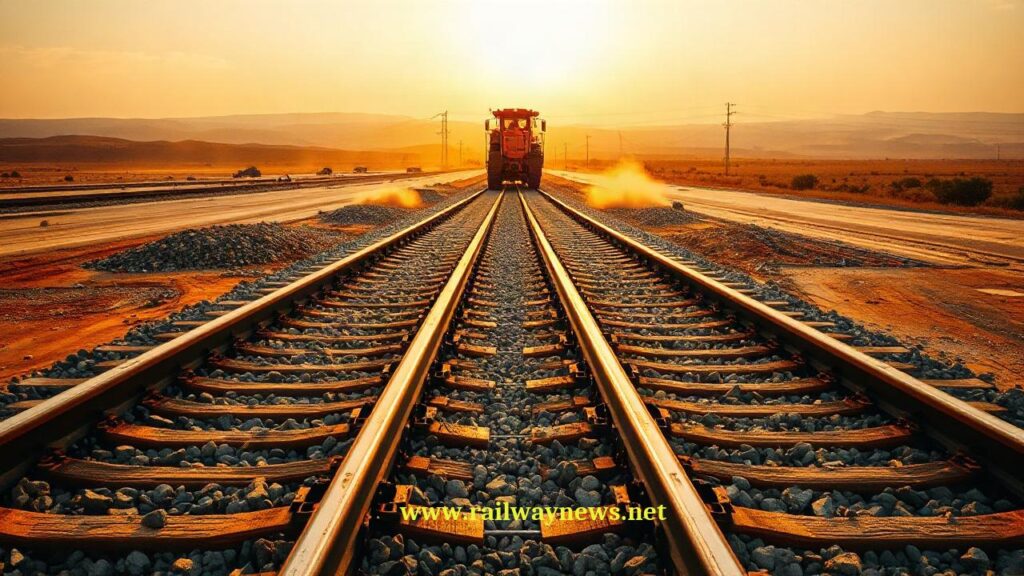
⚡ In Brief: Pakistan Railways plans to launch a $2.5 billion upgrade of the 480-kilometre Karachi–Rohri section of Main Line-1 in January 2027 to raise passenger train operating speeds to 160 km/h.
ISLAMABAD, Pakistan – Pakistan Railways will begin construction on the $2.5 billion modernisation of its 480-kilometre Karachi–Rohri corridor by January 2027. The project aims to raise maximum train speeds to 160 km/h on a route carrying 76 percent of national rail passenger traffic and 98 percent of rail freight. Financing will be led by the Asian Development Bank alongside other international lending institutions.
What Is the Full Scope of This Project?
The first phase of the Main Line-1 upgrade covers complete dual-track reconstruction and alignment adjustments across 480 route kilometres between Karachi and Rohri. Civil works encompass the Keamari–Landhi–Hyderabad, Hyderabad–Nawabshah, and Nawabshah–Rohri segments, including bridges, station buildings, and freight yards. Trackside security fencing will be installed across the corridor to eliminate animal and pedestrian incursions, while the facility at Walton Academy will undergo technical modernisations to train staff on updated systems. The specific signalling standard and technical supplier allocations were not disclosed at the time of publication.
Key Project Data
| Parameter | Value |
|---|---|
| Project / Contract Name | Main Line-1 (ML-1) Modernisation Phase 1 (Karachi–Rohri) |
| Total Value | USD 2.5 billion (approx. EUR 2.16 billion) |
| Parties Involved | Pakistan Railways, Asian Development Bank, AIIB, World Bank, IsDB |
| Timeline / Completion | Procurement closure late 2026; construction start January 2027; duration 30 to 36 months |
| Country / Corridor | Pakistan / Karachi–Rohri Main Line-1 corridor |
How Does This Compare to Similar Projects?
South Asian railway networks are increasingly prioritising corridor upgrades and speed enhancements to replace legacy infrastructure. In neighboring India, the national operator is pursuing a phased fleet and track modernization programme to convert traditional express routes into semi-high-speed corridors by 2040 (Source: Indian Railways, 2024). Upgrading brownfield trunk lines to 160 km/h aligns with international shifts toward software-based signalling and real-time digital asset monitoring, a global sector projected to expand at a 5.8 percent compound annual growth rate through 2034 (Source: Market.us, 2024). Unlike regional urban transit turnkey packages, such as Alstom’s Mumbai Metro signalling contracts, the Karachi–Rohri scheme requires civil rehabilitation while maintaining heavy mixed-traffic operations on single track detours (Source: Future Market Insights, 2024).
Editor’s Analysis
Rebuilding Pakistan’s primary economic rail artery while running commercial traffic presents severe logistics and scheduling bottlenecks. Securing Asian Development Bank backing indicates a structural move toward multilateral governance standards over prior single-source bilateral arrangements. Long-term commercial success will depend on whether procurement packages include digital signalling capable of scaling to international interoperability baselines (Source: Railmarket, 2024).
FAQ
Q: What speed will trains achieve on the upgraded Karachi–Rohri line?
A: Passenger trains will operate at speeds up to 160 km/h once the civil and track works are completed. This will significantly reduce travel times across the 480-kilometre corridor.
Q: When will construction on ML-1 Phase 1 start and conclude?
A: Construction is scheduled to break ground by January 2027 following contractor selection in 2026. The estimated construction duration is between 30 and 36 months.
Q: Will passenger and freight operations pause during construction works?
A: Pakistan Railways plans to keep the line active by staging work alongside live tracks, though traffic management plans have not been officially confirmed.

Railway infrastructure, rolling stock and transport technologies specialist focused on global rail industry developments, high-speed rail systems, signaling technologies and freight transportation. Covering railway investments, public transport modernization, rail operations and international mobility projects across Europe, Asia and North America.
RELATED POSTS

October 8, 2026 1:15 pm
Alstom secured a €1bn contract to build 13 automated trains,...

October 1, 2026 7:09 am
United States regulators confirmed a September 30 deadline for the...

October 8, 2026 12:18 pm
Siemens Mobility signed an agreement with VinSpeed to supply 350...

October 4, 2026 5:14 pm
Alstom secured a CA$4.7 billion order from VIA Rail Canada...

October 1, 2026 12:13 am
Illinois approved $1.5 billion annually for the Northern Illinois Transit...

October 5, 2026 6:12 pm
AECOM and Jacobs secured a contract in September 2026 to...