
ORR Cuts Risk Charges for UK Third-Party Rail Projects
ORR confirmed in June 2026 that it will direct Network Rail to cut risk charges on third-party rail projects to break-even levels, following an actuarial review.
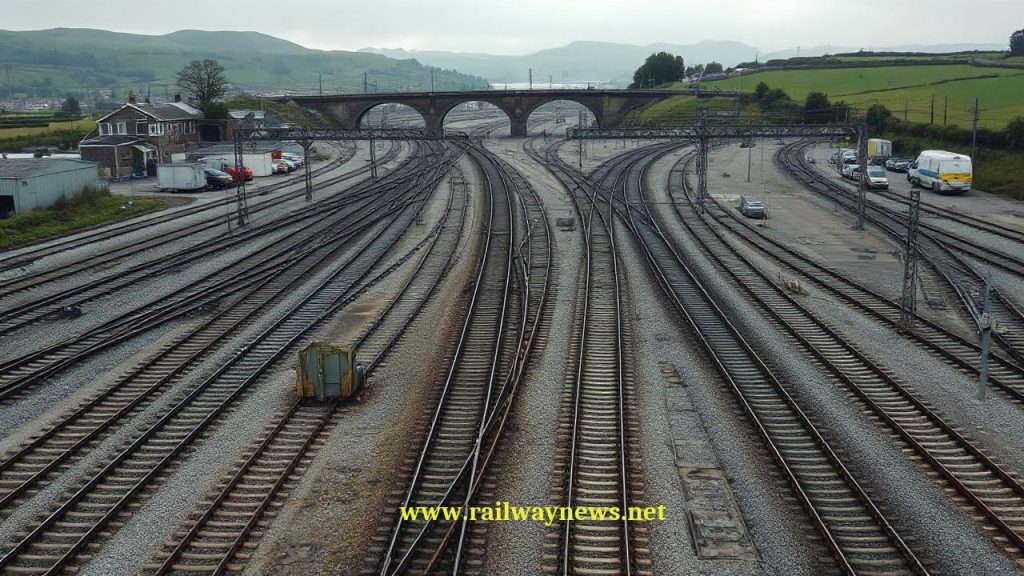
⚡ In Brief: The UK Office of Rail and Road will lower the risk charges Network Rail levies on third-party rail project investors to closer to break-even levels, following an independent actuarial review.
LONDON – The Office of Rail and Road (ORR) confirmed in June 2026 that it will direct Network Rail to reduce the risk charges imposed on private and third-party investors who fund works on the UK rail network. The decision follows a request from the UK Treasury and an analysis that found current charges exceed break-even costs, with detailed adjustments due by autumn 2026.
What Does This Regulation Cover?
The regulation covers the risk charges applied by Network Rail under the Rail Network Investment Framework (RNIF) to third-party-funded projects, including station upgrades, freight terminals, depots, accessibility schemes, and urban regeneration. The ORR’s review examined the Industry Risk Fund (IRF) and Network Rail Fee Fund (NRF), the two main risk-pooling mechanisms, and concluded both hold surplus funds above the level needed to cover expected liabilities. The ORR asked the Government Actuary’s Department to independently verify the technical analysis, and it will now work with Network Rail to bring charges down to a break-even basis without introducing strict fund segregation or interest accrual on the pools. The current £50 million project threshold under the RNIF remains unchanged, as only four agreements in the CP7 control period exceed that figure.
Key Regulatory Data
| Parameter | Value |
|---|---|
| Regulation / Policy Name | Third-Party Risk Charge Reduction under the RNIF |
| Total Value | Not disclosed (adjustment to break-even level) |
| Parties Involved | ORR, Network Rail, HM Treasury, Government Actuary’s Department |
| Timeline / Completion | Detailed adjustments by contract type to be presented in autumn 2026 |
| Country / Corridor | United Kingdom (national rail network) |
How Does This Compare to Global Standards?
Specific benchmarking data on risk charges for third-party rail investment across G7 networks is not publicly available in real time, but the UK’s pivot toward lower, cost-reflective premiums mirrors an international infrastructure financing trend that favours reducing regulatory friction to unlock institutional capital. The reform arrives as East West Rail Company initiates a £300 million consultancy partner search for the Oxford–Cambridge corridor and Network Rail advances a £64 million Transpennine tunnel upgrade procurement, both of which rely on private-sector engagement (Source: Construction News, June 2026). Concurrently, the UK’s construction sector is responding to a £455 billion net zero investment pipeline, much of it in grid and transmission infrastructure that competes for the same institutional investor base (Source: Safer Highways, June 2026). This domestic context positions the ORR’s risk charge reduction as part of a cross-sector drive to make regulated asset returns more competitive with global infrastructure opportunities.
Editor’s Analysis
The ORR’s intervention signals a regulatory stance that is moving from passive risk management to active capital attraction, a shift that could lower the weighted average cost of capital for UK rail projects at a time when competing infrastructure classes are rapidly maturing. With UK rail freight volumes posting broad-based growth in 2025 across agriculture, intermodal, and chemicals, the network’s capacity to absorb private investment efficiently will directly affect service levels and decarbonisation timelines. If the autumn 2026 adjustment succeeds in closing the gap between charged premiums and actual loss experience without reducing liability protections, Network Rail may establish a template for other regulated utilities facing similar tensions between public risk appetite and private finance requirements.
FAQ
Q: What is the Rail Network Investment Framework (RNIF)?
A: The RNIF is the mechanism that governs how third-party investments, from entities such as local authorities, property developers, or freight operators, are incorporated into the mainline rail network. It provides standardized risk allocation and liability arrangements for externally funded works.
Q: When will the reduced risk charges actually take effect?
A: Final details, including how reductions will vary by contract type, are scheduled for release in autumn 2026. Implementation will follow ORR-directed changes agreed with Network Rail after that disclosure.
Q: Is the £50 million project threshold within the RNIF being raised or lowered?
A: No change is recommended. The ORR reviewed the threshold and found insufficient evidence to justify altering it, noting only four active CP7 agreements exceed that value.

Railway infrastructure, rolling stock and transport technologies specialist focused on global rail industry developments, high-speed rail systems, signaling technologies and freight transportation. Covering railway investments, public transport modernization, rail operations and international mobility projects across Europe, Asia and North America.
RELATED POSTS

October 1, 2026 7:09 am
United States regulators confirmed a September 30 deadline for the...

October 1, 2026 12:13 am
Illinois approved $1.5 billion annually for the Northern Illinois Transit...

October 4, 2026 5:14 pm
Alstom secured a CA$4.7 billion order from VIA Rail Canada...

October 6, 2026 2:14 am
Union Pacific launched export rail shipments with Ferromex to deliver...

October 1, 2026 6:10 am
Amtrak approved a System Expansion Committee on July 30 to...
October 1, 2026 3:12 am
Greenbrier confirmed Brian Comstock as new president and CEO effective...