
Nexus Delivers Timber to Stephenson Woodland Walk North Tyneside
Nexus donated used timber to Stephenson Steam Railway’s two-acre Woodland Walk in North Tyneside, UK, enhancing local biodiversity.
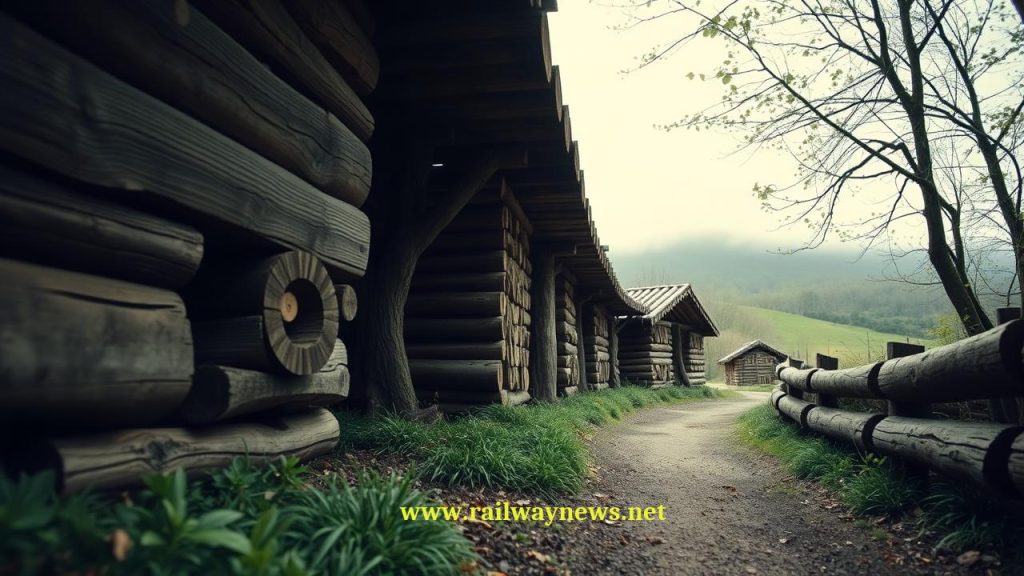
⚡ In Brief: UK transport operator Nexus is donating used timber from its Tyne and Wear Metro lineside estate to the Stephenson Steam Railway to enhance the heritage site’s two-acre Woodland Walk, promoting local biodiversity and circular economy principles.
NORTH TYNESIDE, UK – Tyne and Wear Metro operator Nexus has donated an undisclosed quantity of used timber logs to the nearby Stephenson Steam Railway. The materials, sourced from routine trackside management across the Metro network, will be used to improve the heritage railway’s two-acre Woodland Walk, which opened to the public in June 2025. The project reinforces a long-standing relationship between the two organisations, as the heritage site was the original Metro test track in the late 1970s.
What Is the Full Scope of This Project?
The project involves the transfer and repurposing of timber logs from Nexus’s operational railway estate to the heritage site. These logs will be used by volunteers to strengthen footpaths and create dedicated habitats for insects, birds, and small mammals along the Woodland Walk, a nature trail developed on former scrubland with funding from The National Lottery Heritage Fund. The initiative is a collaboration between Nexus, North East Museums (the site manager), and volunteers from the North Tyneside Steam Railway Association (NTSRA).
Key Project Data
| Parameter | Value |
|---|---|
| Project / Contract Name | Woodland Walk Material Donation |
| Total Value | Not disclosed |
| Parties Involved | Nexus, Stephenson Steam Railway, North East Museums, North Tyneside Steam Railway Association (NTSRA) |
| Timeline / Completion | Logs delivered; to be seasoned for ongoing use on walk opened in June 2025 |
| Country / Corridor | United Kingdom / North Tyneside |
How Does This Compare to Similar Projects?
This community-level sustainability initiative contrasts sharply with the high-value technology investments driving the wider rail sector in 2025-2026. While Nexus is reusing waste timber in a circular economy model, other operators are focused on capital-intensive fleet and infrastructure upgrades. For example, Swiss operator Gornergrat Bahn recently ordered additional POLARIS trains from Stadler for alpine route modernisation (Source: Global Railway Review, 2026), and technology firm Voltify raised USD $30 million to convert diesel trains to electric power without new catenary infrastructure (Source: Railway Supply, 2026). The Nexus project represents a grassroots approach to environmental stewardship, distinct from the industry’s larger technological decarbonisation efforts.
Editor’s Analysis
The Nexus-Stephenson partnership demonstrates a valuable, low-cost model for social and environmental responsibility among public transport operators. While the industry’s primary sustainability focus is on large-scale fleet and energy projects, this initiative highlights the “long tail” of circular economy opportunities that can be leveraged at a local level. These smaller projects build community goodwill and deliver tangible biodiversity benefits, complementing the macro-level investments in technology seen across the European rail market.
FAQ
Q: What is the historical connection between the Metro and the Stephenson Railway?
A: The Stephenson Railway site was the original test track for the Tyne and Wear Metro in the late 1970s. Nexus furthered this connection by donating the first prototype Metro carriage, number 4001, to the museum in 2025.
Q: What is the financial value of the donated timber?
A: The financial value of the used logs has not been disclosed by Nexus or the museum. The donation is primarily valued for its environmental and community benefits rather than a specific monetary figure.
Q: Will this project impact regular Metro passenger services?
A: No, this project will not impact passenger services. The timber is a byproduct of routine, ongoing lineside vegetation management that is conducted across the Metro network.

Railway infrastructure, rolling stock and transport technologies specialist focused on global rail industry developments, high-speed rail systems, signaling technologies and freight transportation. Covering railway investments, public transport modernization, rail operations and international mobility projects across Europe, Asia and North America.
RELATED POSTS

October 8, 2026 1:15 pm
Alstom secured a €1bn contract to build 13 automated trains,...

October 1, 2026 7:09 am
United States regulators confirmed a September 30 deadline for the...

October 4, 2026 5:14 pm
Alstom secured a CA$4.7 billion order from VIA Rail Canada...

October 5, 2026 6:12 pm
AECOM and Jacobs secured a contract in September 2026 to...

October 1, 2026 12:13 am
Illinois approved $1.5 billion annually for the Northern Illinois Transit...

October 4, 2026 11:08 pm
Sound Transit confirmed the September 30 opening of Seattle Pinehurst...