
MTA Opens Three Elevators at 149th Street-Hostos Station
MTA expanded New York transit access with three new elevators at the 149th Street-Hostos station in 2026, bringing its total to 163 accessible subway stations.
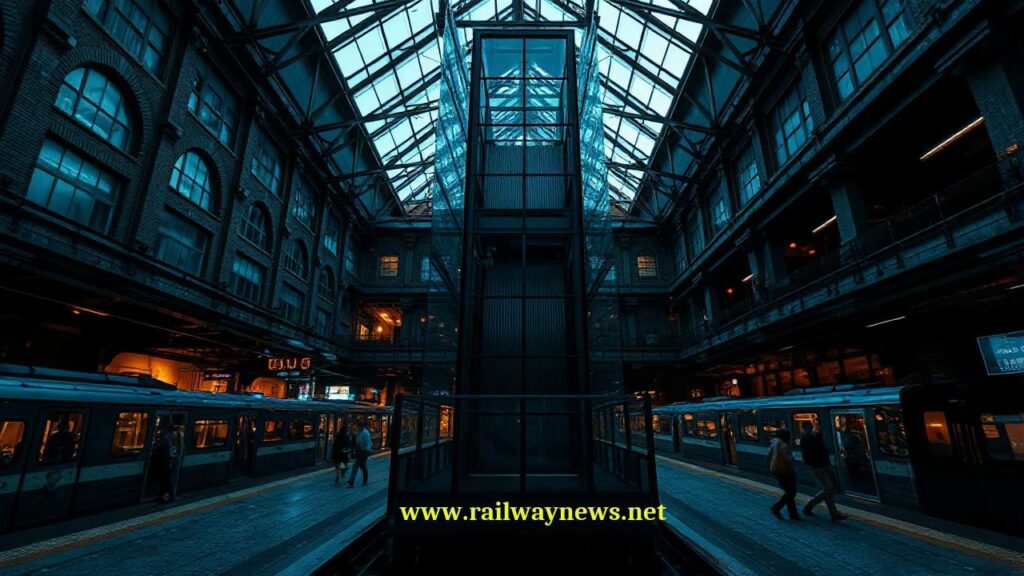
⚡ In Brief: The New York Metropolitan Transportation Authority commissioned three new elevators at the 149th Street-Hostos station, bringing the transit network’s total count of fully accessible subway stations to 163.
NEW YORK, UNITED STATES – The Metropolitan Transportation Authority (MTA) completed accessibility upgrades at the 149th Street-Hostos station serving subway lines 2, 4, and 5 in early 2026. The project introduces three new elevators to accommodate the hub’s 9,000 daily passengers and marks the eighth station made accessible across the network during 2026. Construction teams simultaneously upgraded passenger circulation and restored the station’s 120-year-old historic headhouse.
What Is the Full Scope of This Project?
The 149th Street-Hostos upgrade delivers full vertical accessibility between street level and all train platforms alongside critical station renewals. Vertical transit includes one three-stop elevator linking the street, upper platform, and lower mezzanine, complemented by two elevators operating between the upper and lower platforms. Infrastructure works also added two mezzanine-to-platform staircases, a modernized fare control zone, LED illumination, upgraded fire systems, public address equipment, security cameras, and architectural restoration of the headhouse listed on the National Register of Historic Places.
Key Project Data
| Parameter | Value |
|---|---|
| Project / Contract Name | 149th Street-Hostos Accessibility Project |
| Total Value | Not disclosed |
| Parties Involved | Metropolitan Transportation Authority (MTA), MTA New York City Transit |
| Timeline / Completion | Completed 2026 |
| Country / Corridor | United States / IRT White Plains Road and Jerome Avenue Lines (The Bronx, NY) |
How Does This Compare to Similar Projects?
The 149th Street-Hostos upgrade fits into a larger capital pipeline where the MTA is investing nearly $7.1 billion in station accessibility across its 2025–2029 Capital Plan to add ADA compliance to 60 stations and overhaul 48 existing elevators (Source: MTA, 2024). Network-wide, the agency currently has 30 additional stations under active construction to install accessibility features. While the system reached 163 accessible stations with this opening, specific unit-cost comparisons for this individual three-elevator station contract against equivalent 2024–2025 projects were not publicly available at time of publication.
Editor’s Analysis
Metropolitan operators are prioritizing deep station retrofits to manage rising urban density as global rail infrastructure investments rise toward USD 126.54 billion by 2030 (Source: Mordor Intelligence, 2025). Delivering full accessibility across century-old multi-level junctions requires complex structural underpinning, making capital allocations like the MTA’s $7.1 billion plan essential to system viability. As passenger volumes expand, legacy transit authorities must continue coupling accessibility retrofits with platform-level monitoring upgrades to avoid severe surface corridor congestion.
FAQ
Q: How many subway stations on the MTA network are currently fully accessible?
A: Following the completion of the 149th Street-Hostos project, the MTA network operates 163 fully accessible stations. The transit authority currently has 30 more stations under construction to expand accessibility.
Q: What was the capital cost of the 149th Street-Hostos elevator installation?
A: The specific individual contract value for this station upgrade was not disclosed by the MTA. The project forms part of broader accessibility programs backed by the agency’s $7.1 billion capital investment commitment.
Q: What lines and daily ridership does the 149th Street-Hostos complex serve?
A: The Bronx station serves approximately 9,000 daily passengers. It provides connections across MTA New York City Transit subway lines 2, 4, and 5.

Railway infrastructure, rolling stock and transport technologies specialist focused on global rail industry developments, high-speed rail systems, signaling technologies and freight transportation. Covering railway investments, public transport modernization, rail operations and international mobility projects across Europe, Asia and North America.
RELATED POSTS

October 1, 2026 7:09 am
United States regulators confirmed a September 30 deadline for the...
October 6, 2026 2:14 am
Union Pacific launched export rail shipments with Ferromex to deliver...

October 1, 2026 12:13 am
Illinois approved $1.5 billion annually for the Northern Illinois Transit...

October 1, 2026 6:10 am
Amtrak approved a System Expansion Committee on July 30 to...

October 1, 2026 3:12 am
Greenbrier confirmed Brian Comstock as new president and CEO effective...
October 1, 2026 10:14 am
HS2 installed a 55-metre steel span in Birmingham, completing phase...