
Lusail LRT Phase 1: Qatar’s Smart Mobility Triumph
The successful completion of Phase 1 of the Lusail Light Rail Transit project showcases advancements in sustainable urban transportation through innovative technologies like catenary-free (APS) systems, energy-efficient trams with modern amenities, and a public-private partnership model that successfully integrated international expertise.
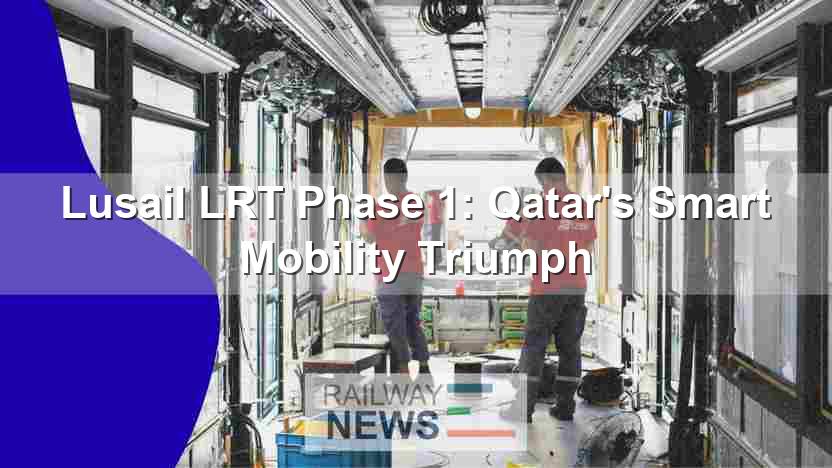
This article explores the successful completion of Phase 1 of the Lusail Light Rail Transit (LRT) project in Qatar, a significant undertaking showcasing advancements in sustainable and efficient urban transportation. The project, a collaborative effort between the LRTC Consortium (comprising Alstom and QDVC) and Qatar Railways Company, exemplifies a commitment to modern, technologically advanced rail infrastructure. The focus will be on the technological aspects of the project, the collaborative partnership involved in its execution, and the broader implications for Qatar’s transportation infrastructure and its position as a leader in smart mobility solutions in the region. We will examine the specific technologies deployed, the challenges overcome, and the long-term impact on Lusail City and the greater Doha area. This analysis explores the details of the implemented system, highlighting its innovative features and the contribution to Qatar’s ambitious vision for sustainable urban development.
System Design and Technology
Phase 1 of the Lusail LRT project encompasses a 9.7km catenary-free single-track elevated line and a 12.8km single-track underground line, incorporating 16 stations, a crucial interchange station connecting with the Doha Metro, a depot for maintenance and storage of rolling stock, and a viaduct spanning the Al Khor Expressway. The system utilizes 28 Alstom Citadis X05 trams, each 32 meters long, designed with five modules and a capacity of 209 passengers. A notable feature is the use of both catenary and catenary-free (APS – Automatic Propulsion System) technology, allowing for flexible operation and reduced reliance on overhead lines, especially in aesthetically sensitive urban environments or underground sections. The trams themselves are equipped with modern passenger amenities such as low-floor access for improved accessibility, energy-efficient LED lighting, and detailed passenger information systems, enhancing the overall passenger experience. The adoption of electrical braking further contributes to energy efficiency and reduced operational costs.
The LRTC Consortium and Project Delivery
The success of Phase 1 is a testament to the effective collaboration between the LRTC Consortium (formed by Alstom, a global leader in rail technology, and QDVC, a Qatari company bringing local expertise) and Qatar Railways Company. This public-private partnership model facilitated the seamless integration of international technological expertise with local knowledge and understanding of the Qatari market. Alstom’s responsibility encompassed the supply of the Citadis X05 trams, undertaking track works, providing power supply equipment, implementing signaling systems, and installing platform screen doors (PSD). This turnkey approach streamlined the project’s execution, ensuring cohesive design, construction, and commissioning.
Sustainable and Smart Mobility Solutions
The Lusail LRT project aligns directly with Qatar’s vision for sustainable urban development. The choice of electric trams, coupled with the implementation of energy-efficient technologies like electrical braking and LED lighting, significantly reduces the project’s carbon footprint compared to traditional transportation systems. Moreover, the integration of advanced signaling and passenger information systems contributes to a smart, efficient, and user-friendly transportation network. This focus on sustainable and intelligent mobility positions Qatar as a regional leader in adopting cutting-edge technologies to address the challenges of urban growth and environmental sustainability.
Challenges and Future Development
The project undoubtedly faced challenges, including navigating the complexities of constructing a modern light rail system in a rapidly developing urban environment like Lusail. Coordinating multiple contractors, integrating diverse technologies, and ensuring timely completion within budget required robust project management and meticulous planning. Future phases of the Lusail LRT project will likely build upon the successes of Phase 1, extending the network’s reach and further integrating it with other modes of public transport within the greater Doha metropolitan area. The lessons learned from Phase 1 will be instrumental in optimizing future phases and ensuring scalability and seamless integration into the evolving transport landscape.
Conclusions
The successful completion of Phase 1 of the Lusail LRT project marks a significant milestone in Qatar’s ambitious infrastructure development program and its commitment to sustainable, technologically advanced transportation solutions. The project’s success is attributable to the synergistic partnership between the LRTC Consortium (Alstom and QDVC) and Qatar Railways Company, effectively combining international expertise with local knowledge. The implementation of state-of-the-art technologies, such as the Citadis X05 trams with their ability to operate with both catenary and APS systems, showcases Qatar’s dedication to innovation and efficiency. The project not only provides a reliable and environmentally friendly transportation system for Lusail City’s residents and visitors but also solidifies Qatar’s position as a regional leader in smart mobility. The lessons learned from this phase, particularly in managing the complexities of a large-scale infrastructure project in a rapidly developing urban environment, will be invaluable for future phases and similar projects worldwide. The focus on sustainability, technological advancement, and efficient project management exemplifies a model for future urban transportation development, addressing the challenges of urban growth while promoting environmentally responsible practices. The Lusail LRT project is not merely a transportation system; it’s a symbol of Qatar’s forward-thinking approach to urban planning and its commitment to creating a sustainable and technologically advanced future.

Railway infrastructure, rolling stock and transport technologies specialist focused on global rail industry developments, high-speed rail systems, signaling technologies and freight transportation. Covering railway investments, public transport modernization, rail operations and international mobility projects across Europe, Asia and North America.
RELATED POSTS

October 8, 2026 1:15 pm
Alstom secured a €1bn contract to build 13 automated trains,...

October 1, 2026 7:09 am
United States regulators confirmed a September 30 deadline for the...

October 4, 2026 5:14 pm
Alstom secured a CA$4.7 billion order from VIA Rail Canada...

October 8, 2026 12:18 pm
Siemens Mobility signed an agreement with VinSpeed to supply 350...

October 5, 2026 6:12 pm
AECOM and Jacobs secured a contract in September 2026 to...

October 4, 2026 11:08 pm
Sound Transit confirmed the September 30 opening of Seattle Pinehurst...