
India’s Hydrogen Rail: Sustainable Tech & Heritage Routes
Indian Railways tests first hydrogen locomotive, a step toward sustainable rail. The “Hydrogen for Heritage” initiative aims for 35 hydrogen trains on heritage routes.
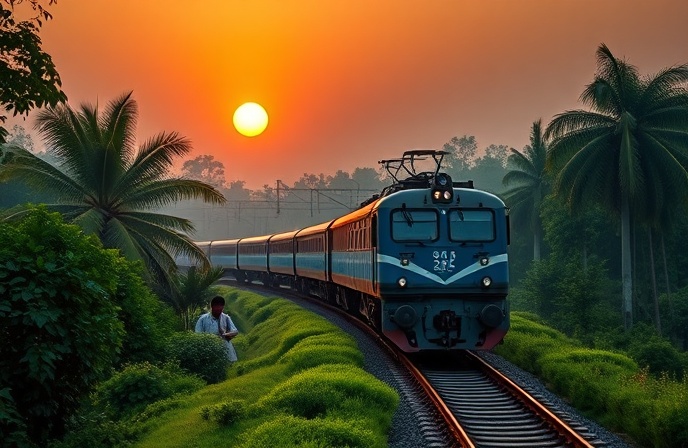
Indian Railways Unveils First Hydrogen-Powered Locomotive: A Step Towards Sustainable Rail
In a landmark development for sustainable rail transport, Indian Railways has successfully tested its first hydrogen-powered locomotive. Railway Minister Ashwini Vaishnaw announced the achievement via social media on July 28, 2025, marking a significant stride towards cleaner energy adoption in the railway sector. The testing took place at the Integral Coach Factory (ICF) in Chennai. This innovation is part of the “Hydrogen for Heritage” initiative, a project designed to deploy 35 hydrogen-powered trains across heritage and hill routes throughout the country. This initiative underscores the commitment of Indian Railways to reduce carbon emissions and embrace environmentally friendly technologies. This article will explore the details of this hydrogen locomotive, the broader implications for the railway industry, and the future outlook for India’s green railway ambitions.
A New Era of Propulsion: The Hydrogen Locomotive Unveiled
The successful testing of the hydrogen-powered locomotive represents a significant technological achievement. The locomotive, designed for 1,200HP, positions India among the leaders in hydrogen-powered train technology. The tested unit, a Driving Power Car, represents the first step in a pilot project. This pilot project aims to retrofit an existing Diesel Electric Multiple Unit (DEMU) with a hydrogen fuel cell. This approach allows for gradual adoption and testing of the new technology. The hydrogen-powered locomotives will be a crucial part of the “Hydrogen for Heritage” initiative. Each hydrogen-powered train is estimated to cost approximately Rs800 million (approximately $9.24 million), with an additional Rs700 million needed for ground infrastructure per route. This initial investment highlights the commitment of Indian Railways to the long-term viability of hydrogen fuel.
The “Hydrogen for Heritage” Initiative: Revitalizing Heritage Routes
The “Hydrogen for Heritage” initiative is a strategic undertaking focused on deploying hydrogen-powered trains on scenic heritage and hill routes. The goal is to enhance the experience for tourists while simultaneously reducing the environmental footprint of railway operations in these sensitive areas. The initiative will involve the deployment of 35 hydrogen-powered trains. The implementation will focus on routes where the visibility of the trains and their impact is significant, showcasing the shift toward sustainability. The project includes the establishment of necessary ground infrastructure, with an estimated investment of Rs1.1 billion. The pilot project, slated for the Jind–Sonipat route within the Northern Railway network, will provide vital operational data and insights to optimize the implementation and performance of these green initiatives.
Costs and Infrastructure: The Financial Landscape of Hydrogen Fuel
The initial implementation of hydrogen-fuelled trains may incur higher operational costs compared to conventional methods. This is due to infrastructure setup expenses and relatively higher fuel costs in the initial stages. However, it is anticipated that these costs will decrease over time as the adoption of hydrogen-powered trains increases. Scaling the hydrogen fuel supply chain, combined with advancements in hydrogen production and storage technologies, is expected to improve the economics of hydrogen-powered trains. The investment in ground infrastructure, although significant, is essential for ensuring the safe and efficient operation of hydrogen-powered trains and for establishing a sustainable, long-term model for railway operations.
Integrating Technology for Enhanced Safety and Efficiency
Beyond hydrogen power, Indian Railways is also integrating advanced technologies to improve operational efficiency and safety. A key development is the partnership with the Dedicated Freight Corridor Corporation of India (DFCCIL) to implement an Artificial Intelligence (AI)-based train safety system. This system will enhance the monitoring of rolling stock health, utilizing data analytics for predictive maintenance and real-time insights into the performance of trains. This integration of AI underscores a broader commitment to embrace cutting-edge technology to boost the overall efficiency, safety, and reliability of rail operations across the network.
Conclusion
The successful testing of India’s first hydrogen-powered locomotive represents a significant milestone in the railway industry’s transition towards sustainable practices. The “Hydrogen for Heritage” initiative demonstrates a proactive approach to reducing carbon emissions and enhancing passenger experiences on heritage routes. While initial operational costs may be higher, the long-term benefits of hydrogen fuel, particularly its zero-emission profile, offer compelling advantages. The integration of AI-based safety systems further reinforces Indian Railways’ commitment to technological innovation. The future of Indian Railways hinges on the successful rollout of these initiatives. The industry anticipates that as technology matures and the hydrogen fuel supply chain grows, the benefits will become more accessible. The focus now is on scaling the initiative, fostering innovation, and establishing a sustainable model for future railway operations.

Railway infrastructure, rolling stock and transport technologies specialist focused on global rail industry developments, high-speed rail systems, signaling technologies and freight transportation. Covering railway investments, public transport modernization, rail operations and international mobility projects across Europe, Asia and North America.
RELATED POSTS

October 1, 2026 7:09 am
United States regulators confirmed a September 30 deadline for the...

October 8, 2026 1:15 pm
Alstom secured a €1bn contract to build 13 automated trains,...

October 4, 2026 5:14 pm
Alstom secured a CA$4.7 billion order from VIA Rail Canada...

October 1, 2026 12:13 am
Illinois approved $1.5 billion annually for the Northern Illinois Transit...

October 8, 2026 12:18 pm
Siemens Mobility signed an agreement with VinSpeed to supply 350...

October 6, 2026 2:14 am
Union Pacific launched export rail shipments with Ferromex to deliver...