
High-Speed Rail’s Future: Houston Bullet Train & Global Trends
High-speed rail is a game-changer for future transportation, boosting economies and reducing emissions. Discover how these projects transform urban landscapes and drive sustainable development.
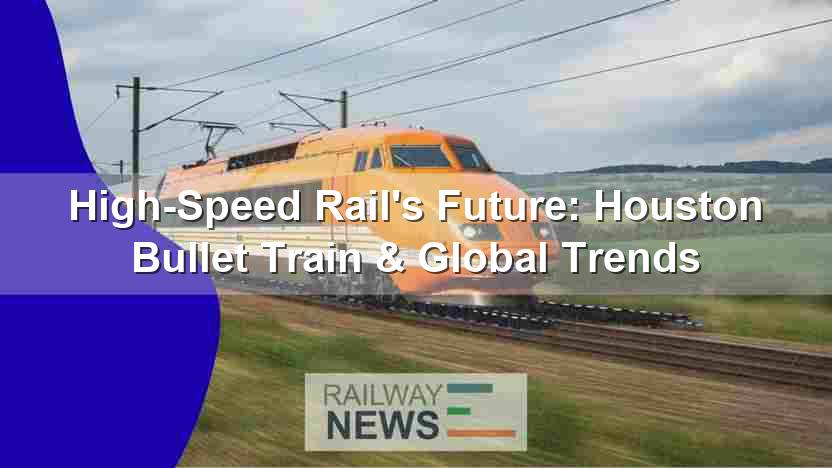
The world is experiencing a rapid evolution in transportation, with high-speed rail (HSR) emerging as a pivotal component of modern infrastructure. This article explores the intricacies of HSR, exploring its economic benefits, engineering challenges, and societal impact. From the intricate design of the tracks to the sophisticated signaling systems, and the critical role of urban planning and community engagement, we will examine the multifaceted aspects of implementing and operating high-speed rail systems. This analysis will consider the technical and economic viability of HSR projects, particularly in light of emerging challenges and opportunities in the global rail sector. Additionally, we’ll evaluate the potential of HSR in fostering economic development and alleviating urban congestion, addressing the crucial question of whether it represents a sustainable and efficient solution for the future of transportation.
The Economic Engine: Driving Development with HSR
High-speed rail networks are not merely about transporting people; they are about fostering economic growth. The direct economic benefits include job creation during construction and maintenance phases, as well as the stimulation of related industries like tourism and hospitality. HSR projects also contribute to increased property values along the rail corridors, and often incentivize urban development and redevelopment in areas adjacent to stations. The indirect benefits are equally significant. For example, faster travel times between cities can lead to the growth of industrial clusters, as businesses can locate in more optimal locations without the restrictions of geographical limitations. Reduced reliance on air travel, particularly in densely populated areas, leads to reduced carbon emissions and a significant improvement in environmental sustainability, creating a ripple effect throughout the economy.
Engineering Marvels: Navigating the Challenges of HSR Construction
Building high-speed rail systems requires significant engineering expertise. The infrastructure demands precision in every aspect of design, construction, and operation. This includes the design of high-strength and lightweight track materials, sophisticated signaling systems, and robust bridge and tunnel structures that can withstand the high speeds and loads inherent in HSR systems. The complexity of tunnels, often crossing mountain ranges or beneath densely populated areas, presents unique engineering challenges. These challenges are further compounded by the necessity of integrating the new rail network with existing infrastructure, requiring careful planning and execution to minimize disruption to existing traffic systems.
Beyond the Tracks: Urban Planning and Community Engagement
HSR projects are not simply about constructing tracks; they are deeply intertwined with urban planning and community development. Carefully designed stations are not just transport hubs; they become important community and economic anchors, often driving revitalization in surrounding areas. Effective urban planning incorporates the needs of residents, businesses, and local authorities. Successful projects involve proactive engagement with communities, addressing concerns and collaborating to ensure that the benefits of the rail network are shared equitably. Thorough and transparent community engagement is vital to mitigate potential conflicts and build trust in the long-term success of the project. Integrating HSR projects with existing local infrastructure is key to a successful outcome.
The Future of High-Speed Rail: A Sustainable Transportation Vision
The future of high-speed rail is bright, promising a sustainable and efficient transportation network. HSR, with its high-speed capabilities, reduced environmental impact compared to air travel, and significant economic benefits, is poised to play a critical role in shaping future transportation networks. The integration of advanced technologies, such as AI-powered systems for improved traffic management, is expected to enhance the safety, efficiency, and passenger experience on HSR lines. The growing demand for efficient and environmentally conscious transportation solutions worldwide makes high-speed rail a strong contender for future infrastructure development. The Houston bullet train project, under active discussion, exemplifies this trend, representing a potential paradigm shift in North American transportation. It is crucial for policymakers and stakeholders to collaborate in the planning and execution of these projects, recognizing the far-reaching impact on communities and the overall economy.
To summarize, high-speed rail represents a significant advancement in transportation infrastructure, offering a myriad of economic, environmental, and societal benefits. While engineering challenges and community engagement are essential considerations, the potential for HSR to transform travel, boost economies, and reduce environmental impact is undeniable. The implementation of HSR projects demands careful planning, robust engineering, and sustained community engagement. The successful integration of new high-speed rail lines with existing infrastructure is vital to minimize disruption, ensuring the long-term success and acceptance of these advanced transport systems. By embracing a holistic approach that considers the social, economic, and environmental aspects of HSR development, we can create sustainable and efficient transportation systems that benefit future generations. This trend is certainly one to watch as developments continue to shape the future of urban and inter-city travel.
You might be interested in:
Last January 2019, we published an article about a fully automated metro line in Delhi. Click here to read – Delhi Metro Line 7: Automated Transit Success

Railway infrastructure, rolling stock and transport technologies specialist focused on global rail industry developments, high-speed rail systems, signaling technologies and freight transportation. Covering railway investments, public transport modernization, rail operations and international mobility projects across Europe, Asia and North America.
RELATED POSTS

October 1, 2026 7:09 am
United States regulators confirmed a September 30 deadline for the...

October 8, 2026 1:15 pm
Alstom secured a €1bn contract to build 13 automated trains,...

October 4, 2026 5:14 pm
Alstom secured a CA$4.7 billion order from VIA Rail Canada...

October 1, 2026 12:13 am
Illinois approved $1.5 billion annually for the Northern Illinois Transit...

October 6, 2026 2:14 am
Union Pacific launched export rail shipments with Ferromex to deliver...

October 1, 2026 6:10 am
Amtrak approved a System Expansion Committee on July 30 to...