
GoRail Launches Modern Freight Emoji Petition to Unicode
GoRail launched a June 2026 petition urging Unicode to approve a modern freight train emoji, noting 40% of US freight ton-miles move by rail without an emoji.
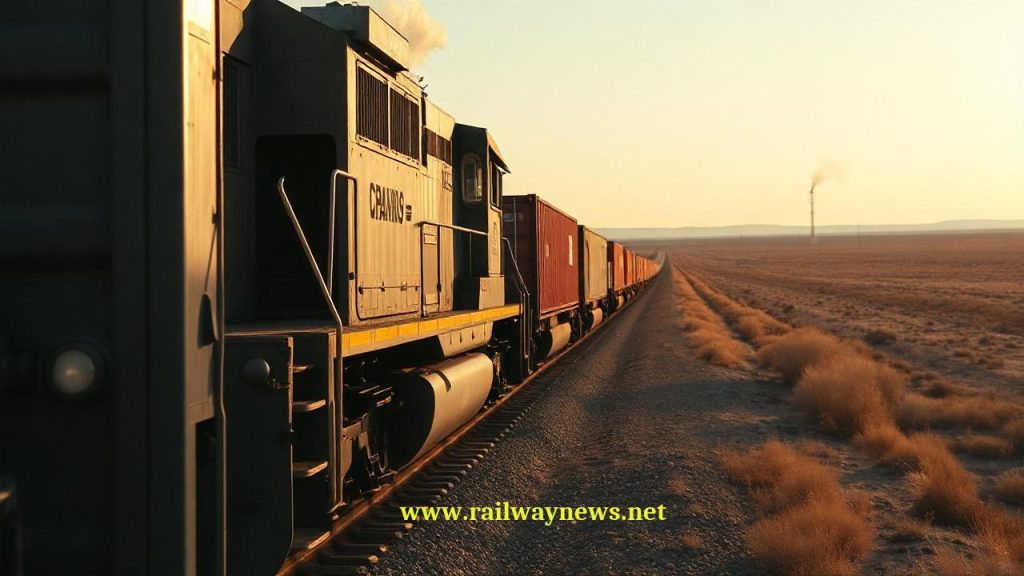
⚡ In Brief: US advocacy group GoRail launched a petition through its Rail Champions campaign urging the Unicode Consortium to approve a modern freight train emoji, arguing the existing steam locomotive icon—standardized in Unicode 6.0 (2010)—no longer represents the rail industry.
WASHINGTON, DC – GoRail, a US-based rail education and advocacy nonprofit, initiated a grassroots petition in June 2026 through its Rail Champions campaign to persuade the Unicode Consortium to encode a distinct modern freight train emoji. The petition targets the global emoji standard, which governs characters available on over 90% of digital devices worldwide. No signature threshold or submission deadline was publicly disclosed by the campaign organizers.
What Are the Technical Specifications?
The Unicode Consortium requires all emoji proposals to document visual distinctness from existing characters, demonstrated capacity to combine with other emoji to form new concepts, and evidence of high anticipated usage frequency. A modern freight train emoji would need to be visually differentiated from the existing steam locomotive (U+1F682, introduced in Unicode 6.0) and the high-speed train with nose cone (U+1F684), both encoded in 2010. Proposal submissions must include glyph design mockups demonstrating scalability at small sizes—typically 18–72 pixels on mobile displays—alongside usage data from search trends, social media analytics, or industry adoption metrics. The Unicode Emoji Subcommittee reviews proposals during quarterly meetings, with final approvals issued annually, usually in September, for implementation the following year across platforms including iOS, Android, and Windows. (Source: Unicode Consortium, 2024 submission guidelines)
Key Technical Data
| Parameter | Value |
|---|---|
| Technology / System Name | Proposed Modern Freight Train Emoji (codepoint not yet assigned) |
| Current Unicode Status | Not under formal review; petition phase |
| Parties Involved | GoRail / Rail Champions (petitioner); Unicode Consortium (approval body) |
| Timeline / Approval Cycle | Not disclosed; standard Unicode review cycle is 18–24 months from formal submission |
| Platform Reach | Global—all Unicode-compliant devices (iOS, Android, Windows, macOS, web platforms) |
Where Does This Technology Stand in the Market?
The existing train emoji set, encoded in Unicode 6.0 (2010), includes three rail glyphs: the steam locomotive (U+1F682), a high-speed train with aerodynamic nose cone (U+1F684), and a light rail/tram car (U+1F688). None depicts a diesel-electric freight locomotive or intermodal consist—the configuration responsible for moving approximately 40% of US freight ton-miles. By contrast, the pickup truck emoji (U+1F6FB) was approved in Unicode 12.0 (2019) after Ford Motor Company submitted a proposal citing the vehicle’s ubiquity in North American markets. Similarly, the hijab emoji (U+1F9D5) advanced through a grassroots campaign led by a 15-year-old in Saudi Arabia, demonstrating that non-corporate petitioners can influence the standard. The annual Unicode approval window typically admits 30–60 new emoji characters from several hundred proposals; transportation category additions have averaged roughly one per release cycle since 2018. Grassroots petition campaigns without a formal technical submission document, however, rarely advance without institutional backing that can supply the required frequency-of-use analytics. (Source: Unicode Emoji Subcommittee, 2024; Emojipedia, 2023)
Editor’s Analysis
The GoRail petition arrives at a moment when rail infrastructure visibility is climbing in policy and investment circles globally—the railway signalling market alone is projected to grow through 2035 driven by industrial Ethernet adoption and government infrastructure spending on rail corridors. An emoji encoding a modern freight locomotive would provide the rail freight sector a digital-native symbol at negligible cost, potentially normalizing rail freight in consumer consciousness at a time when decarbonisation roadmaps increasingly hinge on modal shift from road to rail. The Unicode Consortium rarely acts on petitions lacking a fully documented technical proposal, however, meaning GoRail’s campaign functions primarily as an awareness mechanism rather than a direct pathway to encoding. The signature volume—if and when disclosed—will serve as a proxy for whether this campaign can generate the usage evidence that Unicode evaluators require.
FAQ
Q: How long does the Unicode Consortium take to approve a new emoji?
A: From formal proposal submission to implementation on devices, the standard cycle spans 18 to 24 months. Proposals submitted by the March 31 annual deadline are reviewed that year, with approved emoji typically released in September the following year.
Q: Has a grassroots campaign ever successfully gotten an emoji approved before?
A: Yes—the hijab emoji (U+1F9D5) was proposed in 2016 by a then-15-year-old in Saudi Arabia and approved in Unicode 10.0 (2017). The dumpling emoji was also advanced through a public Kickstarter campaign and approved in Unicode 10.0.
Q: What specific criteria must the freight train emoji meet for Unicode approval?
A: The proposal must demonstrate visual distinction from the existing steam locomotive and high-speed train emoji, show evidence of high expected usage through search analytics or social media data, prove the symbol can combine with other emoji to express broader concepts, and include scalable glyph mockups. This has not been officially confirmed as submitted by GoRail.
Q: When would the freight train emoji appear on iPhones and Android devices if approved?
A: If a formal proposal were submitted by March 2027 and approved that year, the emoji would likely appear in Unicode 18.0 in September 2028, with platform vendors including Apple and Google deploying it through OS updates between October 2028 and early 2029.

Railway infrastructure, rolling stock and transport technologies specialist focused on global rail industry developments, high-speed rail systems, signaling technologies and freight transportation. Covering railway investments, public transport modernization, rail operations and international mobility projects across Europe, Asia and North America.
RELATED POSTS

October 8, 2026 1:15 pm
Alstom secured a €1bn contract to build 13 automated trains,...

October 1, 2026 7:09 am
United States regulators confirmed a September 30 deadline for the...

October 8, 2026 12:18 pm
Siemens Mobility signed an agreement with VinSpeed to supply 350...

October 4, 2026 5:14 pm
Alstom secured a CA$4.7 billion order from VIA Rail Canada...

October 5, 2026 6:12 pm
AECOM and Jacobs secured a contract in September 2026 to...

October 1, 2026 12:13 am
Illinois approved $1.5 billion annually for the Northern Illinois Transit...