
Future Rail Innovations: Global Trends & Safety
The future of rail is here, driven by innovation, competition, and safety. Discover how intelligent systems are transforming operations and routes.
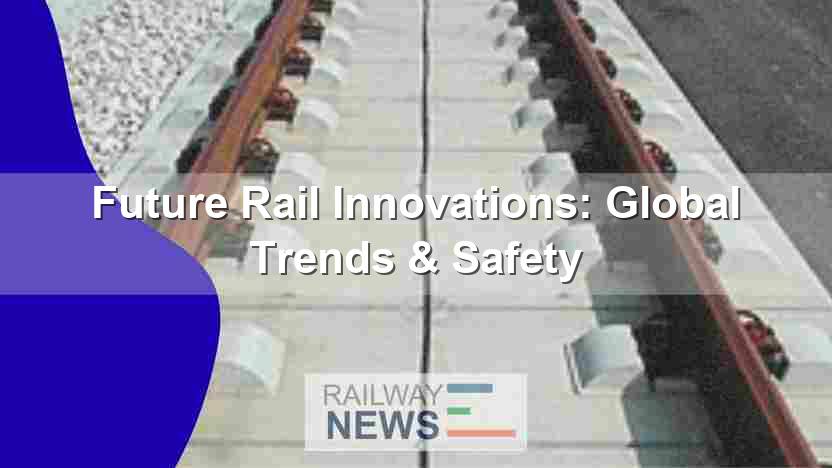
The rail industry is undergoing a period of significant transformation, driven by technological advancements, increasing competition, and a renewed focus on safety. This article explores the key factors shaping the future of rail travel, from the development of cutting-edge technologies to the evolving dynamics of the market. We will examine how innovation is being leveraged to enhance efficiency, improve passenger experience, and address crucial safety concerns. Additionally, we will analyze the growing competitive landscape and its implications for the industry as a whole. Understanding these forces is critical for navigating the complexities of this evolving sector and forecasting its future trajectory. This exploration will ultimately offer insights into the potential for continued growth, adaptation, and success in the rail transportation sector.
The Rise of Intelligent Transportation Systems
The integration of advanced technologies, such as AI (artificial intelligence), machine learning, and IoT (Internet of Things) sensors, is revolutionizing railway operations. These technologies enable predictive maintenance, real-time monitoring of track conditions, and automated control systems. For instance, sophisticated algorithms can anticipate potential track failures, allowing for proactive maintenance and minimizing delays. This proactive approach significantly improves operational efficiency and safety by reducing downtime and enabling faster response times to potential issues. Moreover, the use of AI for route optimization and dynamic scheduling can lead to substantial cost savings. The deployment of these intelligent systems promises to enhance the overall reliability and efficiency of railway networks.
Navigating the Competitive Landscape
The rail industry is increasingly experiencing a competitive environment, with new entrants and existing players vying for market share. This competition often hinges on factors like pricing strategies, route development, and the provision of enhanced passenger services. Companies are pushing the boundaries of efficiency, creating innovative approaches to service delivery, and focusing on customer experience through improved onboard amenities, personalized services, and convenient booking processes. The growing significance of regional and local rail networks is also playing a key role in this competitive landscape, with companies tailoring their services to meet the specific needs of distinct communities. Understanding and adapting to these competitive dynamics is vital for the long-term success of any rail company.
Elevating Safety Standards through Technological Integration
Safety is paramount in the rail industry, and technological advancements play a crucial role in upholding and enhancing safety protocols. Advanced signalling systems, incorporating real-time data analysis, can significantly reduce the risk of collisions and accidents. Precision braking systems, coupled with improved driver training programs, further contribute to safer operations. Safety is not merely a regulatory requirement; it is a fundamental aspect of the customer experience. Passengers are increasingly prioritizing safety when selecting transportation options, and rail operators must address this need to maintain market share. Enhanced security measures, advanced track maintenance, and continuous monitoring of infrastructure contribute to a reliable and safe railway system.
Conclusion: Shaping the Future of Rail
The rail industry faces a dynamic future, marked by significant innovation, increasing competition, and an unwavering commitment to safety. The integration of intelligent transportation systems is revolutionizing operational efficiency and safety protocols. Predictive maintenance, real-time monitoring, and automated control systems are not just futuristic concepts but are already transforming how railways operate. Understanding the competitive dynamics within the industry is crucial for sustained success. Companies are focusing on tailoring services to meet specific community needs, developing enhanced passenger experiences, and strategically optimizing pricing and route development. Additionally, the continued advancement of safety measures is not only essential for upholding regulatory standards but also crucial for building public trust and securing a positive reputation. The successful navigation of this complex environment will demand a proactive approach, fostering collaboration amongst industry stakeholders, and embracing continuous innovation and improvement. Ultimately, the future of rail lies in the ability to merge these essential components to deliver a sustainable, efficient, and safe transportation system. This synergy between technological innovation, market competition, and steadfast safety standards is vital for the continued growth and success of the industry. Rail innovation and the robust competition it sparks will be essential to securing the future of rail transportation, ensuring its continued vitality in the years ahead.
You might be interested in:
Last January 2019, we published an article about railway safety improvements. Click here to read – Sphera + Petrotechnics: Revolutionizing Railway Safety

Railway infrastructure, rolling stock and transport technologies specialist focused on global rail industry developments, high-speed rail systems, signaling technologies and freight transportation. Covering railway investments, public transport modernization, rail operations and international mobility projects across Europe, Asia and North America.
RELATED POSTS

October 8, 2026 1:15 pm
Alstom secured a €1bn contract to build 13 automated trains,...

October 1, 2026 7:09 am
United States regulators confirmed a September 30 deadline for the...

October 8, 2026 12:18 pm
Siemens Mobility signed an agreement with VinSpeed to supply 350...

October 4, 2026 5:14 pm
Alstom secured a CA$4.7 billion order from VIA Rail Canada...

October 5, 2026 6:12 pm
AECOM and Jacobs secured a contract in September 2026 to...

October 1, 2026 12:13 am
Illinois approved $1.5 billion annually for the Northern Illinois Transit...