
Europe’s High-Speed Rail: Infrastructure & Tech Advancements
Unlocking the secrets to Europe’s high-speed rail evolution: Discover how advanced infrastructure and train technologies are shaping a more efficient and comfortable passenger experience.
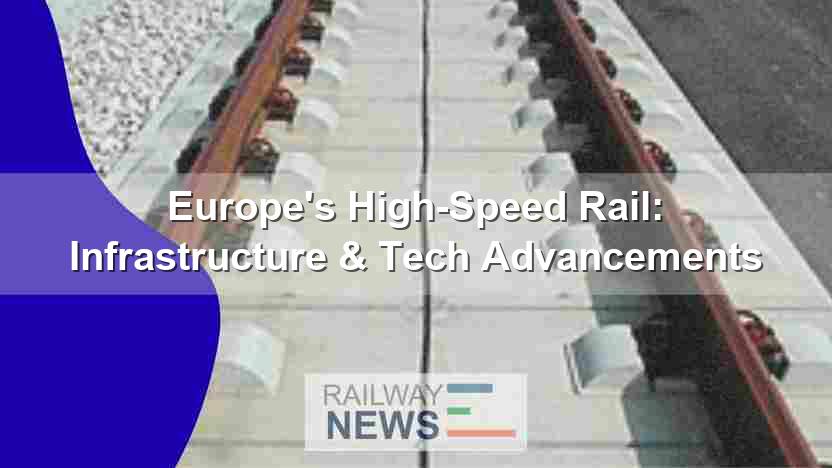
This article explores the multifaceted evolution of high-speed rail in Europe, examining the interplay between technological advancements, operational strategies, and passenger experience. We will explore the crucial elements driving the ongoing improvement of these systems, from the design of high-speed trains to the optimization of infrastructure and service delivery. The increasing demand for efficient and comfortable high-speed travel necessitates continuous innovation and adaptation. Key performance indicators (KPIs) such as journey time, punctuality, and passenger satisfaction will be analyzed, demonstrating how operators and manufacturers are striving to enhance the passenger experience while maintaining operational effectiveness. This analysis will investigate the economic and environmental benefits of high-speed rail, considering its role in promoting sustainable transportation solutions.
You might be interested in:
Last March 2019, we explored the amazing high-speed rail revolution with DB and Talgo’s ECx train. Click here to read – DB & Talgo’s ECx: High-Speed Rail Revolution
1. Infrastructure Enhancement for Optimal Performance
The backbone of any high-speed rail network is its infrastructure. This includes upgrades to existing lines, including track geometry refinements, ballast improvements, and the installation of advanced signaling systems. Modernization efforts also encompass the construction of dedicated high-speed lines, often with engineered curves and reduced friction. This chapter will also investigate the crucial role of intermodal connections, which ensures smooth transfers between different modes of transport. Careful consideration must be given to the alignment and elevation profiles of the tracks for optimized speed and safety. Modern infrastructure investments are vital for achieving optimal performance and expanding the reach of high-speed rail networks across Europe.
2. Advanced Train Technologies: Pushing the Boundaries
The design and engineering of high-speed trains are continuously evolving, with manufacturers like Alstom leading the way. This chapter explores the advancements in train technology, focusing on aerodynamics, lightweight materials, and propulsion systems. For example, Alstom Coradia Nordic trains exemplify this evolution with features like integrated, high-efficiency electric traction. A closer look at the integration of advanced control systems, including automatic train protection and communication-based train control (CBTC), will highlight the improved safety and operational efficiency achieved. This evolution is not only about speed but also about passenger comfort and sustainability.
3. Operational Strategies for Efficiency and Reliability
Efficient operations are crucial for maximizing the utilization of high-speed rail lines. This chapter explores the crucial role of optimized scheduling, real-time data analysis for maintenance, and enhanced train crew training. The implementation of sophisticated dispatching software, coupled with robust communication networks, dramatically improves the network’s responsiveness to unforeseen circumstances, such as delays or disruptions. These strategies aim to reduce operational costs and enhance the overall efficiency of the system.
4. Passenger Experience and Comfort: Beyond Speed
The passenger experience is a critical aspect of high-speed rail success. This chapter examines the impact of design features on passenger comfort and experience. This includes factors like spacious seating, climate control, Wi-Fi connectivity, and intuitive interfaces. This careful consideration of amenities directly influences passenger satisfaction. Examining various operational initiatives that cater to specific passenger needs, such as family-friendly accommodations or accessible facilities, will showcase the commitment to providing high-quality travel experiences.
Conclusions: The Future of European High-Speed Rail
The evolution of European high-speed rail demonstrates a remarkable commitment to progress, incorporating technological innovations, improved infrastructure, and operational efficiencies. This progress isn’t merely about faster travel but also about enhancing the overall passenger experience. The use of advanced materials and streamlined designs, combined with optimized routes and scheduling, collectively enhances the safety and efficiency of these systems. The examples of infrastructure upgrades and advanced train technologies, including the Alstom Coradia Nordic trains, underscore the continuous effort to develop faster, more reliable, and more comfortable rail transport. This dedication is instrumental in creating sustainable transportation solutions.
The integration of different railway operators and the seamless intermodal connections demonstrate the long-term vision to enhance accessibility and create a detailed transport network. The economic and environmental benefits are significant, making high-speed rail a cornerstone of a greener and more efficient future for Europe. As new technologies emerge and demand grows, the future of European high-speed rail looks bright, with the potential to continue improving the lives of millions through seamless, affordable, and environmentally responsible travel.

Railway infrastructure, rolling stock and transport technologies specialist focused on global rail industry developments, high-speed rail systems, signaling technologies and freight transportation. Covering railway investments, public transport modernization, rail operations and international mobility projects across Europe, Asia and North America.
RELATED POSTS

October 8, 2026 1:15 pm
Alstom secured a €1bn contract to build 13 automated trains,...

October 1, 2026 7:09 am
United States regulators confirmed a September 30 deadline for the...

October 8, 2026 12:18 pm
Siemens Mobility signed an agreement with VinSpeed to supply 350...

October 4, 2026 5:14 pm
Alstom secured a CA$4.7 billion order from VIA Rail Canada...

October 5, 2026 6:12 pm
AECOM and Jacobs secured a contract in September 2026 to...

October 1, 2026 12:13 am
Illinois approved $1.5 billion annually for the Northern Illinois Transit...