
Above the Track: Mastering EN 50119 for Overhead Contact Lines
Master EN 50119, the definitive standard for railway Overhead Contact Lines. Learn about design loads, mechanical tensioning, and pantograph interaction for electric traction.
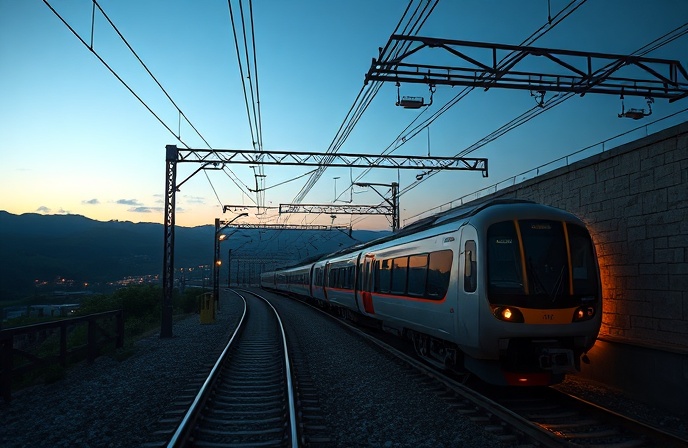
What is EN 50119?
EN 50119 is the detailed European Standard titled “Railway applications – Fixed installations – Electric traction overhead contact lines.” It serves as the primary engineering “bible” for the design, calculation, and erection of overhead contact systems (OCS) used to supply power to electric trains, trams, metros, and trolleybuses.
This standard dictates how to build the physical infrastructure that hangs above the track. It covers everything from the mechanical strength of the wires to the electrical clearances required to prevent arcing. Whether designing a 750V DC tram line or a 25kV AC high-speed line, EN 50119 provides the formulas to ensure the system remains stable under extreme weather conditions like high winds, ice loads, and temperature fluctuations.
Core Design Parameters
EN 50119 establishes the “System Design” criteria based on three main pillars:
- Mechanical Design: Calculating the tensile limits of the contact wire and messenger wire. It requires systems to automatically compensate for thermal expansion (using tensioning weights or springs) to keep the wire sag constant.
- Environmental Loads: The standard mandates strict calculations for “Ice Loads” (weight on the wire) and “Wind Loads” (lateral displacement), ensuring the pantograph does not slip off the wire (dewirement) during a storm.
- Electrical Clearances: It defines the minimum air gaps between live parts (25kV) and grounded structures (bridges, tunnels) to prevent flashovers, often referencing EN 50124-1.
The Pantograph-Catenary Interface
While EN 50119 focuses on the fixed installation, it is inextricably linked to the vehicle’s current collector. The standard specifies the Geometry of the Contact Wire—specifically its height, gradient (slope), and stagger (zig-zag pattern). The “stagger” is crucial to prevent the pantograph carbon strip from wearing a groove in a single spot; the wire must sweep back and forth as the train moves.
Comparison: System Types Defined
The standard covers various configurations depending on speed and power requirements.
| Feature | Single Contact Line (Trolley Wire) | Catenary Suspension (Messenger + Contact) |
|---|---|---|
| Structure | A single wire suspended from supports. | Contact wire hangs from a messenger wire via droppers. |
| Speed Suitability | Low Speed (Trams, Depots, < 80 km/h). | High Speed (Mainline, > 200 km/h). |
| Sag Performance | High sag variation (Poor current collection). | Flat profile (Excellent continuous contact). |
| Primary Use | Urban Trams, Trolleybuses. | Heavy Rail, High-Speed Lines. |

Railway infrastructure, rolling stock and transport technologies specialist focused on global rail industry developments, high-speed rail systems, signaling technologies and freight transportation. Covering railway investments, public transport modernization, rail operations and international mobility projects across Europe, Asia and North America.