
East Palestine Derailment: A Wake-Up Call for Rail Safety
The February 2023 Norfolk Southern derailment in East Palestine, Ohio, underscored critical deficiencies in rail safety regulations and practices, particularly concerning wayside detectors and tank car protection, leading to a call for enhanced regulatory oversight and improved industry standards to prevent future catastrophic incidents.
Introduction
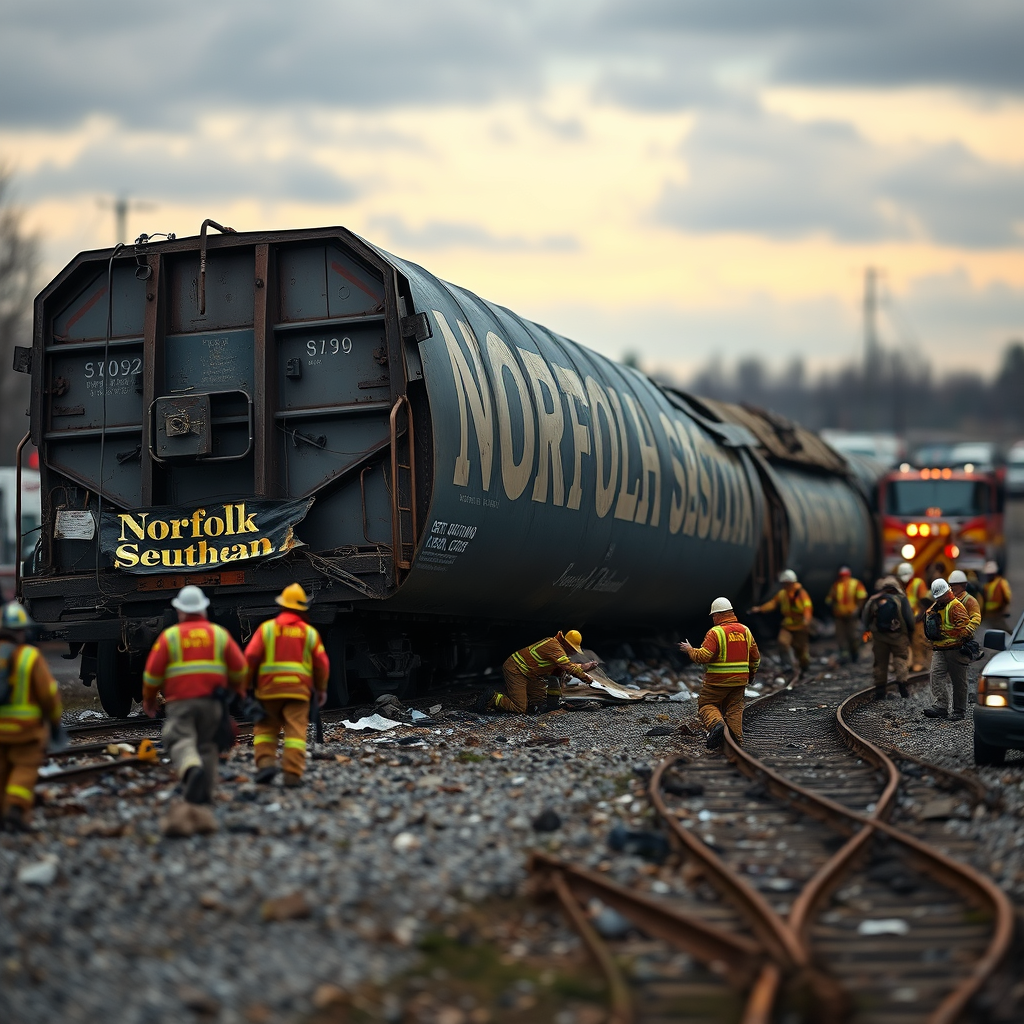
The February 2023 Norfolk Southern derailment in East Palestine, Ohio, served as a stark reminder of the critical need for enhanced rail safety regulations and practices in the United States. This incident, involving the derailment of a train carrying hazardous materials, resulted in a significant environmental impact, community displacement, and widespread public concern. The subsequent investigations, conducted by the National Transportation Safety Board (NTSB) and the Federal Railroad Administration (FRA), highlighted critical deficiencies in existing safety protocols and regulatory frameworks. This article explores the key findings of these investigations, focusing on the identified shortcomings and the subsequent calls for legislative action to improve rail safety. We will examine the role of wayside detectors, the need for improved tank car protection, the importance of enhanced data recording, and the broader implications for the freight rail industry. The analysis will explore the interplay between regulatory oversight, industry responsibility, and the necessity for a detailed approach to prevent future catastrophic derailments.
Failure of Wayside Detection Systems and Regulatory Gaps
The FRA report, concurring with the NTSB findings, pinpointed a failed roller bearing as the initial cause of the East Palestine derailment. However, the investigation went beyond this immediate trigger, highlighting the potential contribution of inadequate wayside detector (WSD) performance and communication. Wayside detectors, strategically placed along rail lines, continuously monitor train components for overheating, providing early warnings of potential failures. The report criticized the lack of consistent regulation regarding WSD placement, maintenance, and data transmission protocols. The absence of clear standards and the inconsistent deployment of these crucial systems contributed to the delayed detection of the failing bearing, allowing the problem to escalate to a catastrophic failure. This underscores the need for stricter regulations mandating improved WSD technology, standardized placement guidelines, and the timely dissemination of critical data to relevant personnel. The report highlighted the importance of real-time data analysis and predictive maintenance strategies enabled by advanced Intelligent Transportation Systems (ITS).
Inadequate Tank Car Protection and Hazardous Material Transport
The report also critically assessed the lack of adequate thermal protection systems on the tank cars carrying hazardous materials. These systems, designed to prevent catastrophic failures in the event of a derailment, were absent from the involved tank cars, leading to the release of toxic substances and the subsequent evacuation of East Palestine. The FRA’s findings emphasize the urgent need for stricter regulations on tank car design and construction, mandating the inclusion of enhanced safety features like thermal protection. This is crucial to minimizing the potential environmental and health consequences associated with the transport of hazardous materials by rail. The industry needs to invest in and adopt safer tank car designs immediately, as well as consider the transportation of certain hazardous materials by alternative modes where feasible.
Data Recording and Accountability
The FRA, building on the NTSB’s recommendations, is implementing mandatory installation of inward- and outward-facing event recorders (black boxes) on all locomotives. This measure aims to improve data acquisition following incidents, facilitating more detailed accident investigations and the identification of contributing factors. The increased transparency and data availability will enhance accountability within the rail industry, allowing for better identification of systemic issues and implementation of targeted corrective actions. Additionally, the FRA’s increased enforcement actions, including numerous counts against Norfolk Southern for potential violations, demonstrate a commitment to holding rail operators accountable for safety failures. This focus on data-driven decision-making, combined with stricter enforcement, will contribute to a culture of safety improvement.
Conclusion
The East Palestine derailment served as a pivotal event, exposing critical vulnerabilities within the US rail safety system. The FRA’s final report, echoing many of the NTSB’s findings, underscores the urgent need for detailed legislative action. The report highlights deficiencies in wayside detection systems, the lack of sufficient tank car protection, and the importance of enhanced data recording capabilities for improving investigations and accountability. Beyond the immediate aftermath, the report serves as a roadmap for future improvements. The call for stricter regulations on wayside detector deployment and functionality, the mandatory implementation of thermal protection systems on tank cars carrying hazardous materials, and the widespread adoption of event data recorders are essential steps towards enhancing rail safety. The FRA’s increased enforcement activities and Norfolk Southern’s subsequent investment in safety improvements indicate a growing awareness of the industry’s responsibility. However, true progress requires a collaborative effort involving regulatory bodies, the rail industry, and the legislative branch. Congress must enact legislation to provide a strong regulatory framework, ensuring consistent standards and holding rail operators accountable for adhering to these safety standards. Ultimately, the goal is to create a safer rail transportation system that minimizes risks to both the public and the environment, preventing future catastrophes similar to the one experienced in East Palestine. The industry’s and government’s willingness to invest in technology, infrastructure, and training, coupled with transparent and effective regulatory oversight, will be key to ensuring a safer future for rail transport.

Railway infrastructure, rolling stock and transport technologies specialist focused on global rail industry developments, high-speed rail systems, signaling technologies and freight transportation. Covering railway investments, public transport modernization, rail operations and international mobility projects across Europe, Asia and North America.
RELATED POSTS

October 1, 2026 7:09 am
United States regulators confirmed a September 30 deadline for the...

October 1, 2026 12:13 am
Illinois approved $1.5 billion annually for the Northern Illinois Transit...

October 1, 2026 6:10 am
Amtrak approved a System Expansion Committee on July 30 to...

October 5, 2026 1:13 pm
New York MTA confirmed a late 2026 DEIS release for...

October 6, 2026 9:17 am
Illinois approved $1.1M in state funds to upgrade two McHenry...

October 6, 2026 2:14 am
Union Pacific launched export rail shipments with Ferromex to deliver...