
Denmark ERTMS Upgrade: EU Funding Fuels Rail Innovation, Safety
Denmark’s rail network gets EU funding for digital upgrade. €19.3M boosts ERTMS rollout, improving safety & efficiency.
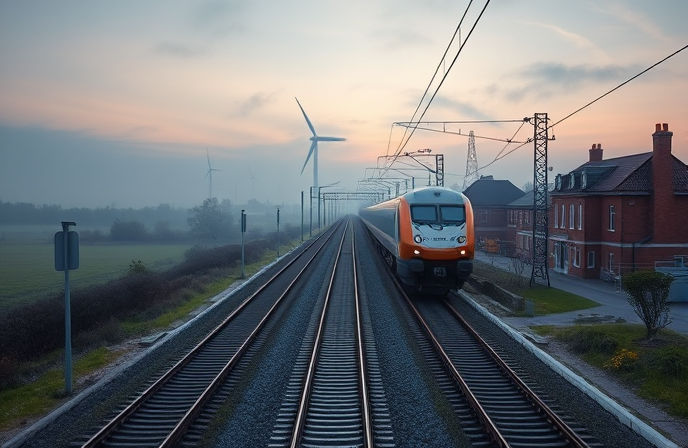
EU Boosts Digital Rail Upgrade in Denmark with EUR 19.3 Million Funding
Banedanmark, Denmark’s national rail infrastructure manager, is set to significantly modernize its railway network following a EUR 19.3 million (approximately DKK 145 million) injection from the European Union. Awarded through the Connecting Europe Facility (CEF), the funding will accelerate the rollout of the European Rail Traffic Management System (ERTMS) on the Korsør–Middelfart section of the Funen railway line. This initiative, announced recently, aims to replace outdated analogue signalling systems with a modern, digital solution. The project falls under Denmark’s broader national signalling program, targeting completion by 2033. This article will delve into the details of the project, exploring the benefits of ERTMS, the implications for the Scandinavian–Mediterranean transport corridor, and the broader strategic advantages for both Denmark and the EU. The primary focus will be on how this investment is driving efficiency, safety, and interoperability improvements across the Danish rail network.
A Digital Revolution: The ERTMS Advantage
The core of this project revolves around the implementation of the ERTMS. ERTMS, or the European Rail Traffic Management System, is a standardized European system designed to improve railway safety and efficiency by replacing the various national train control systems with a single, unified standard. This includes both the European Train Control System (ETCS) for in-cab train control and the GSM-R (Global System for Mobile Communications – Railway) for voice and data communication. The new system allows for increased line speeds and optimized train spacing, leading to higher network capacity. The current project aims to boost the maximum line speed to 200 km/h on the Korsør–Odense section. This upgrade will not only reduce delays and improve punctuality, but will enhance the overall passenger and freight transport experience, offering a more reliable and efficient railway network.
Strategic Significance: The Scandinavian–Mediterranean Corridor
The Korsør–Middelfart section is a critical component of the TEN-T (Trans-European Transport Network) core network, specifically forming a segment of the Scandinavian–Mediterranean transport corridor. This strategic location makes the project a high priority for EU infrastructure investment. The upgrade is crucial for streamlining international transport, facilitating the movement of goods and passengers across borders. With the implementation of the digital signalling system, the alignment with cross-border standards will optimize connectivity. Consistent signalling across the EU will not only boost efficiency but will also reduce logistical bottlenecks and improve the overall competitiveness of rail transport compared to other modes of transport. Banedanmark’s project contributes significantly to the broader goal of enhancing the flow of goods and people throughout Europe.
Implementation and Benefits: Beyond Speed and Capacity
The funding allocated by the EU will expedite the installation of the new digital system. The project will involve replacing existing infrastructure, integrating the ERTMS, and training railway personnel. The upgrade is expected to ensure much more stable and secure operations on the Danish railway. The digital system allows trains to run more closely together, leading to an increase in overall line capacity. This enhancement translates to improved punctuality and reliability for passengers and freight operators. This reduces faults and ensures a more robust service. Mads Søndergaard Petersen, Head of the Signalling Division at Banedanmark, emphasized the project’s importance, highlighting that the EU support is a significant endorsement for the modernization of the Danish railway infrastructure and its alignment with European standards.
Collaboration and Future Outlook
The project is not isolated; Sund & Bælt, operator of the Great Belt Fixed Link, has also received funding to implement the ERTMS. This collaborative approach ensures a consistent, interoperable signalling system across the Funen railway section. The system is expected to be fully rolled out across the Funen railway by 2028, with the entire national program slated for completion by 2033. The overarching objective is to create a seamless, efficient, and green rail transport network across Europe. As other EU countries progress with their ERTMS upgrades, the long-term aim is to streamline rail operations across borders, enabling faster and more interoperable rail services. This strategic move by Denmark demonstrates its commitment to leading the way in phasing out outdated analogue systems and advancing the future of rail transport in Europe.
Conclusion
The EU’s financial backing of EUR 19.3 million for the ERTMS rollout on the Korsør–Middelfart railway section marks a pivotal step in Denmark’s railway modernization initiative. This investment reinforces the nation’s commitment to embrace modern technologies and underscores the commitment to improve safety, efficiency, and interoperability within the broader European rail network. The project’s focus on ERTMS, along with its strategic location on the Scandinavian–Mediterranean transport corridor, is set to enhance cross-border connectivity and boost the capacity of the Danish rail network. The initiative’s successful completion will set an example for other EU member states. The combined effect of these projects is expected to significantly improve the punctuality, reliability, and overall competitiveness of rail transport in Denmark. Looking ahead, this forward-thinking approach is anticipated to establish a greener, more efficient, and interconnected European rail system, facilitating seamless transport across national borders and playing a key role in realizing sustainable transport goals across Europe.
Company Summary
Banedanmark: As Denmark’s state-owned railway infrastructure manager, Banedanmark is responsible for the planning, construction, maintenance, and operation of the Danish railway network. Its primary objective is to provide a safe, efficient, and modern railway infrastructure to facilitate both passenger and freight transport across the country. The company works to ensure the network is aligned with European standards and is actively involved in implementing advanced technologies, such as ERTMS, to enhance the network’s capacity, reliability, and sustainability.

Railway infrastructure, rolling stock and transport technologies specialist focused on global rail industry developments, high-speed rail systems, signaling technologies and freight transportation. Covering railway investments, public transport modernization, rail operations and international mobility projects across Europe, Asia and North America.
RELATED POSTS

October 1, 2026 7:09 am
United States regulators confirmed a September 30 deadline for the...

October 8, 2026 1:15 pm
Alstom secured a €1bn contract to build 13 automated trains,...

October 4, 2026 5:14 pm
Alstom secured a CA$4.7 billion order from VIA Rail Canada...

October 1, 2026 12:13 am
Illinois approved $1.5 billion annually for the Northern Illinois Transit...

October 6, 2026 2:14 am
Union Pacific launched export rail shipments with Ferromex to deliver...

October 1, 2026 6:10 am
Amtrak approved a System Expansion Committee on July 30 to...