
CTA Approves Portable Rail Simulator for 5000-Series Cars
CTA approved a one-year pilot on March 12, 2025, using a portable rail simulator to train its operators on 5000-series cars in Chicago rail yards.
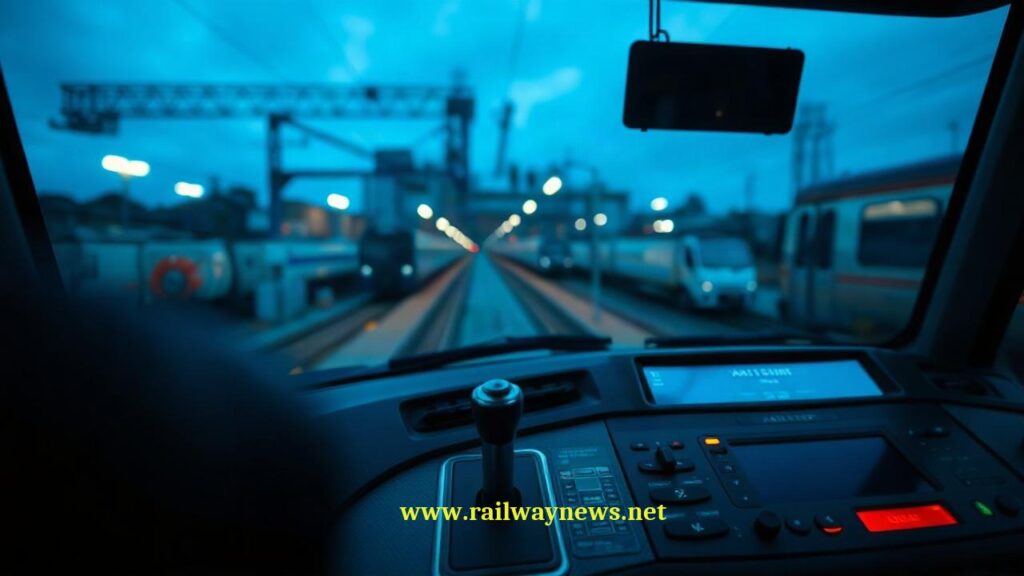
⚡ In Brief: The Chicago Transit Authority authorized a one-year pilot agreement with the Center for Research in Railway Technologies to deploy a portable rail simulator for training operators on 5000-series rail cars across simulated emergency, weather, and construction conditions.
CHICAGO, UNITED STATES – The Chicago Transit Board approved a one-year pilot contract on March 12, 2025, enabling the Chicago Transit Authority (CTA) to test a portable rail simulator training system developed by the Center for Research in Railway Technologies. The deployment targets operator instruction for the CTA’s 5000-series rail fleet, simulating hazardous operating conditions including severe weather, track construction zones, and network emergencies. Financial terms of the one-year agreement were not disclosed by the transit agency.
What Are the Technical Specifications?
The portable simulator system replicates the cab controls, braking dynamics, and display interfaces of CTA’s Bombardier-built 5000-series rapid transit cars. Developed by the Center for Research in Railway Technologies, the hardware provides mobile training stations capable of generating dynamic environmental variables, including adverse weather, signal failures, track incursions, and construction speed restrictions. The unit complements traditional stationary full-cab simulators by allowing decentralized instructor-led assessments across multiple rail yards without removing active revenue rolling stock from passenger service. CTA is testing the system as one of five active pilots initiated through its Innovation Studio, established in 2024 to address operational challenges. Specific hardware weight, computational platforms, and visual field-of-view angles were not disclosed by the agency.
Key Technical Data
| Parameter | Value |
|---|---|
| Technology / System Name | Portable Rail Simulator (5000-Series Fleet) |
| Total Value | Not disclosed |
| Parties Involved | Chicago Transit Authority (CTA), Center for Research in Railway Technologies |
| Timeline / Completion | One-year pilot program (2025–2026) |
| Country / Corridor | United States / Chicago “L” Heavy Rail Network |
Where Does This Technology Stand in the Market?
Center for Research in Railway Technologies delivers a dedicated fleet-specific portable package focused on Chicago’s 5000-series stock vs Lander Simulation’s portable metro desktop units that prioritize cross-fleet reconfigurability across European light rail networks (Source: Lander Simulation, 2023). Furthermore, CORYS offers the Matrix compact desk simulator featuring interchangeable control consoles and multi-network scenario libraries deployed across more than 60 transit systems globally vs the single-agency focus of CTA’s current test (Source: CORYS, 2024). Comparable baseline contract valuation data for the Center for Research in Railway Technologies’ deployment was not publicly available at time of publication. The shift toward decentralized simulation occurs as global transit operators absorb part of the $66 billion planned United States railway modernization spending alongside municipal workforce retention mandates (Source: Federal Railroad Administration, 2024).
Editor’s Analysis
Transit agencies are transitioning from capital-heavy fixed simulators toward modular, portable platforms to lower procurement costs and accelerate driver recertification cycles. By integrating simulation pilots directly into the Innovation Studio alongside faregate modernization and non-police safety initiatives, CTA is treating training logistics as a distributed software problem rather than a stationary infrastructure commitment. As metropolitan rail operators navigate post-pandemic labor shortages and fleet renewals, portable simulation units will become standard procurement requirements across North American transit authorities (Source: American Public Transportation Association, 2024).
FAQ
Q: What rail fleet does the CTA portable simulator replicate?
A: The portable simulator replicates the cab environment and operational physics of the CTA’s 5000-series rail cars. These vehicles form a core portion of Chicago’s rapid transit fleet originally built by Bombardier Transportation.
Q: How much did the CTA pay for this simulator pilot?
A: The total financial contract value of the one-year pilot agreement was not disclosed by the Chicago Transit Authority. The program is structured as a 12-month evaluation managed under the agency’s Innovation Studio.
Q: Will this training simulator disrupt regular passenger rail operations?
A: The deployment will not impact active passenger services because the training takes place on off-track portable units rather than revenue trainsets. Operators can complete mandatory weather and emergency response drills directly at rail maintenance facilities.

Railway infrastructure, rolling stock and transport technologies specialist focused on global rail industry developments, high-speed rail systems, signaling technologies and freight transportation. Covering railway investments, public transport modernization, rail operations and international mobility projects across Europe, Asia and North America.
RELATED POSTS

October 1, 2026 7:09 am
United States regulators confirmed a September 30 deadline for the...

October 8, 2026 1:15 pm
Alstom secured a €1bn contract to build 13 automated trains,...

October 4, 2026 5:14 pm
Alstom secured a CA$4.7 billion order from VIA Rail Canada...

October 1, 2026 12:13 am
Illinois approved $1.5 billion annually for the Northern Illinois Transit...

October 6, 2026 2:14 am
Union Pacific launched export rail shipments with Ferromex to deliver...

October 1, 2026 6:10 am
Amtrak approved a System Expansion Committee on July 30 to...