
ČD ComfortJet: Prague-Berlin Rail Upgrade & European Expansion
Czech Railways introduces ComfortJet trains on the Prague-Berlin route, enhancing international service quality.
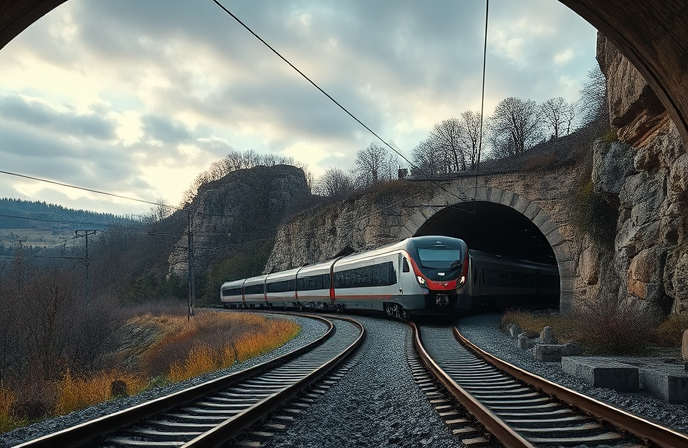
České dráhy Elevates International Service with ComfortJet Deployment
Prague, Czech Republic – Czech Railways (České dráhy, ČD) is ushering in a new era of international rail travel, deploying its state-of-the-art ComfortJet trainsets exclusively on the flagship Ex5 Berliner route, connecting Prague, Berlin, and Hamburg. From July 26th, this upgrade promises a significant boost in passenger comfort and service quality. This move, prompted by the ongoing modernisation of ČD’s long-distance fleet and strategically timed to coincide with line closures on the Berlin-Hamburg corridor, will see the ComfortJet trains replace older rolling stock, which are being redeployed on domestic services. This article details the implementation, operational specifics, and broader implications of this significant investment in ČD’s international rail network.
Enhanced Passenger Experience: ComfortJet Fleet Unveiled
The heart of this upgrade is the ComfortJet fleet, designed to redefine the passenger experience on international routes. These modern trainsets, manufactured by the Siemens-Škoda consortium, offer a range of passenger amenities. Each complete nine-car train can accommodate 555 passengers, with 99 seats in first class and a dedicated restaurant car. Trains are roughly 237 meters long and achieve speeds up to 230 km/h when paired with modified Siemens Vectron locomotives, making them ideal for high-speed corridors like Berlin-Hamburg and the upcoming Koralmbahn in Austria. Passengers can expect Wi-Fi, power outlets at every seat, a modern air conditioning system, and accessible compartments. This introduction of the ComfortJet fleet signals a concerted effort by ČD to enhance the quality and appeal of its international rail services.
Operational Details and Route Deployment
The ComfortJet deployment will initially cover the Prague-Berlin route. Three eight-car ComfortJet formations will operate on three key train pairs, temporarily utilising the original WRmz815 restaurant cars. All other trains on the Prague-Berlin route, excluding the EC 172/173 Hungaria (operated by Hungarian rolling stock), will be served by nine-car ComfortJet units. The replacement of older stock from the Ex5 route will not be scrapped. Instead, the displaced rolling stock is earmarked for selected domestic express routes, reflecting ČD’s commitment to upgrading passenger comfort across its entire network. This strategic redeployment ensures that the benefits of the investment are felt throughout the system.
Impact of Berlin-Hamburg Line Closure and Service Timetable
A key factor shaping this deployment is the temporary closure of the Berlin–Hamburg line. For the next nine months, trains terminating in Berlin will be served by six ComfortJet sets—three eight-car and three nine-car configurations. The initial service will incorporate the original restaurant carriages. This adaptation highlights ČD’s operational flexibility. Full ComfortJet service will be operational across the entire Ex5 route once the Berlin–Hamburg line closure concludes. ČD will then be able to optimize the service to the full extent of the ComfortJet capabilities.
Future Expansion: Beyond Berlin
The ComfortJet initiative represents a long-term investment in ČD’s international ambitions. While the initial focus is on the Berlin route, these trainsets will soon expand to other key destinations. ČD plans to deploy ComfortJet trains to Villach in Austria, Bratislava, Budapest, and, starting in mid-2025, Copenhagen. The operator has ordered a total of 20 ComfortJet trainsets, and as of the publication of this article, seven nine-car and five eight-car units have been delivered. This gradual roll-out will continue to strengthen ČD’s position within the European rail network.
Conclusion
The deployment of ComfortJet trains on the Ex5 Berliner route marks a pivotal moment for ČD, significantly improving the quality and appeal of its international rail services. This strategic move, driven by ČD’s ongoing fleet modernisation efforts and facilitated by the Siemens-Škoda consortium, reflects a strong commitment to passenger comfort and service quality. The temporary operational adjustments necessitated by the Berlin–Hamburg line closure demonstrate ČD’s adaptability and long-term vision for expansion. The redeployment of older rolling stock to domestic routes further underscores the company’s dedication to enhancing passenger experiences across its entire network. The planned expansion to other international routes signals a significant investment in its future and strengthens its role as a key player in the European rail landscape. This initiative sets a new standard for cross-border rail travel and positions ČD for continued growth in the coming years.

Railway infrastructure, rolling stock and transport technologies specialist focused on global rail industry developments, high-speed rail systems, signaling technologies and freight transportation. Covering railway investments, public transport modernization, rail operations and international mobility projects across Europe, Asia and North America.
RELATED POSTS

October 8, 2026 1:15 pm
Alstom secured a €1bn contract to build 13 automated trains,...

October 1, 2026 7:09 am
United States regulators confirmed a September 30 deadline for the...

October 8, 2026 12:18 pm
Siemens Mobility signed an agreement with VinSpeed to supply 350...

October 4, 2026 5:14 pm
Alstom secured a CA$4.7 billion order from VIA Rail Canada...

October 5, 2026 6:12 pm
AECOM and Jacobs secured a contract in September 2026 to...

October 1, 2026 12:13 am
Illinois approved $1.5 billion annually for the Northern Illinois Transit...