
BHP Signs Four-Year Potash Rail Deals with CN CPKC
BHP Canada signed four-year rail agreements with CN and CPKC for unit train potash haulage from its Jansen mine in Saskatchewan to Vancouver, starting mid-2027.
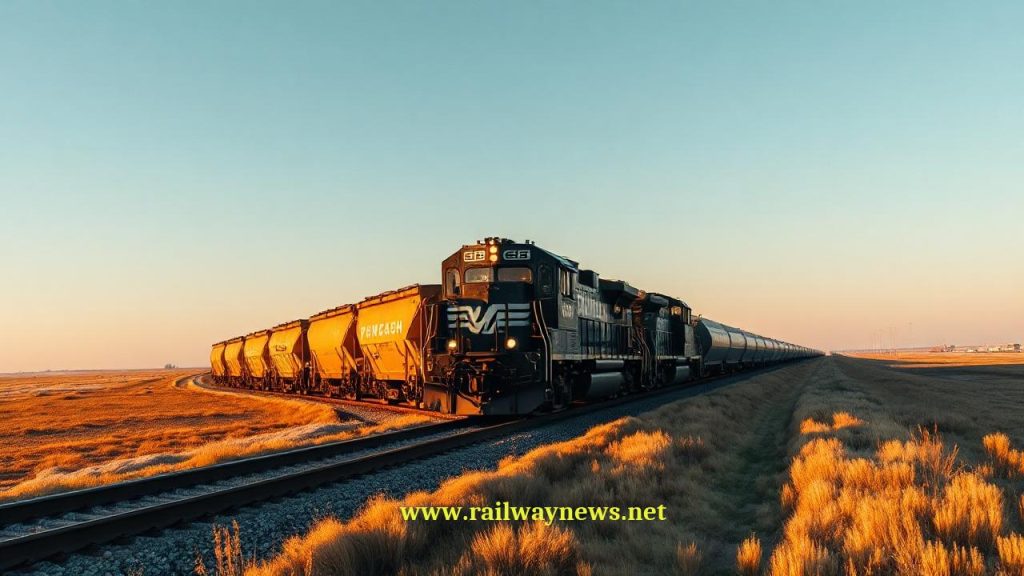
⚡ In Brief: BHP Canada signed four-year rail transportation agreements with CN and CPKC for potash unit trains from its Jansen mine to Vancouver, with first production expected mid-2027.
SASKATOON, CANADA – BHP Canada Inc. has finalised concurrent rail service contracts with both Canadian National Railway (CN) and Canadian Pacific Kansas City (CPKC) to haul potash from its Jansen Stage 1 project in Saskatchewan to Westshore Terminals in Vancouver. The initial term spans approximately four years, supporting the mine’s first output scheduled for mid-2027, though the total contract value and committed volume were not disclosed.
What Does This Contract Cover?
The agreements cover dedicated unit train operations between the Jansen mine site—located roughly 90 miles from Saskatoon—and Westshore Terminals on Canada’s Pacific coast, using BHP-owned rail cars. Connectivity will be provided by the new Jansen Access Spur linking both CN and CPKC mainlines. The contracts are structured around Jansen Stage 1 production only, with future haulage arrangements tied to the project’s subsequent expansion phases.
Key Contract Data
| Parameter | Value |
|---|---|
| Contract Name | BHP Jansen Potash Rail Haulage Agreements |
| Total Value | Not disclosed |
| Parties Involved | BHP Canada Inc. (shipper), CN, CPKC |
| Timeline / Completion | Initial term approx. 4 years, production start mid-2027 |
| Country / Corridor | Canada: Jansen, Saskatchewan – Vancouver, British Columbia |
How Does This Compare to Similar Contracts?
This dual-rail structure mirrors Canpotex’s established logistics model, where the potash export association representing Nutrien and Mosaic also contracts both CN and CPKC for unit train movements from multiple Saskatchewan mines to West Coast terminals. (Source: Canpotex operational filings, 2024) BHP’s direct approach, however, bypasses the cooperative export channel entirely, giving it independent control over its rail fleet and terminal slot allocations. In the wider North American context, the concurrent deal comes as agricultural shippers—including organisations that represent potash-end users—have vigorously opposed further rail consolidation, most recently urging the U.S. Surface Transportation Board to pause the proposed Union Pacific–Norfolk Southern merger over fears of reduced competition and higher costs. (Source: American Farm Bureau Federation coalition filing, 2026)
Editor’s Analysis
BHP’s decision to lock in both Class I carriers from day one is a competitive de-risking move that directly addresses the concerns voiced by agricultural lobbies during rail merger reviews. By owning the rail cars and holding contracts with both CN and CPKC, BHP avoids single-carrier dependency and gains leverage that could prove critical as Canadian grain and potash volumes compete for westbound capacity. With potash demand projected to climb on sustained global fertiliser demand, the Jansen corridor is set to become a material new artery in North American bulk export flows.
FAQ
Q: How much potash will the Jansen mine ship under these contracts?
A: BHP has not published specific volume commitments tied to the rail agreements. Stage 1 production is designed to yield approximately 4.3–4.5 million tonnes per annum, but the contracted rail capacity has not been disclosed.
Q: Why did BHP sign with both CN and CPKC instead of a single railway?
A: Securing both railways provides supply chain redundancy and competitive tension, ensuring BHP is not beholden to a single carrier’s pricing or service levels. This mirrors the strategy used by Canpotex for decades.
Q: What happens after the initial four-year term ends?
A: Future arrangements will be negotiated to align with Jansen’s subsequent expansion stages, which are expected to bring additional production online. The commercial terms for those phases have not been publicly defined.

Railway infrastructure, rolling stock and transport technologies specialist focused on global rail industry developments, high-speed rail systems, signaling technologies and freight transportation. Covering railway investments, public transport modernization, rail operations and international mobility projects across Europe, Asia and North America.
RELATED POSTS

October 1, 2026 7:09 am
United States regulators confirmed a September 30 deadline for the...

October 1, 2026 12:13 am
Illinois approved $1.5 billion annually for the Northern Illinois Transit...

October 1, 2026 6:10 am
Amtrak approved a System Expansion Committee on July 30 to...

October 1, 2026 4:10 am
DART launched two public ridership dashboards in March 2026 to...
October 1, 2026 3:12 am
Greenbrier confirmed Brian Comstock as new president and CEO effective...

October 1, 2026 5:14 am
Siemens confirmed delivery of the first new S200 train to...