
BART Cuts Emissions By 69% Across Bay Area Rail Network
BART confirmed a 69% cut in greenhouse gas emissions across the San Francisco Bay Area in 2025 as the rail operator expanded network service by 11%.
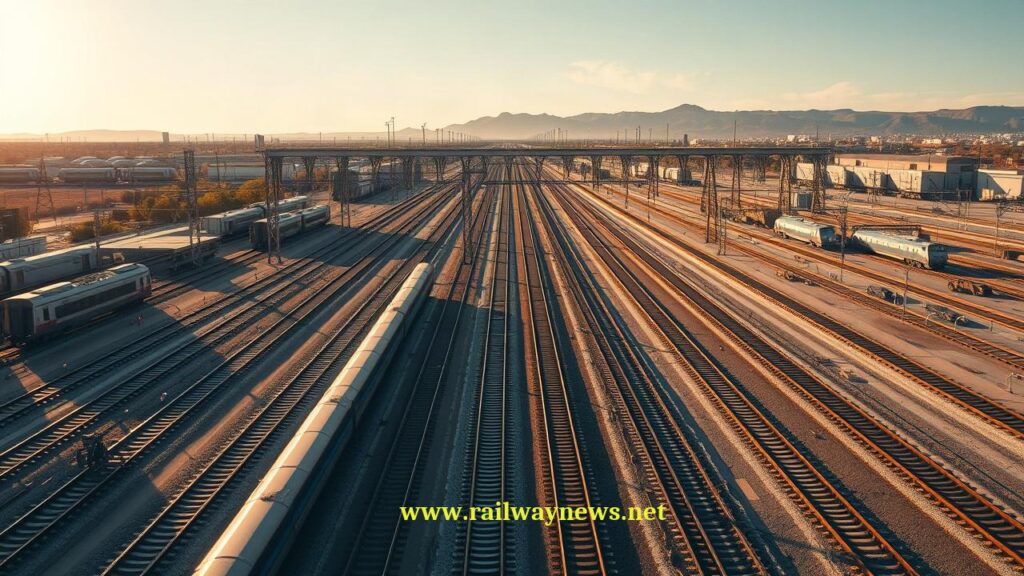
⚡ In Brief: San Francisco Bay Area Rapid Transit concluded its 10-year Sustainability Action Plan in 2025, cutting operational greenhouse gas emissions by 69% while greenhouse gas-free traction power contracted to 75% amid ongoing budget constraints.
SAN FRANCISCO, UNITED STATES – Bay Area Rapid Transit (BART) concluded its 2015–2025 Sustainability Action Plan in early 2025, reporting a 69% reduction in total greenhouse gas emissions over the 10-year period. The transit agency implemented 80 of 120 planned environmental initiatives while expanding network service by 11% in annual train miles and opening five new stations. However, independent operational filings reveal that BART’s share of greenhouse gas-free electricity contracted to 75% in 2025 due to post-pandemic budget deficits.
What Does This Regulation Cover?
The BART 2015–2025 Sustainability Action Plan established binding internal environmental directives across energy procurement, facilities management, and traction power efficiency for the San Francisco Bay Area transit network. Across the 10-year operational timeframe, the agency completed or absorbed into baseline operations 80 individual projects out of an initial target pipeline of 120 measures. Decarbonization milestones included securing long-term power purchase agreements for utility-scale solar, wind, and hydroelectric supplies, which yield an estimated regional avoidance of 24.4 pounds of carbon dioxide per passenger round trip compared to automotive travel. Despite these structural efficiency gains, agency documentation confirms that budget constraints forced BART to scale back clean electricity purchases, leaving 25% of its 2025 power portfolio dependent on grid-standard generation.
Key Regulatory Data
| Parameter | Value |
|---|---|
| Regulation / Policy Name | BART 2015–2025 Sustainability Action Plan |
| Total Value | Not disclosed |
| Parties Involved | Bay Area Rapid Transit (BART) |
| Timeline / Completion | 2015–2025 (Concluded) |
| Country / Corridor | United States / San Francisco Bay Area |
How Does This Compare to Global Standards?
BART’s 69% reduction in emissions over a decade exceeds standard North American heavy rail benchmarks, yet its power supply procurement retreat diverges from global electrification trends. Across the Canadian rail network, sustained capital investment drove emissions intensity reductions alongside record safety and workforce gains under recent industry monitoring (Source: Railway Association of Canada, 2025). Globally, the electric multiple unit (EMU) sector represents the fastest-expanding rolling stock segment, supported by state-backed mandates to eliminate diesel traction and transition networks to 100% renewable grid feeds (Source: Precedence Research, 2025). While BART maintains full catenary and third-rail electrification, peer operators internationally have prioritized fully decarbonized power purchase contracts to match net-zero standards. Independent verification of comparable decarbonization contract metrics for US passenger carrier Amtrak in 2024 and 2025 was not available at time of publication.
Editor’s Analysis
BART’s 10-year environmental audit exposes the structural tension between urban transit decarbonization goals and post-pandemic farebox shortfalls. Operating an electric rail network provides quantifiable carbon offsets against automotive transit, but sustaining clean energy power purchase agreements requires dedicated operating subsidies rather than one-time capital grants. Global rail market projections indicate capital expenditure is shifting heavily toward digital railway monitoring and zero-emission train fleets (Source: Fortune Business Insights, 2025), meaning US transit operators must resolve structural operating deficits to avoid backsliding on utility procurement targets.
FAQ
Q: What percentage did BART reduce its greenhouse gas emissions between 2015 and 2025?
A: BART reduced its total greenhouse gas emissions by 69% over the 10-year plan while adding five passenger stations. The agency completed 80 of the 120 environmental projects outlined in the framework.
Q: Why did BART’s greenhouse gas-free electricity supply fall to 75% in 2025?
A: Financial distress stemming from post-pandemic fare revenue deficits forced BART to curtail premium zero-carbon power purchase agreements. The agency was unable to source 100% clean power due to strict operating budget limits.
Q: How much carbon dioxide does an average BART passenger trip displace?
A: Each average BART round trip avoids an estimated 24.4 pounds of carbon dioxide emissions relative to automobile travel. Total system capital expenditure for the completed 10-year sustainability program was not disclosed.

Railway infrastructure, rolling stock and transport technologies specialist focused on global rail industry developments, high-speed rail systems, signaling technologies and freight transportation. Covering railway investments, public transport modernization, rail operations and international mobility projects across Europe, Asia and North America.
RELATED POSTS

October 1, 2026 7:09 am
United States regulators confirmed a September 30 deadline for the...

October 1, 2026 12:13 am
Illinois approved $1.5 billion annually for the Northern Illinois Transit...

October 1, 2026 6:10 am
Amtrak approved a System Expansion Committee on July 30 to...
October 1, 2026 4:10 am
DART launched two public ridership dashboards in March 2026 to...

October 1, 2026 3:12 am
Greenbrier confirmed Brian Comstock as new president and CEO effective...
October 1, 2026 5:14 am
Siemens confirmed delivery of the first new S200 train to...