
Alstom Launches World’s First ETCS Hybrid Level 3 Meerut Metro
Alstom launched the world’s first ETCS Hybrid Level 3 metro service on the 21 km Meerut Metro line in India.
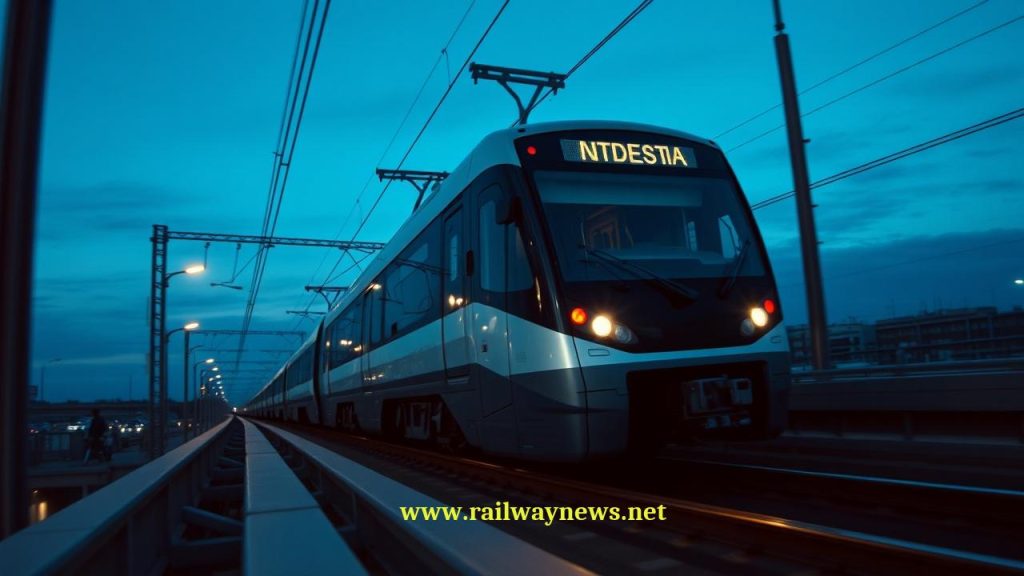
⚡ In Brief: Alstom commissioned the world’s first metro service using ETCS Hybrid Level 3 signaling over an LTE 4G network on the 21 km Meerut Metro line in India, part of the newly completed sections of the Delhi-Meerut regional corridor.
MEERUT, INDIA – Alstom has announced the commercial commissioning of the final sections of the Namo Bharat regional rapid corridor and the launch of the integrated Meerut Metro service. The project introduces the first-ever implementation of ETCS Hybrid Level 3 signaling for a metro system, covering a new 21 km line and an additional 26.5 km of the regional route.
What Are the Technical Specifications?
The core innovation is the deployment of the European Train Control System (ETCS) Hybrid Level 3 over a Long-Term Evolution (LTE) 4G radio network. This system architecture reduces reliance on traditional trackside train detection equipment, such as track circuits, by leveraging train-reported positioning and radio-based communication for traffic management. The rolling stock for both the regional and metro services is from Alstom’s Adessia platform, designed in Hyderabad and manufactured at facilities in Savli and Maneja under the “Make in India” initiative. The trains have a design speed of 135 km/h and a maximum operating speed of 120 km/h, making them India’s fastest urban metro trains. The broader project scope includes significant civil infrastructure, such as roads, culverts, and a new four-lane bridge connecting Trans Ganga City with Kanpur City, under the coordination of the National Capital Region Transport Corporation (NCRTC).
Key Technical Data
| Parameter | Value |
|---|---|
| Technology / System Name | ETCS Hybrid Level 3 over LTE 4G / Alstom Adessia Rolling Stock |
| Total Value | Not disclosed for this commissioning phase (Original 2020 contract value not specified in announcement) |
| Parties Involved | Alstom, National Capital Region Transport Corporation (NCRTC) |
| Timeline / Completion | June 2024 Commissioning |
| Country / Corridor | India / Delhi–Ghaziabad–Meerut |
Where Does This Technology Stand in the Market?
The deployment of ETCS Hybrid Level 3 for a metro system is a significant deviation from the global standard for high-capacity urban rail, which is Communications-Based Train Control (CBTC). Alstom’s system competes directly with established CBTC products like Siemens’ Trainguard MT and Thales’ SelTrac, which are widely used in metros worldwide for enabling high-frequency, moving-block operations. While CBTC is a dedicated metro solution, ETCS is an interoperable mainline standard; applying it to metro operations suggests a strategic push for seamless integration between regional and urban networks. Compared to conventional ETCS Level 2, which relies on physical Eurobalises for train position updates, Hybrid Level 3 offers greater flexibility and potentially lower lifecycle costs by reducing trackside hardware. This implementation places Alstom at the forefront of a growing Indian railway signaling market, which is seeing major investment from competitors like ABB and a joint venture between Kernex Microsystems and Bharat Heavy Engineering. (Source: Business Standard, 2026).
Editor’s Analysis
The use of a mainline-derived ETCS signaling system for a metro line is a strategic move to foster network-wide interoperability, a long-term goal for India’s national rail plan. This approach blurs the traditional technical divide between urban and regional rail, potentially creating a more efficient, unified transport ecosystem. By proving the technology’s viability, Alstom gains a critical first-mover advantage in a market rapidly modernizing its signaling infrastructure, directly challenging competitors who are also expanding their Indian manufacturing and R&D capabilities. (Source: Business Standard, 2026).
FAQ
Q: What makes the Meerut Metro the first of its kind?
A: Meerut Metro is the world’s first metro system to enter commercial service using ETCS Hybrid Level 3 signaling over an LTE 4G wireless network. This technology is typically associated with mainline railways, not high-frequency urban transit.
Q: How fast are the new Namo Bharat and Meerut Metro trains?
A: The trains have a design speed of 135 km/h and a maximum operating speed of 120 km/h. This makes the Meerut Metro trains the fastest of their kind currently operating in India.
Q: Is this project part of a larger network?
A: Yes, the Meerut Metro is directly integrated with the Namo Bharat Regional Rapid Transit System (RRTS). The entire project is managed by NCRTC and is designed to connect Delhi with surrounding satellite cities to ease road congestion.

Railway infrastructure, rolling stock and transport technologies specialist focused on global rail industry developments, high-speed rail systems, signaling technologies and freight transportation. Covering railway investments, public transport modernization, rail operations and international mobility projects across Europe, Asia and North America.
RELATED POSTS

October 1, 2026 7:09 am
United States regulators confirmed a September 30 deadline for the...

October 8, 2026 1:15 pm
Alstom secured a €1bn contract to build 13 automated trains,...

October 4, 2026 5:14 pm
Alstom secured a CA$4.7 billion order from VIA Rail Canada...

October 1, 2026 12:13 am
Illinois approved $1.5 billion annually for the Northern Illinois Transit...

October 8, 2026 12:18 pm
Siemens Mobility signed an agreement with VinSpeed to supply 350...

October 6, 2026 2:14 am
Union Pacific launched export rail shipments with Ferromex to deliver...