
Transport for Wales Wins Awards for £1.5B Valley Lines
Transport for Wales secured two rail awards for its £1.5 billion project to upgrade and electrify 170 km of track across the South Wales Valleys.
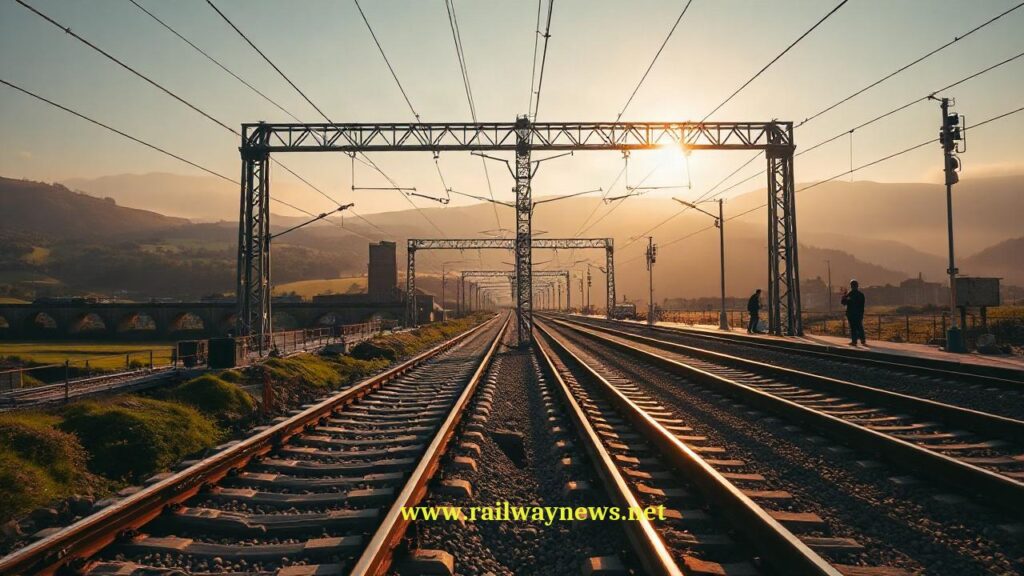
⚡ In Brief: Transport for Wales and Amey Infrastructure Wales have won the Sir John Armitt Prize for their £1.5 billion Core Valley Lines Transformation Programme, which modernizes 170 kilometers of rail infrastructure across the South Wales Valleys.
CARDIFF, Wales – Transport for Wales and delivery partner Amey Infrastructure Wales have secured two major titles at the British Construction & Infrastructure Awards for the £1.5 billion Core Valley Lines upgrade. The multi-year project modernizes 170 kilometers of rail corridors across South Wales through electrification, digital train control, and track capacity enhancements. The joint project team received both the Transport Project Award and the Sir John Armitt Prize following evaluation by the Institution of Civil Engineers and New Civil Engineer.
What Is the Full Scope of This Project?
The Core Valley Lines Transformation Programme upgrades 170 kilometers of passenger routes across the Merthyr Tydfil, Aberdare, Treherbert, Rhymney, Cardiff, and City corridors. Works encompass route electrification across key valley arteries, the replacement of a 100-year-old token exchange mechanism on the Treherbert line with digital signaling, and the construction of seven passing loops designed to increase service capacity from two to four trains per hour. The infrastructure capital expenditure interfaces directly with an £800 million rolling stock investment delivering new electric and tri-mode trains, alongside the development of two new stations and accessibility upgrades at multiple legacy stops (Source: Transport for Wales, 2024). Detailed expenditure allocations for individual civil engineering works packages were not disclosed by the delivery team.
Key Project Data
| Parameter | Value |
|---|---|
| Project / Contract Name | Core Valley Lines (CVL) Transformation Programme |
| Total Value | £1.5 billion |
| Parties Involved | Transport for Wales (TfW), Amey Infrastructure Wales |
| Timeline / Completion | Phased delivery (final commissioning date not disclosed) |
| Country / Corridor | United Kingdom / South Wales Valleys (170 km network) |
How Does This Compare to Similar Projects?
Comparable data for this project type was not publicly available at time of publication.
On a sectoral level, the project’s digital signaling modernization aligns with national asset renewal, where the UK railway signaling market stood at USD 21.10 billion in 2025 and is projected to expand at a compound annual growth rate of 5.8% between 2026 and 2033 (Source: Straits Research, 2025). The £1.5 billion CVL budget also reflects capital allocation patterns seen across international rail modernizations; for instance, Morocco’s national rail operator ONCF committed $847 million exclusively for rolling stock procurement to acquire 18 high-speed trainsets for its intercity lines (Source: Railway Supply, 2025).
Editor’s Analysis
The unified delivery structure connecting infrastructure management, signaling renewals, and operations on the Core Valley Lines presents a functional blueprint as Great British Railways establishes its national organizational model. The phase-out of mechanical token control in favor of digital architectures reflects broader industry trends, where automatic train protection captured a 28.7% share of the UK rail signaling sector in 2025 (Source: Straits Research, 2025). Long-term operational viability will rest on maintaining strict timetable reliability once passenger frequencies scale up to four trains per hour across the newly electrified valley branches.
FAQ
Q: What is the Core Valley Lines Transformation Programme?
A: It is a £1.5 billion capital infrastructure program managed by Transport for Wales and Amey Infrastructure Wales to modernize 170 kilometers of rail network across the South Wales Valleys. The work delivers route electrification, digital signaling, new passing loops, and station enhancements under the South Wales Metro scheme.
Q: How much funding is committed to new trains on the network?
A: Infrastructure works are paired with an £800 million fleet renewal program delivering new electric and tri-mode passenger trains across South Wales (Source: Transport for Wales, 2024). Full budget breakdowns for individual stations on the route were not disclosed.
Q: How do the upgrades affect train service frequency?
A: The commissioning of seven new passing loops enables service frequencies on core Valley branches to double from two trains per hour to four trains per hour. Eliminating manual token handovers on the Treherbert branch also shortens headways and improves service reliability.

Railway infrastructure, rolling stock and transport technologies specialist focused on global rail industry developments, high-speed rail systems, signaling technologies and freight transportation. Covering railway investments, public transport modernization, rail operations and international mobility projects across Europe, Asia and North America.
RELATED POSTS

October 8, 2026 1:15 pm
Alstom secured a €1bn contract to build 13 automated trains,...
October 1, 2026 7:09 am
United States regulators confirmed a September 30 deadline for the...

October 8, 2026 12:18 pm
Siemens Mobility signed an agreement with VinSpeed to supply 350...

October 4, 2026 5:14 pm
Alstom secured a CA$4.7 billion order from VIA Rail Canada...
October 5, 2026 6:12 pm
AECOM and Jacobs secured a contract in September 2026 to...
October 4, 2026 11:08 pm
Sound Transit confirmed the September 30 opening of Seattle Pinehurst...