
Union Pacific Completes 25 Military Trains for US Army
Union Pacific completed 25 military trains from Colorado to California to move heavy equipment for a full division of 12,000 U.S. Army soldiers in summer 2024.
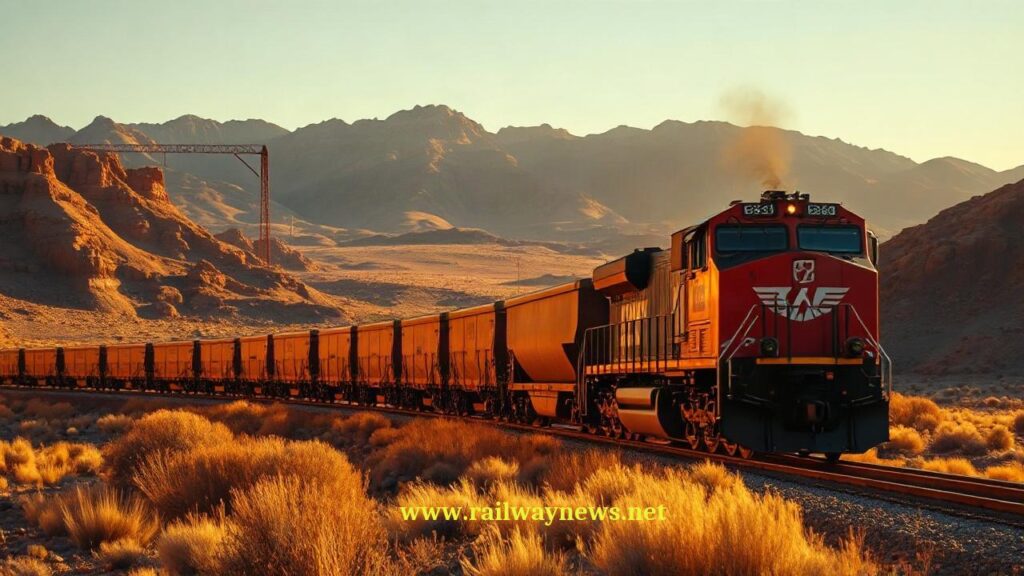
⚡ In Brief: Union Pacific operated 25 military trains between Colorado and California to transport equipment for a 12,000-soldier U.S. Army division during a major summer training deployment.
OMAHA, United States – Union Pacific Railroad transported heavy equipment for a full U.S. Army division between Fort Carson, Colorado, and Yermo, California, using 25 dedicated trains during summer 2024. The operation supported roughly 12,000 soldiers across three brigades participating in maneuvers at the National Training Center. Thirteen outbound trains departed every 48 hours between early June and early July, with redeployment concluded in August.
What Does This Contract Cover?
The service agreement covered the full mobilization and redeployment haulage for 12,000 soldiers and three combat brigades across more than 1,000 miles of track. Freight assets carried on the 25 consists included tracked combat vehicles, tactical trucks, specialized support equipment, and operational field supplies. Following completion of maneuvers in California, return movements routed rail equipment back to Fort Carson and three separate military storage depots.
Key Contract Data
| Parameter | Value |
|---|---|
| Contract Name | U.S. Army Division Summer Training Movement |
| Total Value | Not disclosed |
| Parties Involved | Union Pacific Railroad, U.S. Army |
| Timeline / Completion | June 2024 – August 2024 |
| Country / Corridor | United States / Fort Carson, CO to Yermo, CA |
How Does This Compare to Similar Contracts?
Comparable contract data for this military rail movement was not publicly available at time of publication. In physical scale, cycling 25 heavy unit trains within an eight-week window stands among the largest single-carrier peacetime military mobilizations conducted on the North American Class I rail network. Unlike European defense corridors that encounter clearance restrictions and strategic choke points like the Suwałki Gap, North American standard-gauge mainlines accommodate heavy vehicle axle loadings and double-stack clearances without modal transfers (Source: Warsaw Security Forum, 2024).
Editor’s Analysis
The Fort Carson-to-Yermo movement highlights the dual-use value of Class I railroad mainlines as primary military logistics assets during rapid mobilization scenarios. Integrating 13 outbound unit trains on strict 48-hour headways shows that large freight carriers can absorb surge defense traffic alongside daily scheduled carload volumes. Rising international focus on defense logistics suggests rail infrastructure readiness will remain a central planning priority for domestic transportation policy (Source: Warsaw Security Forum, 2024).
FAQ
Q: How many trains were used in the Fort Carson military movement?
A: Union Pacific deployed 25 dedicated trains to move divisional equipment between Colorado and California. Thirteen outbound trains ran on 48-hour intervals from early June to July, followed by return moves in August.
Q: What was the total value of Union Pacific’s military movement contract?
A: The total value of the transportation contract was not disclosed by Union Pacific or the Department of Defense. Pricing for large military unit moves is handled under established federal master freight agreements.
Q: Did the military deployment disrupt regular commercial rail freight?
A: Commercial network disruptions have not been officially confirmed by the carrier or federal surface transport authorities. Union Pacific spaced outbound train dispatches 48 hours apart to prevent yard congestion and maintain corridor fluidness.

Railway infrastructure, rolling stock and transport technologies specialist focused on global rail industry developments, high-speed rail systems, signaling technologies and freight transportation. Covering railway investments, public transport modernization, rail operations and international mobility projects across Europe, Asia and North America.
RELATED POSTS

October 8, 2026 1:15 pm
Alstom secured a €1bn contract to build 13 automated trains,...

October 1, 2026 7:09 am
United States regulators confirmed a September 30 deadline for the...

October 4, 2026 5:14 pm
Alstom secured a CA$4.7 billion order from VIA Rail Canada...
October 8, 2026 12:18 pm
Siemens Mobility signed an agreement with VinSpeed to supply 350...

October 1, 2026 12:13 am
Illinois approved $1.5 billion annually for the Northern Illinois Transit...
October 5, 2026 6:12 pm
AECOM and Jacobs secured a contract in September 2026 to...