
Webco Industries Expands Steel Tubing At Port Muskogee
Webco Industries expanded steel tubing at Port Muskogee in February 2025, creating 10 new jobs and linking regional rail freight via an idle port slitter.
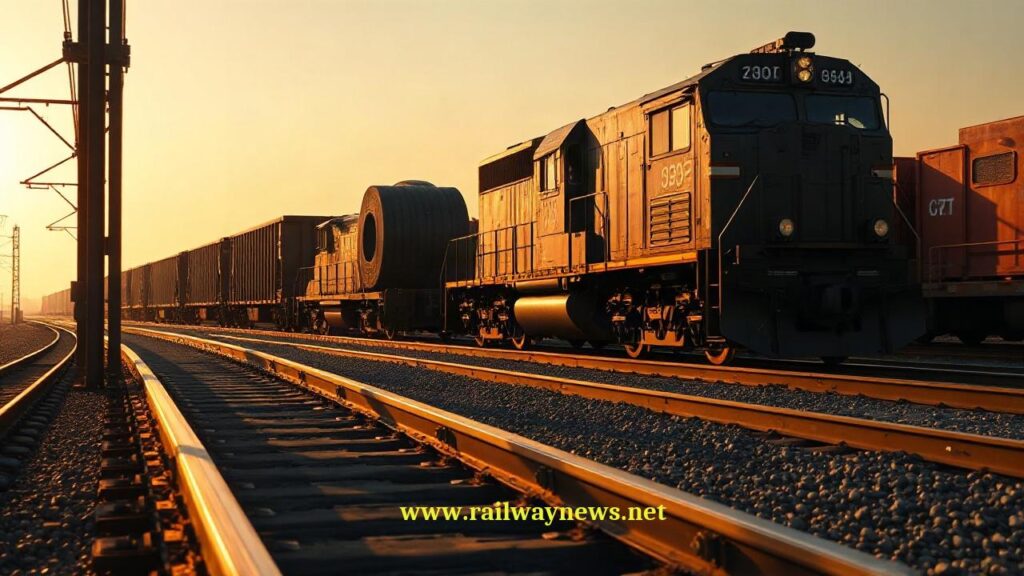
⚡ In Brief: Webco Industries is expanding its carbon and stainless-steel tubing operations to Port Muskogee in Oklahoma, creating 10 new jobs within six months and upgrading existing port-owned slitting equipment to access multimodal river and rail freight corridors.
MUSKOGEE, UNITED STATES – Webco Industries Inc. partnered with Port Muskogee in February 2025 to expand its industrial steel tubing manufacturing operations across an existing slitter facility in Oklahoma. The joint capital initiative will generate 10 industrial manufacturing jobs within six months while integrating Webco into regional multimodal logistics networks. The venture taps directly into freight corridors where steel products account for 35% to 45% of total cargo volumes handled at the port.
What Is the Full Scope of This Project?
Webco Industries and Port Muskogee are reactivating and modernizing idle port-owned slitter equipment to expand downstream carbon and stainless-steel tube manufacturing. The upgraded infrastructure returns specialized steel-processing capacity back to productive commercial service, providing direct access to the McClellan-Kerr Arkansas River Navigation System alongside local rail and road links. Webco, based in Sand Springs, Oklahoma, will utilize this facility to route inbound flat-rolled coil and outbound tubular freight through the multimodal port terminal. Total capital expenditures committed by both Webco and the port authority were not disclosed in the official announcement.
Key Project Data
| Parameter | Value |
|---|---|
| Project / Contract Name | Port Muskogee Slitter Facility Reactivation & Tubing Expansion |
| Total Value | Not disclosed |
| Parties Involved | Webco Industries Inc., Port Muskogee |
| Timeline / Completion | Initial operations and hiring targeted within 6 months |
| Country / Corridor | United States / McClellan-Kerr Arkansas River Navigation System |
How Does This Compare to Similar Projects?
Specialized rail-and-water industrial manufacturing co-locations are expanding as heavy manufacturers seek alternatives to pure highway logistics. The global rail logistics market stood at USD 372.7 billion in 2024 and is projected to expand to USD 531.4 billion by 2030 at a compound annual growth rate of 6.6% (Source: Grand View Research, 2024). Concurrently, global rail freight transport expenditure is anticipated to scale from USD 370.0 billion in 2025 to USD 602.7 billion by 2036 at a 4.5% annual growth rate (Source: Future Market Insights, 2025). While large-scale national logistics programs—such as Oman’s rail freight wagon procurements with CRRC or Tanzania’s cross-border standard-gauge railway construction—involve multi-billion-dollar network-level spend (Source: CFR, 2025; Deloitte, 2025), Webco’s targeted facility reuse exemplifies the regional brownfield strategy: reviving idle public port assets to secure supply-chain resilience without constructing entirely new freight yards.
Editor’s Analysis
Webco’s integration into Port Muskogee reflects how North American steel fabricators are insulating supply chains from trucking price volatility by anchoring directly inside multi-carrier river-rail transshipment hubs. Expanding freight nodes that serve bulk commodities aligns with global demand projections, which estimate rail freight transport alone will reach USD 534.6 billion by 2034 (Source: Market.us, 2024). Moving processed steel directly through inland waterways and adjacent rail lines offers long-term carbon and freight efficiency advantages over long-haul motor carrier options.
FAQ
Q: What is Webco Industries manufacturing at Port Muskogee?
A: Webco is expanding its carbon and stainless-steel tubing processing operations using an upgraded, port-owned slitter facility. The site processes steel coils into specialized tubing for diverse industrial markets.
Q: How much money is being invested in the Muskogee plant upgrade?
A: The specific financial investment figure committed by Webco Industries and Port Muskogee was not disclosed by either party. The agreement centers on refurbishment and reactivation of existing industrial infrastructure.
Q: How will the expansion affect regional freight traffic?
A: The expansion will increase steel-related barge, rail, and truck volumes through Port Muskogee, where steel products currently account for 35% to 45% of total freight tonnage. Independent verification of exact annualized railcar volumes resulting from the deal was not available at time of publication.

Railway infrastructure, rolling stock and transport technologies specialist focused on global rail industry developments, high-speed rail systems, signaling technologies and freight transportation. Covering railway investments, public transport modernization, rail operations and international mobility projects across Europe, Asia and North America.
RELATED POSTS

October 8, 2026 1:15 pm
Alstom secured a €1bn contract to build 13 automated trains,...

October 1, 2026 7:09 am
United States regulators confirmed a September 30 deadline for the...

October 4, 2026 5:14 pm
Alstom secured a CA$4.7 billion order from VIA Rail Canada...
October 8, 2026 12:18 pm
Siemens Mobility signed an agreement with VinSpeed to supply 350...

October 1, 2026 12:13 am
Illinois approved $1.5 billion annually for the Northern Illinois Transit...
October 5, 2026 6:12 pm
AECOM and Jacobs secured a contract in September 2026 to...