
RAC Reports 32% Rail Emissions Intensity Cut in Canada
RAC confirmed a 32.1% cut in Canadian rail emissions intensity for 2024 as Class 1 operators expanded Tier 4 fleets and invested CA$4.5 billion in networks.
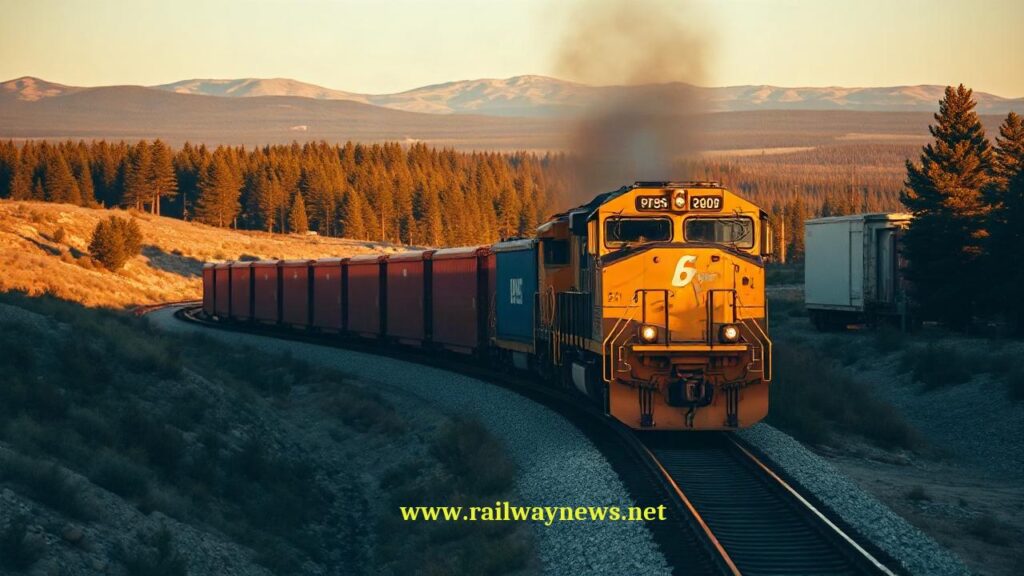
⚡ In Brief: The Railway Association of Canada reported that Tier 4 locomotives reached 10.5% of active national fleets in 2024, enabling Class 1 operators to reduce greenhouse gas emissions intensity by 32.1%.
OTTAWA, Canada – The Railway Association of Canada (RAC) published its 2024 Locomotive Emissions Monitoring report, confirming that domestic operators invested CA$4.5 billion into rail networks during the year. Active Tier 4 locomotives expanded to 10.5% of the national fleet, increasing from 9.8% in 2023. Anti-idling devices reached an adoption level of 93.1% across active locomotives, while 88.9% of all operational units met official emissions criteria.
What Does This Regulation Cover?
Canada’s locomotive emissions monitoring framework tracks carrier compliance with exhaust limits and monitors greenhouse gas (GHG) intensity across freight and passenger operations. Class 1 freight carriers handled 30.7% more volume while reducing absolute GHG output by 10.7%, resulting in a 32.1% decrease in GHG intensity (Source: Railway Association of Canada, 2024). Regional and shortline railways registered a 25.4% improvement in emissions intensity, while intercity passenger rail operations improved intensity by 33.9%. Idle-reduction technology was deployed on 93.1% of locomotives to lower fuel consumption during network dwell periods.
Key Regulatory Data
| Parameter | Value |
|---|---|
| Regulation / Policy Name | Locomotive Emissions Monitoring (LEM) Program / Tier 4 Standards |
| Total Value | CA$4.5 billion (2024 annual network capital expenditure) |
| Parties Involved | Railway Association of Canada, Transport Canada, Class 1 and regional rail carriers |
| Timeline / Completion | Annual reporting cycle (2024 assessment; ongoing fleet compliance) |
| Country / Corridor | Canada (National rail network) |
How Does This Compare to Global Standards?
Canadian fleet decarbonization reflects standard North American Tier 4 diesel adoption rates, but comparative international benchmarks remain unaligned. Independent verification of freight locomotive emissions progress across other international jurisdictions during the identical 2024 reporting window was not available at time of publication. Within passenger service operations, high-efficiency equipment management delivered comparable stability; Alstom operated 117,020 GO rail trips and 56,494 UP Express trips in Ontario with an on-time performance rate exceeding 97% during 2024–2025 (Source: Alstom, 2025). Furthermore, regional passenger systems such as Florida’s Tri-Rail achieved historic volumes above 4.5 million journeys in 2025, demonstrating how sustained passenger mode shifts complement freight efficiency gains across North America (Source: Tri-Rail, 2025).
Editor’s Analysis
The global rail freight market stood at USD 370.0 billion in 2025 and is projected to expand at a 4.5% compound annual growth rate to USD 602.7 billion by 2036 (Source: Future Market Insights, 2025). Canadian operators have successfully decoupled freight volume increases from absolute emissions, but the gradual pace of Tier 4 fleet penetration indicates that internal combustion upgrades alone cannot achieve deeper decarbonization milestones. Meeting future sustainability goals will necessitate transitioning from diesel efficiency optimization toward zero-emission hydrogen and battery-electric traction systems.
FAQ
Q: What percentage of locomotives in Canada met Tier 4 standards in 2024?
A: Tier 4 locomotives accounted for 10.5% of active Canadian locomotive fleets in 2024, rising from 9.8% in 2023. Overall, 88.9% of active locomotives complied with an established emissions standard.
Q: How much capital did Canadian operators allocate to railway infrastructure in 2024?
A: Canadian railways invested CA$4.5 billion during 2024 to support fleet upgrades, infrastructure maintenance, and operational technologies. Specific financial allocations by individual locomotive class were not disclosed.
Q: How did Canadian Class 1 railways perform regarding greenhouse gas reductions in 2024?
A: Canadian Class 1 operators reduced greenhouse gas emissions intensity by 32.1% during the year. This efficiency gain occurred while total freight traffic increased by 30.7% and absolute greenhouse gas emissions declined by 10.7%.

Railway infrastructure, rolling stock and transport technologies specialist focused on global rail industry developments, high-speed rail systems, signaling technologies and freight transportation. Covering railway investments, public transport modernization, rail operations and international mobility projects across Europe, Asia and North America.
RELATED POSTS

October 1, 2026 7:09 am
United States regulators confirmed a September 30 deadline for the...

October 8, 2026 1:15 pm
Alstom secured a €1bn contract to build 13 automated trains,...

October 4, 2026 5:14 pm
Alstom secured a CA$4.7 billion order from VIA Rail Canada...

October 1, 2026 12:13 am
Illinois approved $1.5 billion annually for the Northern Illinois Transit...

October 6, 2026 2:14 am
Union Pacific launched export rail shipments with Ferromex to deliver...

October 1, 2026 6:10 am
Amtrak approved a System Expansion Committee on July 30 to...