
MTA Awards $19.7M Metro-North Hudson Line Design Contract
MTA awarded a $19.7 million contract to an STV-WSP joint venture to design flood defenses along the Metro-North Hudson Line ahead of planned 2029 construction.
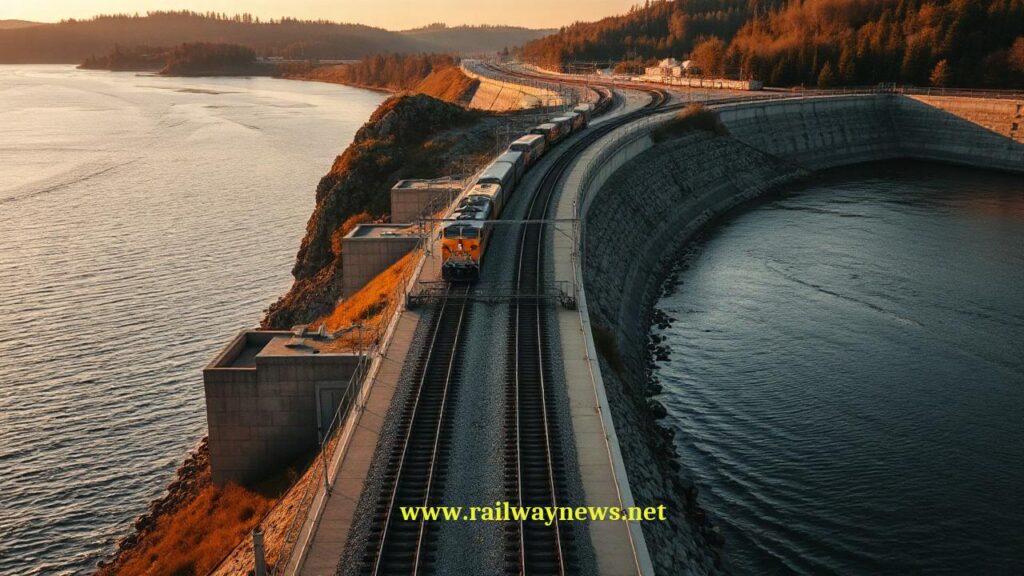
⚡ In Brief: New York’s MTA awarded a $19.7 million design contract to an STV-WSP joint venture to engineer climate resiliency and flood defense infrastructure across Metro-North’s Hudson Line ahead of a planned $270 million construction package.
NEW YORK, UNITED STATES – The Metropolitan Transportation Authority (MTA) awarded a $19.7 million engineering design contract to an STV and WSP joint venture to protect Metro-North Railroad’s Hudson Line against storm surges and tidal flooding. The contract initiates a $270 million infrastructure protection project scheduled to enter civil construction in 2029. The engineering works will safeguard an active passenger corridor operating along the eastern edge of the Hudson River.
What Does This Contract Cover?
The $19.7 million contract funds the preliminary and final engineering design to fortify right-of-way assets along the lower Hudson Line between Spuyten Duyvil and Hastings-on-Hudson. The joint venture between STV and WSP will draft specifications for stabilizing cut slopes, rehabilitating shoreline structures, upgrading track drainage culverts, and installing trackside flood barriers. This initial design phase forms part of a planned $270 million capital project, which integrates into the MTA’s broader $800 million Hudson Line fortification initiative outlined in the 2025–2029 Capital Plan. The specific procurement timeline and contractor bidding schedule for the construction phase were not disclosed.
Key Contract Data
| Parameter | Value |
|---|---|
| Contract Name | Metro-North Hudson Line Climate Resiliency Design Phase |
| Total Value | $19.7 million (Design) / $270 million (Project Total) |
| Parties Involved | Metropolitan Transportation Authority (MTA), Metro-North Railroad, STV / WSP Joint Venture |
| Timeline / Completion | Construction scheduled to begin in 2029; design completion date not disclosed |
| Country / Corridor | United States / Metro-North Hudson Line (Spuyten Duyvil to Hastings-on-Hudson) |
How Does This Compare to Similar Contracts?
The MTA’s design expenditure on the Hudson Line reflects a targeted asset-hardening approach compared to larger capital awards across regional passenger transit. Within New York, the MTA committed substantially larger funding allocations to subway capacity expansions, awarding contracts in 2024 for utility relocation around 106th Street and in 2025 for tunneling and the 116th Street station shell on Second Avenue Subway Phase 2 (Source: MTA, 2025). On an intercity scale, the California High-Speed Rail Authority awarded a USD 3.5 billion systems package in 2026, demonstrating the cost differential between greenfield line construction and commuter rail corridor preservation (Source: California High-Speed Rail Authority, 2026). Internationally, urban operators are prioritizing systemic network renewals, matching a global passenger rail sector projected to expand at a 5.8% compound annual growth rate through 2033 (Source: Market Data Forecast, 2025).
Editor’s Analysis
Commuter operators face rising capital requirements to protect coastal alignments from extreme tidal events, shifting budgets from network expansion to structural defense. As global rail passenger volumes increased by 7% year-over-year in October 2025, maintaining corridor reliability along legacy routes like the Hudson Line is vital to protecting farebox revenue and service frequency (Source: UIC, 2025). The four-year duration between this design award and the projected 2029 construction start date illustrates the complex environmental and operational reviews required when modifying active coastal trackage.
FAQ
Q: Which section of the Metro-North Hudson Line will receive flood protection?
A: The fortification design covers coastal track sections between Spuyten Duyvil and Hastings-on-Hudson. Engineering plans will focus on stabilizing retaining walls, enlarging drainage culverts, and reinforcing shoreline structures.
Q: When will physical construction begin on the Hudson Line resiliency project?
A: Civil construction is scheduled to begin in 2029 under an estimated $270 million overall project budget. Specific tender release dates for construction contractors have not been officially confirmed.
Q: Who is responsible for designing the climate adaptation works?
A: A joint venture between engineering firms STV and WSP was selected by the MTA under the $19.7 million contract. The joint venture will deliver all technical specifications for trackside flood protection and slope stabilization.

Railway infrastructure, rolling stock and transport technologies specialist focused on global rail industry developments, high-speed rail systems, signaling technologies and freight transportation. Covering railway investments, public transport modernization, rail operations and international mobility projects across Europe, Asia and North America.
RELATED POSTS

October 1, 2026 7:09 am
United States regulators confirmed a September 30 deadline for the...

October 8, 2026 1:15 pm
Alstom secured a €1bn contract to build 13 automated trains,...

October 4, 2026 5:14 pm
Alstom secured a CA$4.7 billion order from VIA Rail Canada...

October 1, 2026 12:13 am
Illinois approved $1.5 billion annually for the Northern Illinois Transit...

October 6, 2026 2:14 am
Union Pacific launched export rail shipments with Ferromex to deliver...

October 1, 2026 6:10 am
Amtrak approved a System Expansion Committee on July 30 to...