
Amey Secures Eight-Year Irish Rail Framework Contract
Amey secured an eight-year contract from Irish Rail to design, build, and test signalling, electrification, and telecoms work on the network from 2026 to 2034.
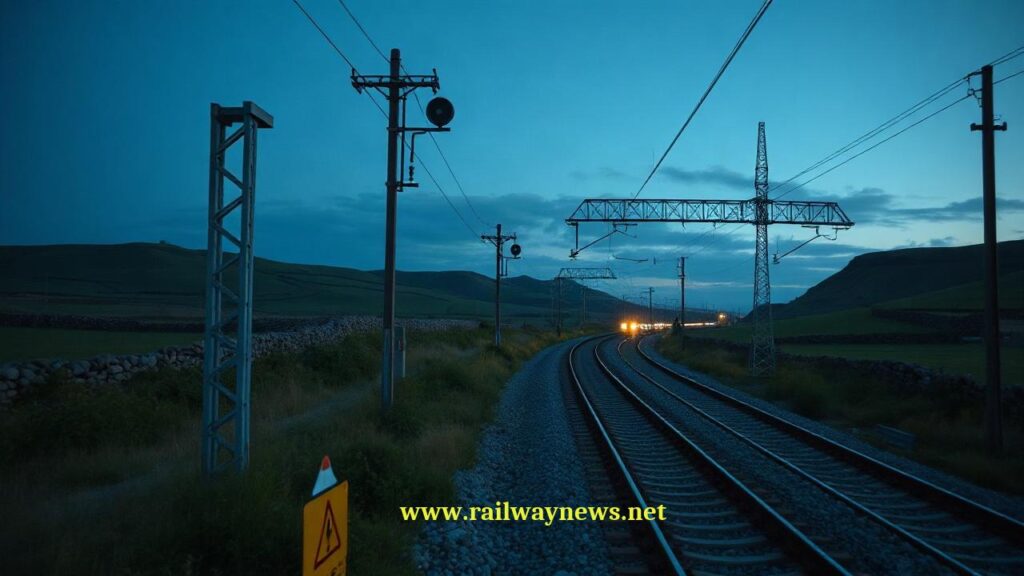
⚡ In Brief: Irish Rail has selected infrastructure engineering firm Amey as its sole implementation partner under an eight-year framework agreement to deliver signalling, electrification, and telecommunications works across the Republic of Ireland.
DUBLIN, Ireland – Irish Rail has appointed UK-based engineering specialist Amey to an eight-year single-party framework agreement for signalling, electrification, and telecommunications engineering across the national network. The contract marks Amey’s first major direct asset delivery award with Ireland’s national rail operator, building upon its existing joint venture management of Dublin’s Luas light rail system. Total capital value for the eight-year arrangement was not disclosed by either organisation.
What Does This Contract Cover?
Amey will manage end-to-end delivery of Signalling, Electrification, and Telecoms (SET) infrastructure projects across the Republic of Ireland under a single-party framework structure for eight years. The framework encompasses the complete asset lifecycle, requiring Amey to provide early-stage design, project management, physical installation, integration testing, and final safety commissioning. Work packages will be allocated on a project-by-project basis across capital investment programs, which include strategic network preservation initiatives such as the route between Collooney and Claremorris. Independent verification of the contract’s total expenditure ceiling was not available at time of publication.
Key Contract Data
| Parameter | Value |
|---|---|
| Contract Name | Signalling, Electrification and Telecoms (SET) Implementation Partner Framework |
| Total Value | Not disclosed |
| Parties Involved | Iarnród Éireann (Irish Rail), Amey |
| Timeline / Completion | Eight years (2026–2034) |
| Country / Corridor | Republic of Ireland (National Network) |
How Does This Compare to Similar Contracts?
Single-provider technical frameworks spanning eight years reflect a contracting structure designed to secure scarce engineering talent amid intense capital competition across Western Europe. Global rail signaling spending reached USD 21.10 billion in 2025, driven primarily by European renewal programs and digital train control rollouts (Source: MarketsandMarkets, 2025). The broader sector is projected to expand at a compound annual growth rate of 4.8% through 2035 as operators modernise legacy lines (Source: IndexBox, 2025). While larger infrastructure managers such as Britain’s Network Rail frequently split multidisciplinary renewal lots among multiple joint ventures, Irish Rail’s sole-partner appointment mirrors concentrated asset management frameworks seen in mid-sized European networks prioritizing unified engineering accountability (Source: SCI Verkehr, 2025).
Editor’s Analysis
Irish Rail’s long-term appointment of Amey mitigates persistent engineering supply shortages as European operators compete for specialized electrical and signaling personnel. Utilizing an integrated lifecycle delivery model removes recurring procurement bottlenecks ahead of planned fleet electrification and capacity upgrades across key Irish corridors. This operational setup aligns with wider European infrastructure procurement strategies where operators establish multi-year supplier commitments to guarantee engineering access through 2035 (Source: IndexBox, 2025).
FAQ
Q: What engineering services are included under the Irish Rail agreement?
A: Amey will execute signalling, electrification, and telecoms works spanning initial system design, physical installation, and final testing. Engineering tasks will be delivered across the Republic of Ireland on a project-by-project basis.
Q: What is the total financial budget for the framework?
A: The total financial budget was not disclosed by Irish Rail or Amey at the time of award. The agreement is designated as a high-value commercial framework that will run across an eight-year period.
Q: How will this agreement affect passenger services on the Irish network?
A: The framework focuses on improving core signal reliability and traction infrastructure to decrease passenger delays over time. Specific route disruptions or service changes will be determined per project as individual task orders enter construction.

Railway infrastructure, rolling stock and transport technologies specialist focused on global rail industry developments, high-speed rail systems, signaling technologies and freight transportation. Covering railway investments, public transport modernization, rail operations and international mobility projects across Europe, Asia and North America.
RELATED POSTS

October 1, 2026 7:09 am
United States regulators confirmed a September 30 deadline for the...

October 1, 2026 12:13 am
Illinois approved $1.5 billion annually for the Northern Illinois Transit...

October 1, 2026 6:10 am
Amtrak approved a System Expansion Committee on July 30 to...
October 1, 2026 4:10 am
DART launched two public ridership dashboards in March 2026 to...
October 1, 2026 3:12 am
Greenbrier confirmed Brian Comstock as new president and CEO effective...
October 1, 2026 5:14 am
Siemens confirmed delivery of the first new S200 train to...