
CPKC Opens Agri-Food Customs Clearance Facility in Toluca
CPKC launched an agri-food customs facility at Puerta Mexico in Toluca with SENASICA in 2026, clearing rail freight across 3 nations to bypass border checks.
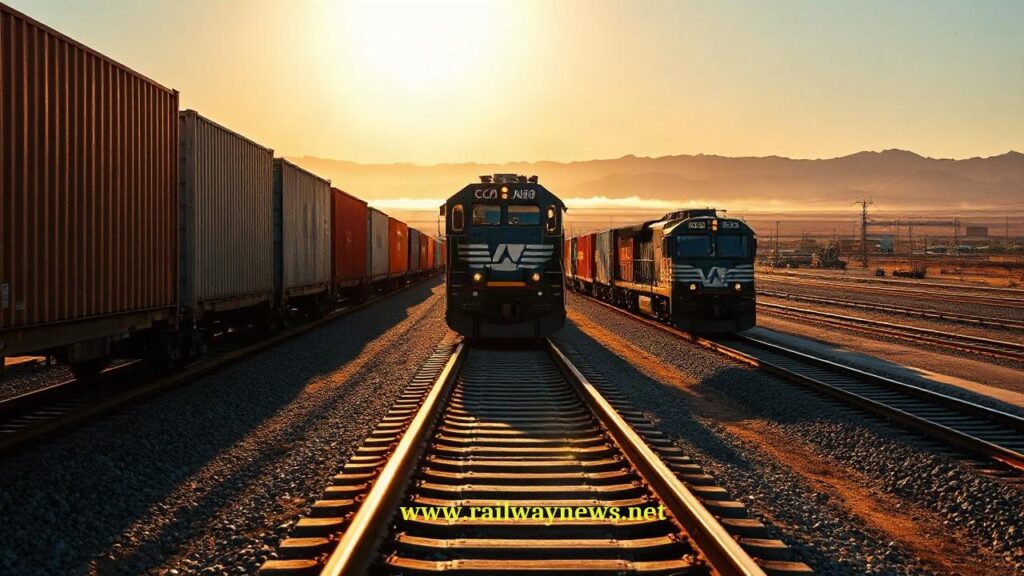
⚡ In Brief: Canadian Pacific Kansas City and Mexican food safety regulator SENASICA established an on-site customs clearance facility at Toluca’s Puerta Mexico terminal, enabling agri-food shipments across the 20,000-mile rail network to bypass congested border inspection points.
TOLUCA, Mexico – Canadian Pacific Kansas City (CPKC) and Mexico’s National Service of Agri-Food Health, Safety and Quality (SENASICA) have operationalized an inland inspection facility at the Puerta Mexico terminal in Toluca. The customs clearance solution transfers final regulatory checks away from the international border crossing at Nuevo Laredo for freight operating on CPKC’s Mexico Midwest Express service. The operational change targets perishable and cold-chain agricultural traffic originating across 3 North American nations.
What Is the Full Scope of This Project?
The Puerta Mexico terminal inspection facility transfers final phytosanitary and zoosanitary inspections directly to Toluca for agricultural shipments moving between the United States and Mexico. Under the operational framework with SENASICA, certified government inspectors are stationed directly at the terminal site in the State of Mexico to clear inbound shipments using non-intrusive screening systems. The inland process eliminates the requirement for agricultural and animal-based freight to decouple for lengthy physical inspections at northern border yards in Nuevo Laredo, Tamaulipas. By completing agricultural safety verification at destination, the railroad minimizes cargo handling, reduces drayage handoffs, and limits temperature variations for refrigerated boxcars and intermodal containers. Total capital outlays and physical facility dimensions were not disclosed by the carrier.
Note: Independent verification of the total capital investment for the Toluca inspection facility was not available at time of publication.
Key Project Data
| Parameter | Value |
|---|---|
| Project / Contract Name | Puerta Mexico Inland Agri-Food Inspection Facility |
| Total Value | Not disclosed |
| Parties Involved | Canadian Pacific Kansas City (CPKC), SENASICA |
| Timeline / Completion | Operational (September 2026) |
| Country / Corridor | United States – Mexico / CPKC Mexico Midwest Express (Midwest to Toluca) |
How Does This Compare to Similar Projects?
Comparable data for this project was not publicly available at time of publication. Traditional cross-border agri-food rail movements entering Mexico via the Laredo–Nuevo Laredo gateway routinely encounter regulatory dwell times ranging from 12 to 24 hours per train at border checkpoints (Source: Surface Transportation Board, 2024). In contrast, rival freight offerings such as the Falcon Premium intermodal service operated jointly by Union Pacific, Canadian National, and Ferromex continue to rely on physical customs and sanitary clearance at border interchange facilities in Eagle Pass and Piedras Negras rather than deep inland destination hubs (Source: Union Pacific, 2023).
Editor’s Analysis
Relocating government inspections deep into Mexico’s industrial interior exploits CPKC’s single-line transit network to challenge motor carrier market share. Removing border handling delays protects cold-chain product integrity and establishes an operational buffer against competing multi-carrier western rail alliances. This arrangement aligns with a broader North American freight shift where Class I railroads restructure customs procedures to capture high-value perishable freight from long-haul highway transport (Source: Association of American Railroads, 2024).
FAQ
Q: What types of freight qualify for the Toluca customs inspection process?
A: The inland inspection process applies specifically to agricultural, perishable, and animal-based goods originating in the U.S. Midwest and Canada. These shipments move on CPKC’s dedicated Mexico Midwest Express service directly into the Puerta Mexico terminal.
Q: Where were these agricultural shipments inspected prior to the new arrangement?
A: Shipments previously stopped at the northern border in Nuevo Laredo for routine physical inspections by SENASICA personnel. Total financial costs associated with building the replacement facility in Toluca were not disclosed.
Q: How does this clearance model impact cross-border transit efficiency?
A: Moving final clearance to Toluca prevents rail car congestion at border bottlenecks and reduces product spoilage risks for temperature-controlled loads. Exact transit-time savings in total hours have not been officially confirmed.

Railway infrastructure, rolling stock and transport technologies specialist focused on global rail industry developments, high-speed rail systems, signaling technologies and freight transportation. Covering railway investments, public transport modernization, rail operations and international mobility projects across Europe, Asia and North America.
RELATED POSTS

October 1, 2026 7:09 am
United States regulators confirmed a September 30 deadline for the...

October 1, 2026 12:13 am
Illinois approved $1.5 billion annually for the Northern Illinois Transit...
October 1, 2026 4:10 am
DART launched two public ridership dashboards in March 2026 to...

October 1, 2026 6:10 am
Amtrak approved a System Expansion Committee on July 30 to...

October 1, 2026 5:14 am
Siemens confirmed delivery of the first new S200 train to...
October 1, 2026 3:12 am
Greenbrier confirmed Brian Comstock as new president and CEO effective...