
WMATA Confirms 380,000-Sq-Ft Training Center in Maryland
WMATA confirmed a 380,000-square-foot training hub in Maryland to replace a warehouse with a mock station and police academy to drill staff off live lines.
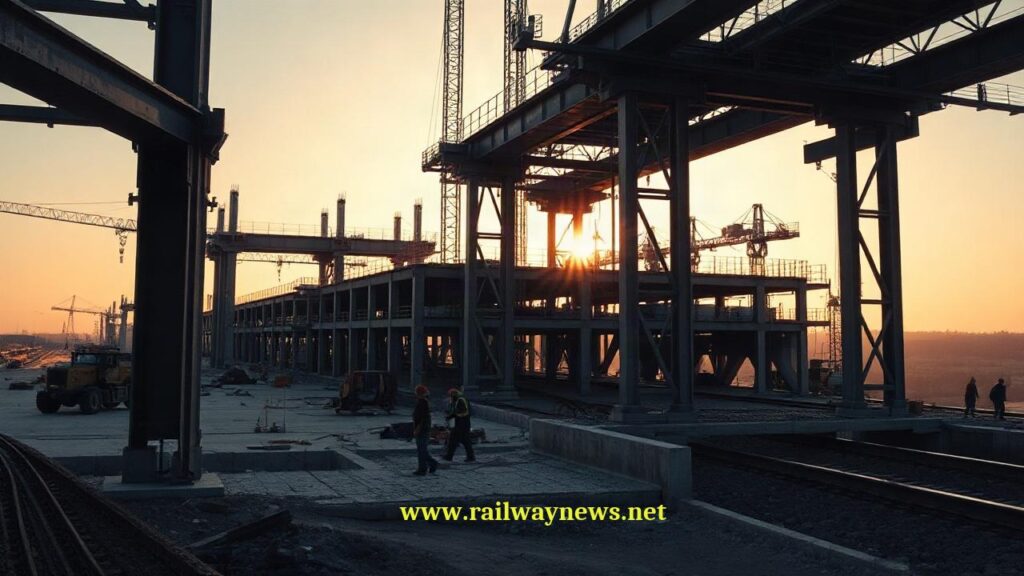
⚡ In Brief: The Washington Metropolitan Area Transit Authority plans to build a 380,000-square-foot centralized operations and police training facility in Landover, Maryland, replacing an existing agency warehouse.
WASHINGTON, UNITED STATES – The Washington Metropolitan Area Transit Authority opened public review in 2025 on plans to construct a 380,000-square-foot consolidated workforce development center in Landover, Maryland. The capital scheme involves the demolition of an agency-owned storage building to establish full-scale operational simulation facilities, including an underground station replica. WMATA has not published an estimated project expenditure or a formal completion date.
What Is the Full Scope of This Project?
The proposed 380,000-square-foot complex centralizes WMATA’s scattered operational instruction, technical maintenance curricula, and police enforcement programs onto a single site. The facility plans detail a purpose-built structure housing a decommissioned rail car fleet within an authentic replica Metro Rail station and tunnel environment. The site also incorporates a separate, access-controlled training academy for the Metro Transit Police Department alongside classrooms and virtual reality simulation laboratories. Independent verification of the warehouse replacement timeline and total construction budget was not available at time of publication.
Key Project Data
| Parameter | Value |
|---|---|
| Project / Contract Name | WMATA Consolidated Training Center & Police Academy |
| Total Value | Not disclosed |
| Parties Involved | Washington Metropolitan Area Transit Authority (WMATA) |
| Timeline / Completion | Not disclosed |
| Country / Corridor | United States / Washington Metrorail network |
How Does This Compare to Similar Projects?
Comparable data for dedicated transit simulation training centers was not publicly available at time of publication, though heavy rail operators across North America are prioritizing workforce and yard modernizations. In the intercity segment, Amtrak is advancing multi-billion-dollar maintenance facility upgrades and tunnel modernizations across its network to manage record ridership levels (Source: Amtrak, 2024). Operational expansion is tracking a broader international rebound, with the International Union of Railways recording a 7% increase in passenger rail traffic among member companies in 2024 relative to 2023 (Source: UIC, 2025). As transit authorities worldwide expand high-capacity infrastructure—such as France adding 200 kilometers of automated metro track and 68 stations by 2030—the reliance on dedicated off-line simulation centers has accelerated to support advanced Communications-Based Train Control deployment without interrupting live services (Source: Future Market Insights, 2025).
Editor’s Analysis
Workforce training capacity has emerged as a primary operational bottleneck for transit authorities upgrading to computerized signaling and tighter headway intervals. WMATA’s decision to co-locate transit police instruction with rail operations mirrors an agency strategy focused on rapid incident response and coordinated safety procedures. With international passenger volumes growing 7% year-on-year, off-corridor simulation hubs provide agencies a controlled environment to certify staff without taking active tracks out of revenue service (Source: UIC, 2025).
FAQ
Q: Where will WMATA build the new training center?
A: WMATA proposes building the 380,000-square-foot facility in Landover, Maryland, on land occupied by an existing agency-owned warehouse. The facility will consolidate rail staff instruction and the Metro Transit Police Department academy.
Q: What is the total budget for the Landover project?
A: WMATA has not publicly released the total capital cost or construction tender schedule for the facility. Independent verification of the budget was not available at time of publication.
Q: How will the facility affect active passenger operations?
A: Active Metro rail services will remain unaffected because instruction occurs inside an isolated mock station and tunnel housing dedicated rail cars. This setup allows emergency and operational drills to proceed without track closures on passenger lines.

Railway infrastructure, rolling stock and transport technologies specialist focused on global rail industry developments, high-speed rail systems, signaling technologies and freight transportation. Covering railway investments, public transport modernization, rail operations and international mobility projects across Europe, Asia and North America.
RELATED POSTS

September 6, 2026 5:19 am
Hitachi delivered Taiwan's first N700ST high-speed train from Japan in...
September 6, 2026 6:17 am
Hungary ordered a national ban on most freight trains from...
September 6, 2026 1:17 am
Hitachi Toshiba Supreme Consortium confirmed the first of 12 N700ST...

September 5, 2026 4:19 pm
CPK launched formal tender talks with four consortia to design...
September 7, 2026 8:16 am
Midea, Gree and TCL shipped air conditioners via China Railway...

September 6, 2026 4:12 am
Alstom delivered the first of 100 new G Class trams...